Debugging Microcontroller with Analyzers

Thread Starter

MTech1

Joined Feb 15, 2023
181
Hello Experts

I would like to understand in which conditions an logic analyzer can be helpful. For example, I have a few scenarios:

1. If my microcontroller is not running at the intended speed, how can an analyzer be used to verify?

2. If I am sending data from the microcontroller to an LCD but only seeing black square boxes instead of the data, how can an analyzer help in this situation?

3. If I am sending data from a microcontroller to a PC but not receiving it on the terminal, can an analyzer be useful? If so, how?

You can also share your experience
 
Last edited:

MrChips

Joined Oct 2, 2009
34,627
I don't use logic analyzers except the one between my ears. To assist that analyzer I may have to use two tools, an oscilloscope and a software debugger. The software debugger is not essential since I can always find an alternative method of debugging.

For your three scenarios you mentioned, an oscilloscope is your best friend.
 

Thread Starter

MTech1

Joined Feb 15, 2023
181
For your three scenarios you mentioned, an oscilloscope is your best friend.
I understand that an oscilloscope is highly useful, but I want to focus on understanding the specific scenarios where a logic analyzer would be the helpful. I've seen many recommendations to use a logic analyzer, but I don't understand exactly when and under what conditions it should be used effectively.
 

KeithWalker

Joined Jul 10, 2017
3,603
Logic analyzers were developed to check the relative timing between digital signals. They are most useful for debugging digital prototype products before they go into production. They are also useful in debugging Field programmable gate arrays and logic circuits, and analyzing communication protocols like I2C, SPI and UART.
To answer your questions on specific applications, my only recommendation is that you read the user manual of the logic analyzer you propose to use.
 

Thread Starter

MTech1

Joined Feb 15, 2023
181
analyzing communication protocols like I2C, SPI and UART.
I am asking same question in different way. Suppose You are working on a project involving a microcontroller at home and trying to verify if it is running at the correct speed. While you have access to a logic analyzer, you do not have an oscilloscope available.

I would like to know what other techniques you would recommend for verifying the microcontroller's speed. Are there methods you typically use or suggest to others that can help in this scenario without relying on additional tools like an oscilloscope?
 

joeyd999

Joined Jun 6, 2011
6,204
I am asking same question in different way. Suppose You are working on a project involving a microcontroller at home and trying to verify if it is running at the correct speed. While you have access to a logic analyzer, you do not have an oscilloscope available.

I would like to know what other techniques you would recommend for verifying the microcontroller's speed. Are there methods you typically use or suggest to others that can help in this scenario without relying on additional tools like an oscilloscope?
An LED blinking at 1 hz driven by an oscillator controlled timer?
 

hexreader

Joined Apr 16, 2011
619
While you have access to a logic analyzer, you do not have an oscilloscope available.
Sell the logic analyser and use the money to buy an oscilloscope :)

Verify signal quality and timing using an oscilloscope first. Only then can you perhaps trust logic analyser to give you more detailed diagnostic information, if needed.

Beware of Cheap MSO vs cheap DSO + cheap LA. Cheap MSO might be worst of both worlds.

EDIT: disclaimer - just my thoughts. Take them or leave them
 
Last edited:

geekoftheweek

Joined Oct 6, 2013
1,429
I have had a lot of success with a cheap USB logic analyzer and the Pulseview application in my own projects. I'll admit my only problems so far have been programming errors which an inexpensive analyzer will help you find and sort out.

Logic analyzers have a place as long as you respect their short commings. There are times though that nothing will beat a proper oscilloscope. If you're just looking at purely digital signals and not looking for problems with those signals then a cheap USB analyzer will probably get the job done.

My biggest arguement for an analyzer is you can get an eight channel analyzer for a lot less than an eight channel anything to do with an oscilloscope and for some of us that is all we can do.
 

nsaspook

Joined Aug 27, 2009
16,249
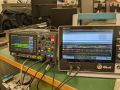
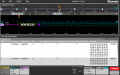
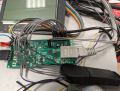
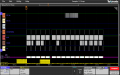
The cheap USB logic analyzers are great for low speed digital signals but once you get much above 10 MHz the signal issues become more analog in nature (signal shapes as rise times become RF transmission effects) so a proper oscilloscope is a absolute necessity for data driven solutions to problems.

You can't troubleshoot digital signal issues like this with a cheap USB logic analyzer.
1736476319026.png
1736476335754.png
 
Top