DC Motor adjustable torque control recommendation

Thread Starter

bhollehday

Joined Jan 18, 2025
13
I have a simple on/off dc motor at constant RPM that I am trying to limit torque to prevent breaking drive components. I am looking for a low cost solution and have looked through slipper clutches and mechanisms but can't find anything that would work in the design. I am wondering if it is possible to incorporate an adjustable current regulator of some sort between the motor and the power source that is resettable. That way if the motor sees a spike in current due to a jam of some sort on the drive mechanism, it would cut power to the motor until you reset it.
 

MaxHeadRoom

Joined Jul 18, 2013
30,557
That way if the motor sees a spike in current due to a jam of some sort on the drive mechanism, it would cut power to the motor until you reset it.
If no acceleration control is implemented, you will have to ignore the inrush at instant start also.
A 8 pin Picmicro would do it if you are able, via a ramp up routine. .
 

Thread Starter

bhollehday

Joined Jan 18, 2025
13
If no acceleration control is implemented, you will have to ignore the inrush at instant start also.
A 8 pin Picmicro would do it if you are able, via a ramp up routine. .
Thanks for the recommendation. I already have the PCB boards made and want to avoid modifying. I'm looking for some sort of secondary module to simply splice between motor and PCB.
 

Thread Starter

bhollehday

Joined Jan 18, 2025
13
Must be an extraordinary small motor??
And You are worried about damage due to torque?
Yes pretty small motor with gear box. The component it is driving is somewhat fragile, instead of it breaking the component every time it jams up with FOD or debris, id like it to try and cut power in order for the user to clear the FOD/debris.
 

MisterBill2

Joined Jan 23, 2018
27,159
Certainly this is an interesting problem. , 0.030Amps/12 volts. How important is the speed regulation in this application? And how much of a pain would false-alarm shutdowns be? Is a gradual start required, or even desirable?
And after all of those questions, If the motor gets into an overload condition, is a shutdown the best choice? Or just a stall at that torque??
My thinking now, based on the description and a guess, is to use a regulated voltage drive with a current monitor, and an instant switch off if the current suddenly increases, or switch off if the current exceeds a set value. Or maybe both options.

Certainly overload release clutches are available and they work quite well, mostly. A fast over-current trip would help, but inertia would deliver torque for several milliseconds.
Hard braking at shutdown is also an option.
 

Thread Starter

bhollehday

Joined Jan 18, 2025
13
Certainly this is an interesting problem. , 0.030Amps/12 volts. How important is the speed regulation in this application? And how much of a pain would false-alarm shutdowns be? Is a gradual start required, or even desirable?
And after all of those questions, If the motor gets into an overload condition, is a shutdown the best choice? Or just a stall at that torque??
My thinking now, based on the description and a guess, is to use a regulated voltage drive with a current monitor, and an instant switch off if the current suddenly increases, or switch off if the current exceeds a set value. Or maybe both options.

Certainly overload release clutches are available and they work quite well, mostly. A fast over-current trip would help, but inertia would deliver torque for several milliseconds.
Hard braking at shutdown is also an option.
constant speed and its not important. false alarm would be a problem but having user adjustability to play it safe with false alarm vs break something with no alarm is what is desired. Id like to avoid the mechanical options and focus on any options through motor current
 

Sensacell

Joined Jun 19, 2012
3,767
The kinetic energy stored in the rotating armature of the motor can be significant, especially if the gear ratio is high.
When a jam occurs, this energy is what causes most of the damage, the torque created by motor current just adds to the problem.

When the current actually increases, it's simultaneous with the energy of the rotor dumping into the gear train, limiting or interrupting the current does little to help the situation.

Clutches address this problem better by limiting the actual instantaneous torque in the system.
 

Thread Starter

bhollehday

Joined Jan 18, 2025
13
The kinetic energy stored in the rotating armature of the motor can be significant, especially if the gear ratio is high.
When a jam occurs, this energy is what causes most of the damage, the torque created by motor current just adds to the problem.

When the current actually increases, it's simultaneous with the energy of the rotor dumping into the gear train, limiting or interrupting the current does little to help the situation.

Clutches address this problem better by limiting the actual instantaneous torque in the system.
so the jam would not be instant but more of a build up that is starting to create friction. The idea is when the buildup occurs I would think the current of the motor is going up as well and if I could have an adjustable limit then I could sense when there is buildup
 

Sensacell

Joined Jun 19, 2012
3,767
so the jam would not be instant but more of a build up that is starting to create friction. The idea is when the buildup occurs I would think the current of the motor is going up as well and if I could have an adjustable limit then I could sense when there is buildup
This would only work if you approached the jam condition very slowly.
You will see that this idea is rarely implemented in real-world systems, it's just not very practical.
 

KeithWalker

Joined Jul 10, 2017
3,603
We don't have any information about the mechanism that the motor is driving. That makes it very difficult to suggest the best solution. If the cause of the problem is material jamming up the mechanism, the obvious solution would be to filter it out, but we have no idea if that is possible.
 

Thread Starter

bhollehday

Joined Jan 18, 2025
13
This is a food processing machine and uses an auger screw to push the material through. There is a maintenance cycle to clean the residue every so often as it will build overtime and put torque on the auger through and eventually break it. The idea would be kind of a warning system to show that it’s starting to build up in time for maintenance.
 

MisterBill2

Joined Jan 23, 2018
27,159
This is a food processing machine and uses an auger screw to push the material through. There is a maintenance cycle to clean the residue every so often as it will build overtime and put torque on the auger through and eventually break it. The idea would be kind of a warning system to show that it’s starting to build up in time for maintenance.
OK, those are not delicate plastic gears in some instrument. And the torque rise is not instant, unless there is a chunk of bone or other contamination.
 
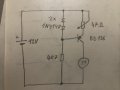
You can try a simple current limiter.
It will not stop the motor permanently, just limit the torque once the overload appears. During the overload the speed will be decreased until the overload disappears. The trimpot sets the limit current:


IMG_1484.jpeg

If you insist on permanent stop you need an electronic fuse.
 

MisterBill2

Joined Jan 23, 2018
27,159
With an auger type grinder, the higher load is either a solid item or just a tough spot. So the motor may stall or else resume speed. So probably an actual overload shut down as well as acurrent limiter will be the best choices.
 
You probably don’t find one that is able to fine tune the cutt-off current exactly as you need (like 20-60mA).
But it can be easily build with couple of parts (about 20).
 
Top