Facebook
 Google
 GitHub
 Linkedin
Im not trying to be rude and i appreciate your posts but from where im sitting your posts constantly contradict each other.The differential equation-s (their nature) describing circuit make this current direction changes you mention by itself, since they are able to differentiate positive and negative currents also (automatically).
One variable is iL and one vC.
So you need two diff. equations for two states (4 equations overall ) only.
You said the equation was the same for both states above then when i see in the wave form there are actually 4 equations you then agree with me.
I am not able to follow what your saying.
Even with the 4 equations the proof still does not work. With the following 4 equations the proof still fails
The 4 equations essentially just cancel each other out.
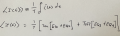
The proof says that integral should be equal to what i posted above and with these 4 equations the integral comes out to zero.
State 1 (Switch on)
Equation 1 = IC = IL - VC/R
Equation 2 = IC = VC/R - IL
Then they would be the same for the second switch state.
State 2 (Switch off)
Equation 3 = IC = IL - VC/R
Equation 4 = IC = VC/R - IL
Taking the integral of all that is zero where it should be equal to the answer in the book.

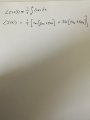
Where it should be equal to IL - VC/R
Last edited: