DAC multiplier bandwidth

Thread Starter

dhuwarakesh

Joined Apr 20, 2024
22
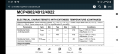
In the datasheet of MCP4912/MCP4922(DAC with SPI interface) ,multiplying bandwidth mentioned as 400 KHz and THD as -73 db(1Khz),but this for 2.5 +0.1 Vp-p.Is 0.1 Vp-p variation absolute maximum for guaranteed perfomance .will a higher peak to peak voltage with higher frequency degarde THD?

Data is not available in datasheet nor do I have spectrum analyser to test the distortion level with test setup.

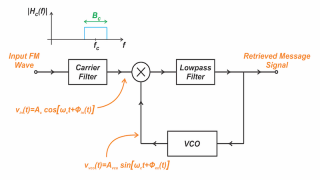
Plan is to use the DAC as mixer for synchronous demodulation(info signal at ref input sine wave for demodulation as digital code followed and filtering at output).will it do.
Or Multiplying dac is the way to go?
 

Attachments

Last edited:

Thread Starter

dhuwarakesh

Joined Apr 20, 2024
22
Yes, likely.
But I don't see how to determine how much without testing the device with a spectrum analyzer.
Some digital scopes have a limited capability to do that.
I thought may be some one who has tread this path(worked with this IC in multiplier mode)already might enligten me
 

Thread Starter

dhuwarakesh

Joined Apr 20, 2024
22
Make sure the das has enough bandwidth to handle the multiplier's frequencies to avoid distortion and get a clean output.
Planned operation is only audio frequency(against 400khz capability).issue is the test conditions in datasheet are only at 1 khz with very minimal swing(0.2 vpp),which raise doubt about the THD perfomance for wide swing
 

drjohsmith

Joined Dec 13, 2021
1,548
Planned operation is only audio frequency(against 400khz capability).issue is the test conditions in datasheet are only at 1 khz with very minimal swing(0.2 vpp),which raise doubt about the THD perfomance for wide swing
What your basically asking is
"If I use this part outside the data sheet range, will it work as per data sheet, if not how will it work"
The easy answer is, no one knows.
The long answer is,
Companies put thousands d of hours designing and checking parts, and publish data that they can guarantee.
If you use one part outside the data sheet range, you might get the performance you want, but that's called random sample of one.
What happens on the next batch of parts, that are different ?
What happens on different board where the driver is better or worse ?
What happens over temprature range and voltage ?
There are designs I know off for comercial boards that use chips outside the data sheet, a d most of the manufactureres test on depth.
But it's not how to design ,
 
Top