Facebook
 Google
 GitHub
 Linkedin

For the math experts:
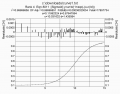
Please see the attached .xls spreadsheet. I've got 2 series of data. The first is the original data, the second is a minor transform of the first. Either of the datasets are valid for my computations, but it seems it is easier to curve fit the second set with a polynomial than the first, as is clear from the graphs.
While the second fit is good, it's not as good as I want it. The numbers represent a natural phenomenon (which I am unable to disclose), and my gut tells me there should be a computable curve that fits exactly.
Ideally, the entire curve should be able to be computed from a single equation. I've tried splitting the curve into sections, and I've had great success in modeling the first 2/3rds of the curve. But the last 1/3rd always seems to give me problems no matter what I do.
FYI, I normally use the LINEST function, but I've shown the trendlines computed by the graph in Excel in the data provided.
I'm wondering if one of our math experts can look at the curves and tell me if a different class of equations might do a better job fitting the data for one or both series.
Thanks for the help.
Please see the attached .xls spreadsheet. I've got 2 series of data. The first is the original data, the second is a minor transform of the first. Either of the datasets are valid for my computations, but it seems it is easier to curve fit the second set with a polynomial than the first, as is clear from the graphs.
While the second fit is good, it's not as good as I want it. The numbers represent a natural phenomenon (which I am unable to disclose), and my gut tells me there should be a computable curve that fits exactly.
Ideally, the entire curve should be able to be computed from a single equation. I've tried splitting the curve into sections, and I've had great success in modeling the first 2/3rds of the curve. But the last 1/3rd always seems to give me problems no matter what I do.
FYI, I normally use the LINEST function, but I've shown the trendlines computed by the graph in Excel in the data provided.
I'm wondering if one of our math experts can look at the curves and tell me if a different class of equations might do a better job fitting the data for one or both series.
Thanks for the help.
Attachments
-
5.4 KB Views: 26