Current Limiting a Servo Motor

Thread Starter

spurf

Joined Feb 14, 2017
11
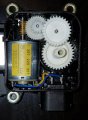
My car has developed an odd problem with the servo motor that controls the re-circulation flap. Initially I thought the servo was dead until I removed it from the car and discovered that it worked fine when 12V was applied across the input pins. I put the servo back in the car and it operated fine on initial testing but then seem to die again. I noticed that that the servo was quite warm to touch immediately after driving the car and when I opened the case the drive motor was too hot to touch.

My best guess is that whatever circuit is supposed to cut power to the servo when the flap has moved from one limit to the other has died. The motor is pulling the maximum stall current in this position and is eventually overheating and failing. I can't find any info on where this control circuit is located and if it is even fixable so was thinking of adding some sort of current limiter into the input leads of the servo. I was think of a pair of PTCs with diodes to allow one PTC to be operating for each polarity change (which controls whether the recirculation flap is closed or open). The servo draws ~40mA when spinning freely and ~160mA at stall. I was thinking 100mA PTCs might do the job. This way when the servo motor stalls, the PTC will trip and prevent the motor from overheating. When the polarity is reversed to move the flap the 1st PTC can reset and so forth.

Would this work or is there a more elegant solution?

20170214_213152.jpg
 

MaxHeadRoom

Joined Jul 18, 2013
30,658
Can you not find the limit that cuts motor power at the extreme end?
This would be the best course.
It must be part of the flap I would think?
Max.
 

crutschow

Joined Mar 14, 2008
38,504
It looks like there are just two wires to the servo and they go directly to the motor.
Is that true?
If so, then there is no limit control on the servo.

Can you measure the control voltage to see what it does?
 

Thread Starter

spurf

Joined Feb 14, 2017
11
Isn't that built into the controller, like many power windows? After a certain amount of time at full current draw it shuts down.
That is my guess, the ratchet on the servo is stopped by to plastic protrusions on the side of the flap housing. I can source a replacement heater / ac controller panel fairly cheaply but it would involve dismantling part of the dash which would be a PITA. I'm also not 100% sure that is where the limiter would be but would be the most logical spot.

Do you think my solution would work, or would the PTCs likely fail with so much cycling?
 

#12

Joined Nov 30, 2010
18,224
Cars use PTC protection on the door locks. Big current surge to slam the locks, PTC keeps the car from burning down if the switch gets stuck. I know because I repaired one like that. It can be done, but turning the power off when the flap arrives at its destination is a much better approach. Otherwise, you move the air flow switch when you have a PTC in protect mode, and the flap never moves until you turn the car off and let the PTC cool down.

Better not to install a guaranteed future failure.
 

Thread Starter

spurf

Joined Feb 14, 2017
11
Otherwise, you move the air flow switch when you have a PTC in protect mode, and the flap never moves until you turn the car off and let the PTC cool down.

Better not to install a guaranteed future failure.
That is why I thought a pair of PTCs might mitigate this as that way one is cooling down while the other is in operation. I'm not too familiar with their operation, but they usually reset within a few seconds?? Unless I'm flipping between the two states rapidly the other PTC should always be ready to go
 

BR-549

Joined Sep 22, 2013
4,931
Can you confirm that the flapper and gear train is not binding? Check for wear and play on the gear shafts and linkage.
 

crutschow

Joined Mar 14, 2008
38,504
That is why I thought a pair of PTCs might mitigate this as that way one is cooling down while the other is in operation. I'm not too familiar with their operation, but they usually reset within a few seconds?? Unless I'm flipping between the two states rapidly the other PTC should always be ready to go
Sounds like it should work as long as you get the right PTC for the motor current required.
You might have to experiment a little for that.
 

#12

Joined Nov 30, 2010
18,224
but they usually reset within a few seconds??
No. More like most of a minute for a small PTC. The problem is that you are hoping nobody will ever move the air switch and change their mind a few seconds later.
If that happens, you have to switch back to the first position, wait until the other PTC cools down, and then switch to that position. If you're the only person who ever uses it, maybe you can get away with it. It just seems like installing a future problem instead of the "right" fix.
 

Thread Starter

spurf

Joined Feb 14, 2017
11
Can you confirm that the flapper and gear train is not binding? Check for wear and play on the gear shafts and linkage.
Yep it move freely and doesn't need much effort to move manually. The servo seems a bit over powered for the job, it requires a fair bit of effort to stop it by hand!
 

Thread Starter

spurf

Joined Feb 14, 2017
11
No. More like most of a minute for a small PTC. The problem is that you are hoping nobody will ever move the air switch and change their mind a few seconds later.
Fair enough, although it is me that drives the car 99% of the time. I plan to drive it till it dies as it's now 15 years old with little resale value although it still drives like new.
 

Thread Starter

spurf

Joined Feb 14, 2017
11
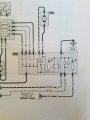
I've dug up this diagram from the workshop manual

20170215_144052.jpg

145 is the servo motor and 144 is the heater control module. Can anyone tell from the diagram if the current sensing bit that has blown is in the module?
 

#12

Joined Nov 30, 2010
18,224
Can anyone tell from the diagram if the current sensing bit that has blown is in the module?
Not for sure. You have 8 unknown wires, but it looks to me like pin 1 is the input. Pin 1 fires 2 relays. Pin 11 is just an indicator light. Pin 9 might be an input or an output. 4,6,8,10, and 2 are unknowns. A good nerd could figure out that board by tracing the connections and labeling the parts better. It looks like mostly relays. You don't need to be a really good nerd to figure those out. If it isn't concealed with a bunch of potting compound, that's the place to start.
 
Top