Courtesy light delay dimmer project

sghioto

Joined Dec 31, 2017
8,636
Thanks for the video. Something is not right with the voltage drop across the two diodes. In my circuit the drop measures 1.38 volts which is correct for two diodes in series but your circuit reads 1.92 volts which is too high. What type of LEDs are you using ? Can you tell me how much current they draw or a link to the brand ?
Edit:
After further testing using a 75 ohm resistor to simulate the LED modules the voltage drop across the two diodes increased to 1.6 volts with a 142 ma draw and the same when the current was doubled to 275 ma and still the circuit worked correctly though the timing was about 10 seconds compared to 15 sec before. It would appear that your LED modules are drawing too much current and will require a series current limiting resistor which ak mentioned back in post #2.
SG
 
Last edited:

eetech00

Joined Jun 8, 2013
4,709
Hi

This is a little different approach but you could try using an LM358 opamp chip.
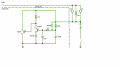
The fade time is controlled by P1. I used a 2n3055 for the drive transistor but it could be changed to accommodate the LED load current. If your interested, I'll breadboard to be sure it works. See attached.

eT

CourtesyLightCircuit.png
 

Thread Starter

Rissy

Joined Nov 23, 2015
106
Is it important for people to know what sort of diodes there are in play on the car's wiring? i.e. the two exiting diodes on the circuit before the door switch? I'm asking, but i've literally got no idea how i'd do that, cause i don't even know where they're buried in the car's wiring!?

The LED's i've got are just cheap ebay jobs. They're little 9-led array panels, but the actual LED's i want to work with the finished article on the car are a couple of Festoon style LED's. I don't know the characteristics of them, but if someone can tell me how to measure from them, as a test to determine any characteristics, then i can do that and revert.
 

sghioto

Joined Dec 31, 2017
8,636
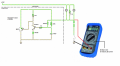
Take your multimeter and set it on the 200 ma current setting. Connect the negative lead to ground and the positive lead to the cathode or negative lead of the LED to measure the LED current. This test will determine if a series resistor is needed for the LED modules. The voltage drop across the diodes when the door switch is closed should be around 1.5 volts. Because your value was almost 2 volts that tells me there is no current limiting resistors in the LED modules.
As far as the diodes are concerned in the vehicle just measure the voltage from ground to the low side of the lamp. If they are standard diodes and wired as you say they are then again the voltage drop would be around 1.5 volts.
SG
EDIT: Corrected drawing of test circuit.
EEE curtesy lamp test.png
 
Last edited:

eetech00

Joined Jun 8, 2013
4,709
Is it important for people to know what sort of diodes there are in play on the car's wiring? i.e. the two exiting diodes on the circuit before the door switch? I'm asking, but i've literally got no idea how i'd do that, cause i don't even know where they're buried in the car's wiring!?

The LED's i've got are just cheap ebay jobs. They're little 9-led array panels, but the actual LED's i want to work with the finished article on the car are a couple of Festoon style LED's. I don't know the characteristics of them, but if someone can tell me how to measure from them, as a test to determine any characteristics, then i can do that and revert.
If you can provide the manufacture name and part number of the LED array we can lookup the data sheet.

BTW - I tested the circuit in post 23 and it works perfectly.

eT
 

ScottWang

Joined Aug 23, 2012
7,501
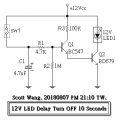
I was tested the similar circuit with 5V many years ago and the delay time about 10 seconds, you can try it with 12V and to adjust R3 for LED driving current, C1 and R2 for the delay time.

12VLEDDelayTurnOFF10Sec_ScottWang.png
 

sghioto

Joined Dec 31, 2017
8,636
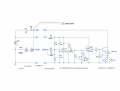
The problem with circuits in post #23 and #27 (according to the TS) is not how the door switch is wired and he claims it would be too much trouble to rewire. Below is my updated schematic with an additional capacitor.
SG
EEE car dimmer.png
 
Last edited:

eetech00

Joined Jun 8, 2013
4,709
The problem with circuits in post #23 and #27 (according to the TS) is not how the door switch is wired and he claims it would be too much trouble to rewire. Below is my updated schematic with an additional capacitor
Post 23 takes no more wires than the original. What do you mean not wired how the door switch is wired?
 

eetech00

Joined Jun 8, 2013
4,709
Is it important for people to know what sort of diodes there are in play on the car's wiring? i.e. the two exiting diodes on the circuit before the door switch? I'm asking, but i've literally got no idea how i'd do that, cause i don't even know where they're buried in the car's wiring!?

The LED's i've got are just cheap ebay jobs. They're little 9-led array panels, but the actual LED's i want to work with the finished article on the car are a couple of Festoon style LED's. I don't know the characteristics of them, but if someone can tell me how to measure from them, as a test to determine any characteristics, then i can do that and revert.
The diodes are only there because I thought you said there were diodes on the input?
 

sghioto

Joined Dec 31, 2017
8,636
Two diodes in series with the door switch, one side of the door switch is ground according to the TS as in the circuit I posted in #28.
SG
 

eetech00

Joined Jun 8, 2013
4,709
Hi

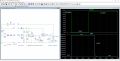
Here is an updated version. I've change the location of the door input diodes.
I've also add a current limit to prevent damage if circuit is overloaded.

eT.

CourtesyLightCircuit2.png
 

sghioto

Joined Dec 31, 2017
8,636
Does the Vce of 2N3904 + 1N4148 can be turn off the Vbe of BD679?
The 2N3904 is turned off when the cap discharges through the door switch. The diode in series with the emitter is needed because of the two diodes in series with the door switch. It's kind of a balancing act, the 2N3904 doesn't turn completely off but enough to turn on the BD679. When the door switch opens there's enough voltage at the collector of the BD679 to allow the cap to begin charging back up to turn on the 2N3904.
SG
 

sghioto

Joined Dec 31, 2017
8,636
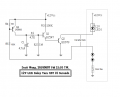
It just occurred to me that the TS should be able cut the wire leading from the door switch diode assembly to separate the two circuits. Below is the modified circuit that ScottWang posted.
SG
EEE Scot Wang modified courtesy car dimmer.png
 
Top