Convert Square wave to DC continous wave

crutschow

Joined Mar 14, 2008
38,520
The input circuit in post #28 is called a capacitance multiplier. It 'multiplies' the capacitance of the 100uf cap, making it seem like the load gets a smoother voltage level.
Im not sure how that would work in the app though because it seems like a fast change in input voltage would cause a fast change in input current
Yes it's called a capacitance multiplier (somewhat of a misnomer), since it does not act just like a large capacitor (which of course, would still draw high peak currents).
Because the input to the multiplier sees the high transistor collector resistance due to the filter at its base, it suppresses current variation from the V1 source pulses to less than 100mA as the TS requested, with an average of about 58mA.
(Of course all his requirements are still not clear and he hasn't posted in a couple days).
It also isolates the source from the switching regulator current pulses of 168mA .

Below is the .asc file for your amusement.
 

Attachments

Last edited:

MrAl

Joined Jun 17, 2014
13,707
The Circuit performs well, as shown in simulation,
but I have to confess that it was created purely out of sarcasm and frustration,
because a ~10mH Choke, and over ~20,000uF of Capacitance is just not at all practical.

The existing Control-Loop was never intended to Power 3 Buck-Converters,
and deal with all the "trash" they create.

The add-on "Circuit-Board", ( whatever that is ), needs to be redesigned to
suit the existing Control-Loop, which is also still an "unknown".
.
.
.
Hi,

That's what i thought too, but then i realized that we dont need a huge cap (1000uf or greater), and in fact that is not as good as a smaller cap (10uf) because of the current draw, and because the current demand is so low a very small 10mH or larger choke could be used and it will have some series resistance that in many apps would be objectionable, but not this one because it also dampens the overshoot. The current variation could be very small too, so it may actually be very practical.
 

MrAl

Joined Jun 17, 2014
13,707
Yes it's called a capacitance multiplier (somewhat of a misnomer), since it does not act just like a large capacitor (which of course, would still draw high peak currents).
Because the input to the multiplier sees the high transistor collector resistance due to the filter at its base, it suppresses current variation from the V1 source pulses to less than 100mA as the TS requested, with an average of about 58mA.
(Of course all his requirements are still not clear and he hasn't posted in a couple days).
It also isolates the source from the switching regulator current pulses of 168mA .

Below is the .asc file for your amusement.
Actually yes very amusing.

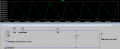
Here is the plot of the input current.
 

Attachments

Thread Starter

NTC

Joined Mar 23, 2023
9
Well, tank you for all the answers. We might have found the solution to our problem.
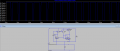
In the end we came up with 3 circuits that we will implement and test in the lab. One of them is the one refered in post #3.

I ll share it here for your curiosity and for others who may have the same problem.

Thank you again for your cooperation,

NTC
 

Attachments

MrAl

Joined Jun 17, 2014
13,707
Well, tank you for all the answers. We might have found the solution to our problem.
In the end we came up with 3 circuits that we will implement and test in the lab. One of them is the one refered in post #3.

I ll share it here for your curiosity and for others who may have the same problem.

Thank you again for your cooperation,

NTC
You're welkome (ha ha).

The inductor in that one circuit looks kind of large. You should try 10mH and 10uf cap.
The problem with larger value inductors is that as the inductance goes up you either need an iron core or a lot of turns of wire. An iron core brings in other problems like minimum excitation current and saturation current, and a lot of turns brings in high resistance and a low operating current spec. It ends up being a trade off and what can actually work in the application.
You can find 10mH inductors with resistance maybe 20 Ohms that are small and low cost. As you go to 100mH the resistance goes up, maybe 100 Ohms. You can find them with lower series resistance but they will have metal cores that bring in other problems as mentioned.

Whatever value you want to use, look around and see what you can find. Remember though that you have to consider a lot more specifications when you are choosing an inductor. To name a few here:
1. Inductance value of course. Has to have the right value.
2. Operating current. Has to be able to support the required continuous current.
3. Saturation current. Has to be able to support the required current without having the inductance drop too much.
4. Minimum current level. Has to have a low enough minimum in order to have the inductance be as high as required.
5. Series resistance. Has to have a low enough DC resistance in order to be able to supply enough current to the load without excessive voltage drop.
6. Size and cost. Dont want it to be too large and of course not cost $100 USD.
7. Value precision (tolerance). Has to have the right value off the shelf for the application. This is sometimes not as important though. 5 percent or even 20 percent may be perfectly acceptable.
 
Top