Constant current through IR LEDs

MrChips

Joined Oct 2, 2009
34,817
He mentions that he wats the same current through the electromagnet, and that is 1-4A. This is not possible with the LEDs in series.

To make that happen, (4A) you would need to put 40 in parallel with a resistor for each.
In reality, he doesn’t know what he wants vs what he needs.
Mixing 100 mA LEDs with 4A electromagnet indicates that he needs to rethink the problem.
 

Thread Starter

sab201

Joined Nov 18, 2023
297
In reality, he doesn’t know what he wants vs what he needs.
Mixing 100 mA LEDs with 4A electromagnet indicates that he needs to rethink the problem.
That is why I want to discuss it here to find a possible solution.

As BobTPH said, if I use 40 LEDs in parallel with a resistor for each I see this could be a possible easier solution. I have to try it out practically to see how it works.

Please let me know what is the problem with this so I can correct it.

The brightness does not matter here because they are Infrared LEDs and the intensity of transmission matters and that will require an element of Trial and error to arrive at the output given the pulsed nature of current flowing through it.
 

panic mode

Joined Oct 10, 2011
4,985
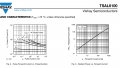
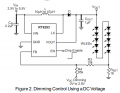
powering bunch of LEDs in parallel with Vf of 1.3V and each with own current limiting resistor is simple and straight forward. it is also quite energy inefficient even if operated from low Voltage such as 3.3V or 5V. it would be better to use switcher, perhaps something like this. it can drive up to 10W load and your is some 6.5W
1766585849578.png
 
Last edited:

MrChips

Joined Oct 2, 2009
34,817
That is why I want to discuss it here to find a possible solution.

As BobTPH said, if I use 40 LEDs in parallel with a resistor for each I see this could be a possible easier solution. I have to try it out practically to see how it works.

Please let me know what is the problem with this so I can correct it.

The brightness does not matter here because they are Infrared LEDs and the intensity of transmission matters and that will require an element of Trial and error to arrive at the output given the pulsed nature of current flowing through it.
You have two separate problems, powering the LEDs and powering an electromagnet. Keep them separate.

If you want to power 50 LEDs in series at 100 mA, then you need a power source of about 100 V with a constant current driver circuit. That is about 10 W power consumption.
 

Thread Starter

sab201

Joined Nov 18, 2023
297
You have two separate problems, powering the LEDs and powering an electromagnet. Keep them separate.
That is the last option I would take if I am out of all other options. You are right - powering the electromagnet and the IR LEDs separately is the right thing to do.

I was looking for a possibility of trying to pass the same pulsed current through both the electromagnet and the IR LEDs in series (with the LEDs in series or parallel combinations using resistors or any other circuit). If there is no way of doing it, I shall power them separately, but I am trying to look for any possibility of doing it as long as the current does not do any damage to the IR LEDs and the IR LEDs are transmitting with that pulsed current.

Thanks all for helping out.
 

WBahn

Joined Mar 31, 2012
32,847
That is the last option I would take if I am out of all other options. You are right - powering the electromagnet and the IR LEDs separately is the right thing to do.
If you realize that it is the right thing to do, then why is it your last option?

I was looking for a possibility of trying to pass the same pulsed current through both the electromagnet and the IR LEDs in series (with the LEDs in series or parallel combinations using resistors or any other circuit). If there is no way of doing it, I shall power them separately, but I am trying to look for any possibility of doing it as long as the current does not do any damage to the IR LEDs and the IR LEDs are transmitting with that pulsed current.
Why do you want the same current in both? Because you think it's easier? Because you think it will save cost? Because you thing it will save energy? Because it's essential for the healing effect you seek?

You said in another reply that it isn't the intensity, but the speed of transition that matters. If you put then in series with an inductor (i.e., this electromagnet), then the speed of transition will be set by the inductor and the voltage applied, not the current.

The voltage you need to be able to supply will depend not on how many LEDs are in series, but the inductance of the electromagnet and how fast you want the current in it to change.

What are your target specs for these pulses you keep talking about?

How many pulses a second?

How long is each pulse?

How fast do they needs to rise and fall?

What is the inductance of this electromagnet you are using?
 

panic mode

Joined Oct 10, 2011
4,985
and what is all the secrecy about electromagnet/supply? it would be be much easier to make a recommendation when SOME specs and application are known...


1766592265364.png

5V, individual resistors, 50 LEDs = 25W
single string of LEDs in series with HV source = 10W
switching mode regulator = 7W. different options exist for different supply voltage

and 15-18W difference is massive, that is a lot of extra heat - comparable to a soldering iron.
 
Last edited:

Alec_t

Joined Sep 17, 2013
15,119
Pulsing an electromagnet with a significant inductance has potential problems of its own: (a) at switch-on the current takes time to rise, so the magnetic field strength does not increase abruptly (which may or may not matter for your application) and (b) at switch-off there will be a large inductive voltage spike which needs to be suppressed.
 

MrChips

Joined Oct 2, 2009
34,817
5V, individual resistors, 50 LEDs = 25W
single string of LEDs in series with HV source = 10W
switching mode regulator = 7W. different options exist for different supply voltage

and 15-18W difference is massive, that is a lot of extra heat - comparable to a soldering iron.
He said he wanted a source of IR. Maybe a soldering iron would make a better source.
 

MrAl

Joined Jun 17, 2014
13,704
My requirement is initially to run IR LEDs in series with the electromagnet with the same current being powered by a constant current buck converter source. The number of LEDs need not be 50, it can be any number from 10 to 50. Once this is possible I will try to experiment more with other possibilities by increasing the number of LEDs.
Hi,

Small question:
Why would you have to do that?
Why not power each separately, the coil vs the LEDs.
 

Thread Starter

sab201

Joined Nov 18, 2023
297
If you realize that it is the right thing to do, then why is it your last option?
I will answer all questions together.

The resistance of the electromagnet is about 3 Ohms. Inductance I couldnt measure since I do not have a meter for that.

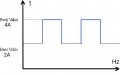
One more information I missed to mention is that the pulsed current I mentioned is a DC waveform that looks like this. Apologize for the misrepresentation since I mentioned "pulsed' current and it hits zero every time and I used that term.

sketch-1766635754671.jpg

I also use other types of waveforms but I dont let the current hit zero at anytime. So I suppose I didnt mean any "speed of transition" since the current does not hit zero and rise again.

The frequency of the pulse waveform is 0.1 to 80 Hz.

Current Max = 4 Amperes
Current Min = 2 Amperes

(Example if 0.1 Hz, max current will be 4 A for 5 seconds and min current 2 A for 5 seconds and the duration decreases as Hz increases)

The reason I wish to use the same current is the same as you guessed. It would be more efficient in healing and I am using a combination of Rodin coils in series with the electromagnet. I want to try out the same electrons to flow through all these to test the effects. Might sound a bit weird but that is something worth trying out.

Thanks.
 

WBahn

Joined Mar 31, 2012
32,847
No matter what you do, you won't have the "same electrons" flowing through anything. That's not how current works.

This insistence on putting the same 2 A to 4 A though the magnet as through LEDs rated for 100 mA is NOT going to work! This has been pointed out several times. But, you do what you want to do.
 

Thread Starter

sab201

Joined Nov 18, 2023
297
No matter what you do, you won't have the "same electrons" flowing through anything. That's not how current works.

This insistence on putting the same 2 A to 4 A though the magnet as through LEDs rated for 100 mA is NOT going to work! This has been pointed out several times. But, you do what you want to do.
Yes, I understand.

Trying to do do something different, in order to learn, test and experiment to understand how it all works, what effects it produces.
 

WBahn

Joined Mar 31, 2012
32,847
Yes, I understand.

Trying to do do something different, in order to learn, test and experiment to understand how it all works, what effects it produces.
What you may end up learning is that LEDs with that kind of current fail catastrophically, which could open-circuit an energized conductor inductor which, if it has enough inductance (and it doesn't take a lot) will produce lethal voltages and at already lethal currents.

EDIT: Fix typo.
 
Last edited:

Thread Starter

sab201

Joined Nov 18, 2023
297
What you may end up learning is that LEDs with that kind of current fail catastrophically, which could open-circuit an energized conductor which, if it has enough inductance (and it doesn't take a lot) will produce lethal voltages and at already lethal currents.
Thanks for the information. I didnt know that. Using a separate circuit for IR LEDs would be the right thing to do.
 

Thread Starter

sab201

Joined Nov 18, 2023
297
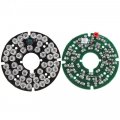
I found a readymade LED board module online for CCTV cameras. Will try to use it with a separate power source.

616onR55BUL.jpg
 
Last edited:
Top