Constand current LEDs

Thread Starter

Ghaas

Joined Dec 21, 2024
4
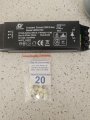
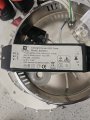
Hi, i need to repair an LED light fitting that has 9 x 3.2V SMD COB LED chips wired in series. They are powered by a 350mA constant current driver rated at max 39VDC. I am trying to determine which LED is effecting the entire circuit. I first tested from + of the driver to - of each LED and found one that was open circuit. I replaced it and the LEDs all work but don't glow as bright.
I also tried testing an individual LED on th3 driver but ended up blowing up some brand new ones in the process.

I effectively have 2 questions.

1. What is the best way to test which LED is blown and if there is more than one in the circuit?

2. Is there a minimum or maximum number of LEDs there has to be in the circuit? I assume the number of LEDs x 3V (the rating of each one) has to only be below the maximum driver Voltage? For example: 2 x LEDs = 6V, so a 39V constant current driver should be able to power the LEDs the same brightness as 9 x LEDs without blowing anything......

Thanks.
 

Attachments

bassbindevil

Joined Jan 23, 2014
922
Measure the voltage across them: an o/c LED will have the full voltage, the others will measure zero. Alternatively, use the "diode check" function on your DMM; it's usually just enough current to faintly light up an LED. Or, use a 9V battery and 1K resistor to apply a current to each LED.

On that driver, it looks like 10V is the minimum output, so that's about 3 LEDs in series; 4 to be safe. It would be instructive to measure the current, if your LEDs aren't getting as bright as you expect. It's possible that the power supply has a cooked capacitor or some other fault.
 

MisterBill2

Joined Jan 23, 2018
27,508
I have not been able to replace the surface mount illumination LEDs because they are bonded to their heat spreader very well. And the LED failures in the 48 inch tubes are just one or two in each series 24LED segment
 

Thread Starter

Ghaas

Joined Dec 21, 2024
4
Measure the voltage across them: an o/c LED will have the full voltage, the others will measure zero. Alternatively, use the "diode check" function on your DMM; it's usually just enough current to faintly light up an LED. Or, use a 9V battery and 1K resistor to apply a current to each LED.

On that driver, it looks like 10V is the minimum output, so that's about 3 LEDs in series; 4 to be safe. It would be instructive to measure the current, if your LEDs aren't getting as bright as you expect. It's possible that the power supply has a cooked capacitor or some other fault.
Thanks for your help. To confirm a faulty LED I bridged the circuit across the LED and the remaining LEDs lit up quite bright, but when I soldered the new LED on they illuminated less bright. I thought constant current would mean the same across across each LED and thus the same brightness.
But I guess the theory is LED load must be between 10 and 54VDC and everything should glow as bright.
I actually attached the wrong specs before. The driver had a sticker on on it.
 

Attachments

MisterBill2

Joined Jan 23, 2018
27,508
Not all LEDs are created equal!!! Even within production runs they are usually tested and sorted. and it is likely that those for sale online are the last of the production is sorted from "best" and "second best", to "OK",and "they light up" quality level bins.
 

BobTPH

Joined Jun 5, 2013
11,515
If the driver is operating correctly, it will output 350 mA. That is the first thing I would measure. If it not outputting 350 mA, measure the voltage output. If it is well within the range of 10-59V, then it is defective. If it is at or above 59V, then the string requires more than that to get to 359 mA. In this case, one or more of the LEDs will have considerably more than the 3.2V they are soeced at.

I think the most likely scenario is that the replacement COB LED was not a 3.2V LED but more like a 30V one. This would explain exactly what you are seeing.
 

Thread Starter

Ghaas

Joined Dec 21, 2024
4
Not all LEDs are created equal!!! Even within production runs they are usually tested and sorted. and it is likely that those for sale online are the last of the production is sorted from "best" and "second best", to "OK",and "they light up" quality level bins.
Fair call, I will swap the LED out for a new one and see if there is any difference. Thanks
 

Thread Starter

Ghaas

Joined Dec 21, 2024
4
If the driver is operating correctly, it will output 350 mA. That is the first thing I would measure. If it not outputting 350 mA, measure the voltage output. If it is well within the range of 10-59V, then it is defective. If it is at or above 59V, then the string requires more than that to get to 359 mA. In this case, one or more of the LEDs will have considerably more than the 3.2V they are soeced at.

I think the most likely scenario is that the replacement COB LED was not a 3.2V LED but more like a 30V one. This would explain exactly what you are seeing.
Some great points, thanks.
I think I wasn't confident of the theory, but confirming the simplicity of the circuit it can really only be a faulty driver or LED/s. So will test further. Appreciate the help.
 

sparky 1

Joined Nov 3, 2018
1,218
The supply voltage must be greater than the sum of the forward voltages of all the LEDs in series.
Differences in brightness most likely indicates inconsistencies in manufacturing or sorting.

When you apply lower current the led gets dimmer.
When you apply too much current poof!
What happens when you bridge a burnt led on a long string, the over current might be harmful
however you chance exceeding the led's maximum current rating.

Lower the power supply current then test. Test dim.
 

MisterBill2

Joined Jan 23, 2018
27,508
A string of LEDs powered by an actual constant current regulated supply should hold the same current as long as the total of the forward voltage drops is within the compliance voltage range.
 
Top