Facebook
 Google
 GitHub
 Linkedin
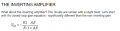
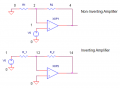
Confusion closed-loop gain equation inverting amplifier
- Thread starter hoyyoth
- Start date


| Thread starter | Similar threads | Forum | Replies | Date |
|---|---|---|---|---|

|
Confusion with loop currents to find Norton current | Homework Help | 2 | |

|
DMM count confusion | Test & Measurement | 6 | |
| F | PCB layout for oscillator - separated GND plane confusion | PCB Layout , EDA & Simulations | 49 | |
| I | BLDC Driver circuit confusion | General Electronics Chat | 5 | |
| C | Fuse Layout confusion | Power Electronics | 4 |