Conduction emission test failure

Thread Starter

Aamir7264

Joined Apr 10, 2024
10
I am facing the CE failure issue in one of my design.
Major components: SCR, MOSFET, Controller.
Project: Timer based product.
Working: Initially the SCR in OFF condition for 1 milli second means controller gives the high signal to the base of NPN when the set timing has been complete from the controller afterwards SCR has been ON and will be on condition(for rest of 9 milli second) until zero crossing detect.
By turning ON/ OFF the SCR resulting to create the unwanted harmonics causing it failing in the CE test.
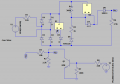
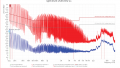
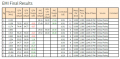
CE test results attached and schematics attached below.
SCR part number: TS420-600
MOSFET part number: 4NK80ZT4 DPAK
1722832861100.png
1722833764550.png
 

Attachments

Thread Starter

Aamir7264

Joined Apr 10, 2024
10
I am facing the CE failure issue in one of my design.
Major components: SCR, MOSFET, Controller.
Project: Timer based product.
Working: Initially the SCR in OFF condition for 1 milli second means controller gives the high signal to the base of NPN when the set timing has been complete from the controller afterwards SCR has been ON and will be on condition(for rest of 9 milli second) until zero crossing detect.
By turning ON/ OFF the SCR resulting to create the unwanted harmonics causing it failing in the CE test.
CE test results attached and schematics attached below.
SCR part number: TS420-600
MOSFET part number: 4NK80ZT4 DPAK

View attachment 328584
View attachment 328585
Hi guys
Could you please help me in the above mentioned Issue.
 

seanstevens

Joined Sep 22, 2009
323
Your spectrum overview is a bit confusing and difficult to read. I presume your QP is the blue graph which gives you 2 incursion points below 200kHz, and the red is your Peak Positive?
I have no idea of the current consumption of your device but I would suggest you use a common mode choke on your mains input lines to remove most of the low-frequency noise. The choke should be rated appropriately for the current consumption.
Common mode chokes are more effective than a simple LC low pass filter.
 

Thread Starter

Aamir7264

Joined Apr 10, 2024
10
Your spectrum overview is a bit confusing and difficult to read. I presume your QP is the blue graph which gives you 2 incursion points below 200kHz, and the red is your Peak Positive?
I have no idea of the current consumption of your device but I would suggest you use a common mode choke on your mains input lines to remove most of the low-frequency noise. The choke should be rated appropriately for the current consumption.
Common mode chokes are more effective than a simple LC low pass filter.

The device's current consumption is 700mA due to the use of the SCR.

At this stage of testing, we are unable to modify the design or make any changes to the PCB. If you have any better options or suggestions, please let us know.
 

Ian0

Joined Aug 7, 2020
13,097
At this stage of testing, we are unable to modify the design or make any changes to the PCB.
That's going to make life difficult.

What exactly does the device do?
Does it pass the harmonic current regulations?
 
Last edited:

Ian0

Joined Aug 7, 2020
13,097
Your spectrum overview is a bit confusing and difficult to read. I presume your QP is the blue graph which gives you 2 incursion points below 200kHz, and the red is your Peak Positive?
I have no idea of the current consumption of your device but I would suggest you use a common mode choke on your mains input lines to remove most of the low-frequency noise. The choke should be rated appropriately for the current consumption.
Common mode chokes are more effective than a simple LC low pass filter.
Quasi-peak is red, and the red limit line applies to quasi-peak.
Average is blue and the blue limit line applies.
Quasi-peak is always more than average.
 

seanstevens

Joined Sep 22, 2009
323
@Ian0
I know, I can see a couple of clear peaks above the limit line between 150-200KHz, then one line at around 4 that I cant see where it ends and a couple around 16-18MHz and they are below the limit lines...
 

Hymie

Joined Mar 30, 2018
1,347
The circuit seems a strange design to achieve a low voltage from the rectified mains.

If the circuit is drawing 700mA from the 240V~ source, then resistor R1 is dissipating over 150W.
 
Top