Colpitts oscillator

Thread Starter

Ramen8

Joined May 12, 2025
5
Hello everyone,

I’m working on designing a 12 GHz Colpitts oscillator using a BFP720 transistor in a common-emitter configuration. I’ve spent the last two months trying various, but I’m still encountering issues.

I’d really appreciate if someone with experience in microwave oscillator design could mentor me through the project—reviewing.

I’m confused about the role of the K-factor in transistors.

At low frequencies, I know the transistor must be unconditionally stable so it doesn’t oscillate at any unwanted frequency.
At microwave frequencies, however, I’ve heard that you need K < 1 to make an oscillator work.
 
Last edited by a moderator:

DickCappels

Joined Aug 21, 2008
10,661
Please post your existing circuit and describe the issues you are encountering. You will almost certainly receive help once we understand what you are doing in a little bit more detail.

Are you using microwave techniques?
Do you have any related prior microwave experience?
 

Thread Starter

Ramen8

Joined May 12, 2025
5
Hi, thank you for your response. This is my first time posting on a forum, so I apologize in advance if I make any mistakes.


Before I introduce the schematic and the specific issues, I’d like to clarify the theoretical background of my question. I’m trying to apply the negative resistance method to my circuit, and to do so, I need a solid understanding of the Rollet stability factor, K.


As far as I understand, a Colpitts oscillator uses a transistor that compensates for the losses in the tank circuit. The oscillation is sustained by the charge and discharge cycles of the tank components. However, at RF and microwave frequencies, it seems that the transistor must be unstable at the oscillation frequency for the oscillator to work, meaning the K factor should be less than 1.


Is this correct, or am I misunderstanding something? How can this apparent difference be explained?


I’m still a beginner when it comes to RF and microwave electronics, so I really appreciate any guidance.


I’m also quite frustrated because I haven’t found much literature or reliable resources on Colpitts oscillators at microwave frequencies. Due to the presence of internal feedback, it seems that much of the classical theory involving input and output reflection coefficients (IMN and OMN) doesn’t directly apply, or at least becomes very hard to use effectively. I'm struggling to frame the problem correctly, and any insight would be extremely helpful.
 

Danko

Joined Nov 22, 2017
2,135
Journal of Modeling & Simulation in Electrical & Electronics Engineering (MSEEE)
Volume 2, Number 1, May 2022, page 37
Hamed Nimehvari Varcheh and Pejman Rezaei
"Low Phase Noise X-band Dielectric Resonator Oscillator"
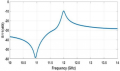
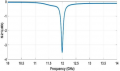
1747045265462.png ___1747045311321.png
 
Last edited:

Thread Starter

Ramen8

Joined May 12, 2025
5
Journal of Modeling & Simulation in Electrical & Electronics Engineering (MSEEE)
Volume 2, Number 1, May 2022, page 37
Hamed Nimehvari Varcheh and Pejman Rezaei
"Low Phase Noise X-band Dielectric Resonator Oscillator"
View attachment 349027 ___View attachment 349028
Thank you, but this isn't what I'm looking for. First of all, I need something that introduces me to the theory behind microwave Colpitts oscillator design. I've read Vendelin, but that theory seemed unhelpful. At 11 GHz, I believe parasitics become critical, so I need to understand how to carry out a practical design in AWR
 
Top