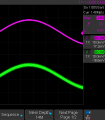
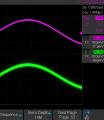
Clean 100mV signal

Thread Starter

SamR

Joined Mar 19, 2019
5,491
Starting at the outer most circumference around the test bench and working your way in is like mapping with a sniffer.
When the major gremlins have been eliminated the more local nearby noise will stand out. Effective grounding rods usually make a difference. If necessary you can try driving a few rebars as temporary grounds when mitigating so the screening will be more effective.
My portable battery-powered pocket scope died and will take 3 months to replace so I'm out of the "sniffer" business ATM. I actually have 4 10' copper clad 5/8" ground rods here. One for the panel, one grounding the metal roof and foil clad foam sheathing under the outside siding so I kinda live in a Faraday box already which makes cell phone reception in the house (unless in front of a window) nonexistent most of the time, and 2 others outside bedroom windows for counterpoise to dipole antennas and earth grounding HF gear. About the only thing I haven't done is install grounded copper screening for the window or wear tinfoil hats. :rolleyes:
 

Thread Starter

SamR

Joined Mar 19, 2019
5,491
The two wires coming from the sig gen would consist of one 'hot' wire (with the signal) and a 'ground' wire. This 'ground' wire from the sig gen must end up on the ground of the scope.

The impulse noise seen with the 12" antenna is significantly less than seen when hooked to the sig gen, and that is why I suspect you do not have a good ground to the sig gen.
The sig gen is ungrounded and isolated as it is fed by a linear wall-wart power supply so the coax shield on the BNC connected coax is only grounded by the scope ground. I am actually surprised that the signal coming from it is as clean as it is when directly connected with coax to the scope. I suspected it as a noise source but when I wanded around it there was no noise. There is a computer monitor above it but the monitor is very quiet and will only deviate the baseline noise @ 10nS with the wand within an inch or 2 of it.
 

Ylli

Joined Nov 13, 2015
1,092
Just for clarity, when I say "ground", I am not referring to earth ground or even power line ground. I am referring to a common connection between the generator and the scope.
 

Thread Starter

SamR

Joined Mar 19, 2019
5,491
Yes, I always connect the virtual grounds when they exist. I just ran into a problem with an audio amp experiment where I had the virtual grounds connected but the chips required ground referenced inputs to earth ground and not having it was causing problems until I corrected it.
 

Thread Starter

SamR

Joined Mar 19, 2019
5,491
My patch cords for the Faraday Box came in today and here is what I am seeing now. Sig Gen is set for 30mV @ 50Hz.
1605918429870.png
Huge difference from before and even taking the input signal down to 10mV the scope is only showing 0.2mV of noise/ripple. Still don't know where the noise is coming from but this I can work with even though it is a PITA to set the box up.
 

tautech

Joined Oct 8, 2019
498
IMHO you have a SMPS EMI/RFI issue as a few posts have pointed out.

For shits and giggles and now with a moment spare time here is a couple of screenshots of a 20mV p-p sinewave from a 2ch AWG with channels in Copy/duplicate mode.
Ch 2 is direct BNC connection while ch4 is via a breakout and into BNC to croc leads connected to the scope.
Ch4 is always displaying more noise however with overhead LED downlights ON you can clearly see the additional noise their SMPS PSU's create. As expected zero impact on the direct BNC connection. In this case the LED power supplies are a good 2m above the scope and AWG.No SMPS.pngSMPS Lighting noise.png
 

Thread Starter

SamR

Joined Mar 19, 2019
5,491
I don't know what you have to deal with there but incandescents are pretty much outlawed here except for a few "artisan" bulbs. Replacement fluorescent bulbs were popular for a while but have mostly been replaced by LED. Either way, we will be plagued by switching noise from now on unless some builds a better mousetrap bulb.
 

Audioguru again

Joined Oct 21, 2019
6,826
The problem with the interference shown on the 'scope is that the "mini-grabbers" are just ordinary wires and are not shielded.
The other problems with interference was caused by the Mickey Mouse solderless breadboard with its many long unshielded wires and many unshielded rows of contacts all over the place.

There is no interference from the signal generator because the cable is shielded with nothing acting like an antenna.
 

Thread Starter

SamR

Joined Mar 19, 2019
5,491
There was no board used in the first noisy scope shot. The sig gen coax cable with a grabber was clipped directly onto the scope probe with their grounds connected grounding the sig gen coax shield. There was a breadboard used inside the Faraday Box on the last clean scope shot. That was the input to an OpAmp noninverting AC amplifier on a breadboard inside the box. The sig gen BNC connector on the box is grounded which grounded the coax shield on the coax jumper from the sig gen to the box. Inside the box was grounded shield coax to a header pin to insert into the breadboard at the signal input pin on the OpAmp plugged into the breadboard. I did not show the output shot as they are typically clean after going through an OpAmp. One thing I have learned is to get a clean input signal is to put it through an OpAmp voltage follower buffer and it will remove the noise except any generated by the OpAmp itself.
 

Audioguru again

Joined Oct 21, 2019
6,826
An opamp follower buffer removes noise because its output impedance is very low and it can drive an unshielded wire without the wire picking up interference.
 
Top