Facebook
 Google
 GitHub
 Linkedin
The PT4115 you chose looks like a good choice.
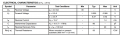
The PT4115 datasheet, page 13, provides information on diode D selection. It is a Schottky diode that should be compatible with the LED operating conditions. The maximum LED operating conditions we find in the LED datasheet are: https://www.ledsupply.com/content/pdf/XLampXML_Color.pdf
From the PT4115 and LED datasheet I derive these diode parameters:
Type: Schottky
Package SMD
Vr >> 6V (DC reverse voltage)
IO >> 1.2A (average rectified current)
Capacitance <?
Searching at Digikey I zeroed in on the onsemi SS3003CH-TL-W with these specs:
https://www.onsemi.com/download/data-sheet/pdf/ss3003ch-d.pdf
Type: Schottky
Package SOT-23-6
Vr >> 30V (DC reverse voltage)
IO >> 3A (average rectified current)
Capacitance 880 pF
PT4115 Datasheet page 13, Diode selection For maximum efficiency and performance, the rectifier (D1) should be a fast low capacitance Schottky diode with low reverse leakage at the maximum operating voltage and temperature. They also provide better efficiency than silicon diodes, due to a combination of lower forward voltage and reduced recovery time. It is important to select parts with a peak current rating above the peak coil current and a continuous current rating higher than the maximum output load current. It is very important to consider the reverse leakage of the diode when operating above 85°C. Excess leakage will increase the power dissipation in the device and if close to the load may create a thermal runaway condition.
LED SPECS
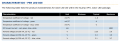
PT4115 SPECS
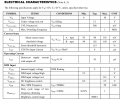
DIODE SPECS
The PT4115 datasheet, page 13, provides information on diode D selection. It is a Schottky diode that should be compatible with the LED operating conditions. The maximum LED operating conditions we find in the LED datasheet are: https://www.ledsupply.com/content/pdf/XLampXML_Color.pdf
From the PT4115 and LED datasheet I derive these diode parameters:
Type: Schottky
Package SMD
Vr >> 6V (DC reverse voltage)
IO >> 1.2A (average rectified current)
Capacitance <?
Searching at Digikey I zeroed in on the onsemi SS3003CH-TL-W with these specs:
https://www.onsemi.com/download/data-sheet/pdf/ss3003ch-d.pdf
Type: Schottky
Package SOT-23-6
Vr >> 30V (DC reverse voltage)
IO >> 3A (average rectified current)
Capacitance 880 pF
PT4115 Datasheet page 13, Diode selection For maximum efficiency and performance, the rectifier (D1) should be a fast low capacitance Schottky diode with low reverse leakage at the maximum operating voltage and temperature. They also provide better efficiency than silicon diodes, due to a combination of lower forward voltage and reduced recovery time. It is important to select parts with a peak current rating above the peak coil current and a continuous current rating higher than the maximum output load current. It is very important to consider the reverse leakage of the diode when operating above 85°C. Excess leakage will increase the power dissipation in the device and if close to the load may create a thermal runaway condition.
LED SPECS
PT4115 SPECS
DIODE SPECS