I fixed my power supply by changing all tl081cp, r1 r2 r3, d5 d6 d7 d8 now everything is working. I replaced r1 r2 r3 with more powerfull resistors that were mentioned in the parts list.
That's great! Happy you solved yours. Unfortunately, when I tried to desolder my resistors, zener and 4148 diodes, I managed to mess up the board.
I have a really bad soldering iron, it's not adjustable and I think that the heating element in it is done.
Anyway, I ordered a new board and as I have also bought new resistors with higher wattage rating, I plan to install those on the board. May I ask, how much AC volts are you feeding the board with?
That's great! Happy you solved yours. Unfortunately, when I tried to desolder my resistors, zener and 4148 diodes, I managed to mess up the board.
I have a really bad soldering iron, it's not adjustable and I think that the heating element in it is done.
Anyway, I ordered a new board and as I have also bought new resistors with higher wattage rating, I plan to install those on the board. May I ask, how much AC volts are you feeding the board with?
I am using some random small 22v transformer for testing and i want to use a bigger transformer that i found in my parts bin but its 28v so i need to look into how to lower ac voltage, if anybody knows most efficient way to lower ac from 28v to 24v pls help.
When your input voltage is to high.
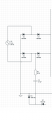
You can have a look in the blog page that you posted, there is a zener (D13) in the opamp lines:
He also added a meter in the schematic in that blog page.
In that schematic there is one mistake, the 82 Ohms resistor should be on the AC input and not on the capacitor C1.
I'm having the same problem. My transformer is spitting out 27,2V (that's how much I'm getting on my multimeter), so I would say it's something around 30-ish Volts peak-to-peak? Apparently, this power supply does not like that. Bertus, I'm not sure, but don't that negative voltage from Zeners works only with DC? I would also like to know if there's any other way except rewinding the secondary of the transformer to regulate the AC output so we get 24V out?
Hello Bertus what about the other question Murzig asked how could we lower our transformer voltages from about 28v to 24v witouth rewinding secondary coil.
Yep, I witnessed that in my first assembly. Now, I do have this 24V or 27,2V Rms V transformer and I would really like to use it with this pcb, any way to do it? I believe Bertus tried to explain it to me, but I just don't get it...
Look at it this way...
AC voltage is measured as "Root Mean Squared" or RMS.
The RMS value has the same heating power as the corresponding DC voltage.
So if you have a resistor and apply 100V DC to it, there will be a certain amount of heat produced.
Applying "100VAC" will heat it up the same.
BUT, as AC is not a constant value, but typically a sine wave, part of the time the voltage is lower than 100V, even going to zero twice per cycle. Therefore, to make up for this lower voltage at times, the peak voltage is higher so the total "power" is the same as a steady DC voltage.
That means the peak voltage is quite a bit higher than the 100V. And for a sine wave, the relationship is RSM voltage x 1.414 = peak voltage.
Is that clear as mud?
That's a great way to explain it!
And, of course there's a but here...
Both, SpeedMaster57 and myself here have a problem that the board, or better said the components on it won't be able to handle those 27,2V Rms of AC how much our transformers are spitting out. I'm not actually worried about Lm7812 or LM7524 on the board. Or, am I missing something here?

 Facebook
 Google
 GitHub
 Linkedin


 Happy you solved yours. Unfortunately, when I tried to desolder my resistors, zener and 4148 diodes, I managed to mess up the board.