Charging a metal plate

Status
Not open for further replies.

Danko

Joined Nov 22, 2017
2,169
I would like to ideally have the metal plate retain its 20v charge when I disconnect the 9v battery. Of course, there will be some leakage and over time the plate will lose its charge, but hopefully it can retain charge for at least like a few hours using this method. At least that's my goal. Any help is appreciated.
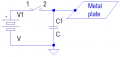
To solve your problem, use capacitor:
1658224392471.png
 

Thread Starter

icydash

Joined Jan 14, 2009
148
To solve your problem, use capacitor:
View attachment 271768
Thanks! Can you explain what the capacitor is doing in this scenario? It looks like the plate and the capacitor both charge up when the switch is closed, and then when the switch is open, the cap continues to charge the plate. This allows the system to continue to work for a while after the plate has been disconnected from the battery. Is that right?

That might work, but essentially I'm switching out one charging source for another charging source. I was hoping to get rid of the charging source all together, once the battery is disconnected. Kind of like how your body maintains static electricity until you touch a doorknob, and then you get a shock.
 
Last edited:

Thread Starter

icydash

Joined Jan 14, 2009
148
I doubt that would make any difference, given the conductance of any impurities in the rubber. Also, how would dust particles reach the plate?
I don't need the dust to actually contact the plate, just be attracted to the plate and pulled in it's direction. So if the dust ended up stuck to the outer rubber layer that would be fine.
 

Danko

Joined Nov 22, 2017
2,169
That might work, but essentially I'm switching out one charging source for another charger source.
How long you will live without access to air? The same.
I was hoping to get rid of the charging source all together. Kind of like how your body maintains static electricity until you touch a doorknob, and then you get a shock.
You are mechanical generator (source) of static electricity yourself. So it can not work without source.

ADDED:
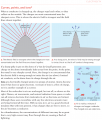
Use electret plate instead of metal plate. It will work forever without outer voltage source.
1658227266552.png
 
Last edited:

Ya’akov

Joined Jan 27, 2019
10,240
As mentioned above, it would be practical for a different project that's not an air filter. Let's not get too hung up on the practicality of it for an air filter. That was just one idea of how the tech could be applied. Any ideas on how to retain the charge for a little while, say an hour? Is that even possible?
You are going to need to explain what you are actually trying to do if you want useful help. An old adage in the computer business is GIGO (Garbage In Garbage Out). Your results are only as good as the dara.

Right now you are giving us pretend use cases to coax information out, but that’s not going to work.

What problem are you trying to solve? I mean the real, complete problem you are trying to solve with this idea. If there is any practical application to your problem, we can certainly help.
 

Thread Starter

icydash

Joined Jan 14, 2009
148
You are going to need to explain what you are actually trying to do if you want useful help. An old adage in the computer business is GIGO (Garbage In Garbage Out). Your results are only as good as the dara.

Right now you are giving us pretend use cases to coax information out, but that’s not going to work.

What problem are you trying to solve? I mean the real, complete problem you are trying to solve with this idea. If there is any practical application to your problem, we can certainly help.
I don't understand why any other information than what has already been provided is needed. The goal is to charge a metal plate to so that it has sufficient negative charge to attract dust particles in the air (say, within 1 foot of the metal plate), while being able to retain that charge for as long as possible when I remove the battery. The size and shape of the plate have been given already, but can be adjusted as needed, as can the voltage. That's the engineering problem. If people need more details to solve that specific engineering problem, I'm happy to provide them. But no other additional context is really needed.

As an aside, it is a really bad idea for people to disclose what they're working on in full on a public forum like this. In almost every country throughout the world, publicly disclosing an invention (including how it's made) on a public forum, before a patent application has been filed, is an absolute bar to obtaining patent protection, or it at least starts a very short clock for filing a patent application. Not to mention that someone could just steal your idea, file a patent application before you, and obtain a patent that precludes you from practicing your own invention.
 
Last edited:

nsaspook

Joined Aug 27, 2009
16,330
I don't understand why any other information than what has already been provided is needed. The goal is to charge a metal plate to so that it has sufficient negative charge to attract dust particles in the air (say, within 1 foot of the metal plate), while being able to retain that charge for as long as possible when I remove the battery. The size and shape of the plate have been given already, but can be adjusted as needed, as can the voltage. That's the engineering problem. If people need more details to solve that specific engineering problem, I'm happy to provide them. But no other additional context is really needed.

As an aside, it is a really bad idea for people to disclose what they're working on in full on a public forum like this. In almost every country throughout the world, publicly disclosing an invention (including how it's made) on a public forum, before a patent application has been filed, is an absolute bar to obtaining patent protection, or it at least starts a very short clock for filing a patent application. Not to mention that someone could just steal your idea, file a patent application before you, and obtain a patent that precludes you from practicing your own invention.
Charge monitor plates have been used to analyze particle/ESD counter-measures (ionizer bars, etc ...) for decades. It's unlikely someone will steal your idea. :rolleyes:

https://staticclean.com/product/statiron-dp-charge-plate-monitor/
https://www.esdcheck.com/default.aspx
https://www.esdproducts.biz/products/instrumentation/chargeplate/model-288b-charge-plate-monitor/
 

Thread Starter

icydash

Joined Jan 14, 2009
148
Charge monitor plates have been used to analyze particle/ESD counter-measures (ionizer bars, etc ...) for decades. It's unlikely someone will steal your idea. :rolleyes:

https://staticclean.com/product/statiron-dp-charge-plate-monitor/
https://www.esdcheck.com/default.aspx
https://www.esdproducts.biz/products/instrumentation/chargeplate/model-288b-charge-plate-monitor/
Why risk it? If giving out more details is somehow necessary to solving the engineering problem, I would do so. If people need more information or have specific questions, they can ask and I'm happy to answer. Otherwise, I think the engineering problem to be solved has been pretty clearly laid out.
 

Thread Starter

icydash

Joined Jan 14, 2009
148
How long you will live without access to air? The same.

You are mechanical generator (source) of static electricity yourself. So it can not work without source.

ADDED:
Use electret plate instead of metal plate. It will work forever without outer voltage source.
View attachment 271769
Thanks very much. I'm actually very interested in electrets and have looked into them, but I can't find anywhere to purchase one. If I could just purchase a 2- ft long sheet of a flexible electric material, that would probably work. But something like that doesn't appear to be readily available.
 

Danko

Joined Nov 22, 2017
2,169

Attachments

Last edited:

Thread Starter

icydash

Joined Jan 14, 2009
148
Thanks very much. The quantities of electret for sale on Alibaba are unfortunately too large for me, and the sellers don't give much information about their level of charge. I don't know how to tell if they have enough charge for my application. And I think it's beyond my skill set to make one myself. I'm thinking the electrical approach may be better because I can control the charge level with finer granularity.

Edit: Going back to your original idea where you insert the capacitor, how big a capacitor do you think I would need to get like an hour or two of life out of the system? Can you think of a way to add in an LED that will light up when the system is fully charged?
 
Last edited:

Danko

Joined Nov 22, 2017
2,169
how big a capacitor do you think I would need to get like an hour or two of life out of the system?
You need to know plate voltage PV1 at time 0h, desired PV2 at time 2h and leakage resistance R_L.
Then you can calculate value of capacitor.
See https://www.electronics-tutorials.ws/rc/rc_2.html

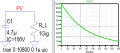
For example, voltage PV on capacitor 4.7 μF, charged up to 100 V, decreases to 46.5 V at 1 hour time
and decreases to 21.6 V at 2 hours with leakage resistance 1 GΩ:

1658349465589.png1658349718661.png

Can you think of a way to add in an LED that will light up when the system is fully charged?
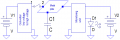
You can use monitoring unit, like that:
https://www.researchgate.net/profil...rement-of-Electrical-Currents-Below-10-pA.pdf

circuit.png
 
Last edited:

Thread Starter

icydash

Joined Jan 14, 2009
148
You need to know plate voltage PV1 at time 0h, desired PV2 at time 2h and leakage resistance R_L.
Then you can calculate value of capacitor.
See https://www.electronics-tutorials.ws/rc/rc_2.html

For example, voltage PV on capacitor 4.7 μF, charged up to 100 V, decreases to 46.5 V at 1 hour time
and decreases to 21.6 V at 2 hours with leakage resistance 1 GΩ:

View attachment 271893View attachment 271894


You can use monitoring unit, like that:
https://www.researchgate.net/profil...rement-of-Electrical-Currents-Below-10-pA.pdf

View attachment 271891
In the above schematic, the additional capacitor (to store charge when the battery is disconnected) would be between the converter and the metal plate, correct? (like the positive terminal would be there and the negative terminal would be tied to ground).

It seems like the monitoring unit would have to have a super high input impedance to prevent all the charge from dissipating from the metal plate as soon as you turn it on.

For the t0 charge I'm thinking around 20kV, based on prior replies from other users on this thread. My converter will probably be 5v to 20kV.
 

Danko

Joined Nov 22, 2017
2,169
In the above schematic, the additional capacitor (to store charge when the battery is disconnected) would be between the converter and the metal plate, correct? (like the positive terminal would be there and the negative terminal would be tied to ground).
You are right. Now capacitor is added to circuit.
It seems like the monitoring unit would have to have a super high input impedance to prevent all the charge from dissipating from the metal plate as soon as you turn it on.
You can use simple vibrating strip of metal foil (reed) placed next to plate and connected to input of amplifier.
It does not take energy from plate's charge, but placed in static electrical field converts mechanical energy to AC voltage,
which is proportional to plate's voltage.
Video in attachment shows how it works. Screwdriver contains transistor, resistor, LED and 3 V battery.
 

Attachments

Last edited:

ScottWang

Joined Aug 23, 2012
7,501
DickCappels already mentioned the safety issue in #14.

And the voltages from 20V in post #1 jump up to 20KV in #12 which was multiple 1000 times.

Please tell us what you really want to do, and a little proof that you have enough knowledge and skill to handle 20KV, if you are ready then please click the "report" button on the left side of the bottom.
 
Status
Not open for further replies.
Top