Facebook
 Google
 GitHub
 Linkedin
Hi.
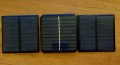
I am trying to "convince" a 5 V/140 mA solar panel to charge a 7.2 V 1300 mAh NiMh battery, even in poor light.
I think the best way is to convert the output of the solar panel to a constant current of ~ 0.2C = 260 mA.
Perhaps by storing the energy in a capacitor; when the voltage hits a certain level, it is discharged into the battery.
The circuit have to be very power efficient, even when the solar panel gets poor light.
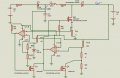
This is what I've done so far:

B1 and R8 simulate the solar panel. C1 is the "buffer" (multi-layer ceramic). R2 is the internal resistance of L1. B2 is the battery to be charged.
So far the energy is transmitted in pulses/bursts.
But the battery docs say "constant current".
So the battery might not "like" it...

Any idea on how to improve it?
Thank you.
I am trying to "convince" a 5 V/140 mA solar panel to charge a 7.2 V 1300 mAh NiMh battery, even in poor light.
I think the best way is to convert the output of the solar panel to a constant current of ~ 0.2C = 260 mA.
Perhaps by storing the energy in a capacitor; when the voltage hits a certain level, it is discharged into the battery.
The circuit have to be very power efficient, even when the solar panel gets poor light.
This is what I've done so far:
B1 and R8 simulate the solar panel. C1 is the "buffer" (multi-layer ceramic). R2 is the internal resistance of L1. B2 is the battery to be charged.
So far the energy is transmitted in pulses/bursts.
But the battery docs say "constant current".
So the battery might not "like" it...
Any idea on how to improve it?
Thank you.