Challenge: Easy and Cheap Pulse EDM

EdmGuru

Joined Aug 21, 2018
47
Hi shortbus I'm glad to hear your doing ok, I still wake up breathing so that's always a good sign lol.
His designs use a small gear motor, with them there is no real control so they spend a lot of time shorting out and then retracting. A stepper motor can be set to only advance a small amount and not short out the burn. Each time it shorts out it leaves a slight mark in the finish.
I hate to disagree with you here as both types of motor can use the same voltage feedback control method to monitor the z axis position and therefore both types are as good as each other but a stepper motor will probably last longer than a brushed DC motor. I don't know if you've seen my latest video on YT testing the new design mosfet power generator but that test machine is the original Easy-Peasy machine that I built back in 2017 and it still works great with just as stable a "burn" as my stepper motor version of EDM which is surprising considering it's just a couple of cheap XY slide tables from China mounted on an old drill stand.
Cheers.
 

Thread Starter

Bogos87

Joined Oct 25, 2023
36
I
Hi shortbus I'm glad to hear your doing ok, I still wake up breathing so that's always a good sign lol.

I hate to disagree with you here as both types of motor can use the same voltage feedback control method to monitor the z axis position and therefore both types are as good as each other but a stepper motor will probably last longer than a brushed DC motor. I don't know if you've seen my latest video on YT testing the new design mosfet power generator but that test machine is the original Easy-Peasy machine that I built back in 2017 and it still works great with just as stable a "burn" as my stepper motor version of EDM which is surprising considering it's just a couple of cheap XY slide tables from China mounted on an old drill stand.
Cheers.

Interesting!
 

EdmGuru

Joined Aug 21, 2018
47
Hi Bogos87
It's just a pulsed RC power generator I'm afraid which is designed for fast cutting or high metal removal rate for a wire EDM so it won't do what you require for your project as there's no real low current limiting function required for small electrodes and to give a good surface finish also the electrode wear rate will be high so you'll need multiple electrodes to erode just one cavity which is ok if you can produce them easily and accurately but then there's the problem of positioning each electrode in exactly the same place repeatedly which may be a problem on a homemade machine.
I've worked on EDM machines all my working life since the 70's and I know their design limitations and yes a pulsed RC machine will work and is fast at removing metal but the main down side is the high electrode wear rate. A pulse EDM has more control over the electrode wear rate because it's a true DC square wave pulse in the KHz range where as a pulsed RC EDM has a capacitor discharge waveform in the MHz range that is pulsed at a lower frequency in the KHz range and it's the very high frequency that is responsible for the higher metal removal rate and also the higher electrode wear rate. An isopulse EDM to my mind is the middle ground of both machine designs as it has power limiting function by using high power output resistors combined with a clever way of prolonging the burn frequency by injecting a small additional pulse on the falling edge of the output pulse rate at certain times dictated by a current feedback circuit or similar. This acts like having an automatic or a variable pulse frequency/ duty cycle of sorts which gives better metal removal rates than a pulse EDM with lower electrode wear rates than an RC EDM but not as good as a pulse EDM because by increasing the pulse frequency on demand you increase the electrode wear rate so to me it's middle ground in performance but it depends mainly on the type of work you produce on it. Some EDM operators prefer one type over the other but for me a true pulse EDM is the easiest way to go.
 

Attachments

shortbus

Joined Sep 30, 2009
10,050
I hate to disagree with you here as both types of motor can use the same voltage feedback control method to monitor the z axis position
You seem to have missed or I didn't explain good enough why I don't like a gear motor for the Z. With the stepper motor when it needs to reverse it does so, with a gear motor the motor its self may revers but before it moves the Z it has to take up all of the clearance in the gear train before moving the Z up. Any of the videos I've watched the electrode seems to do a hard short when a gear motor reverses. Then you also have better/finer movement control with the stepper motor, it by adjusting the motor driver frequency will make a smaller movement, more in tune with the stock removal rate. But that's just my opinions.

An isopulse EDM to my mind is the middle ground of both machine designs as it has power limiting function by using high power output resistors combined with a clever way of prolonging the burn frequency by injecting a small additional pulse on the falling edge of the output pulse rate at certain times dictated by a current feedback circuit or similar.
That isn't how a Charmilles tech explained isopulse to me. With isopulse a cap or caps is charged up and then a single mosfet allows that amount off energy and only that amount into the work. There is a comparator that when the correct operator set voltage is reached in the discharge the mosfet turns off, and the cap/caps charge again, until another operator set voltage occurs on the charge comparator. The charge and discharge comparators control both the energy and frequency of the burn, which is why it was named isopulse, each pulse is isolated from the next. Which is why it is the pulse type of choice on a CNC EDM machine. Or that's how it was explained to me. I don't think the Charmilles tech liked to see me coming toward him when he was in the shop, I asked too many questions. :)
 

shortbus

Joined Sep 30, 2009
10,050
BTW anybody with a BOOK for pulse edm by Ben Fleming? I have RC version btw.
I have first editions of both of his books. The other problem with Ben's books was he changed his ideas too much between book editions. When he had the forum for the RC book builds it was a problem because guys with a later edition were asking about things not in an earlier edition. I see the pulse book for sale on Ebay from time to time.
 

shortbus

Joined Sep 30, 2009
10,050
@Bogos87, I searched through my computer today and must have deleted all of the information I made for adding a stepper to Ben's pulse design. I did a clean out last winter on old files but thought I saved that one, sorry.
 

Thread Starter

Bogos87

Joined Oct 25, 2023
36
@Bogos87, I searched through my computer today and must have deleted all of the information I made for adding a stepper to Ben's pulse design. I did a clean out last winter on old files but thought I saved that one, sorry.
No worries, I think the closest to what I'm looking for is a pulse EDM by Ben Fleming. I'll try to find a .pdf book.
Also, I'm still open for @EdmGuru 's version, if you decide to share/sell a detailed, easy-for-beginner-to-follow instructions/ PCB, I'm looking forward to it.
 

EdmGuru

Joined Aug 21, 2018
47
Hi all. You’ll like this.
I’ve been having a look online about the various designs of EDM generator and I always thought that there were only few different design versions possible but apparently there are more than thirteen different designs of generator!
Here’s a list of types that I’ve found.
NOTE:
DEDM- Die-sinking EDM. WEDM- Wire EDM. TEWR- Tool Electrode Wear Ratio.
AVP- Adaptive Voltage Positioning. ERS- Energy Recovery Scheme.
EPG- EDM Pulse Generator. MRR- Metal Removal Rate.

T1 RC pulse generator. No active devices are used, hence this is easy to implement. Consequently there is no control over the vo, io, Dm, and Tm. It relies on resistance to limit io.

T2 Transistorised pulse generator with a single switch Dm and Tm can be controlled by means of active PE switches. Otherwise, it is similar to T1.

T3 Transistorised pulse generator with multiple switches. Similar to T2. The current capability is increased with the use of multiple transistors. Here, tOFF and a number of transistors used at a time are controlled to avoid wire breakage in WEDM. Hence, this is suitable for WEDM. However, it uses resistances to limit the current and hence efficiency is poor.

T4 Interleaved buck converter with ERS. Ripple in io can be reduced with interleaving. Efficiency is quite on the higher side due to ERS.

T5 H-bridge like EPG. No explicit L and C are used as filter elements, however, it relies on L and C of the electrodes. MRR is improved by keeping the ratio tOFF/tON as low as possible. Therefore, it is more suitable for DEDM.

T6 EPG with interfacing circuit. Discharge current always starts from zero, which results in low TEWR. Hence it is more suitable for DEDM.

T7 EPG with a bipolar interfacing circuit. This topology is originally proposed for DEDM. As the output is bipolar, the average output voltage is zero and hence minute cracks are prevented.

T8 Pulsed power supply with AVP Control. AVP control scheme gives a smooth transition from voltage control to current control. However, the scheme is complex to implement.

T9 Dual converter with DC link- controlled RRC. RRC is controlled to achieve minimum TEWR – hence it is more suitable for DEDM. However, the control mechanism is complex and also three DC links are required.

T10 Dual converter with switching-controlled RRC.

T11 Dual converter with single DC link. Here, two converters operate on a single DC link. It was originally proposed for drilling small holes in injection nozzles. However, it is suitable for both WEDM and DEDM.

T12 HV dual converter with single DC link. This is especially suitable for EDM where gap distance is more and hence high voltage is required for spark-initiation. However, the initiation voltage is decided by the transformer turns ratio and no specific control scheme is suggested for this.

T13 Resonant converter This is originally proposed for portable on-site EDM. It is suitable for rough cutting applications where the size of the machine is a constraint.

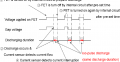
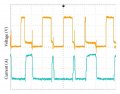
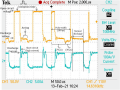
Anyway after reading up on all this I’ve slowly been drawn to the “dark side” of EDM power generator design and that’s the infamous Isopulse EDM. It seems that during the erosion process, not all high power output pulses are equal with some taking longer than others to break down or ionise the dielectric fluid and for the discharge pulse current to start due to spark gap conditions at the time. So the isopulse circuit was invented to bridge the delay gap in the output pulse with a second high power output pulse meaning that every output pulse becomes more equal in discharge time resulting in a higher metal removal rate. This second pulse is usually from a high powered RC type generator in order to “clear” the spark gap or start the “missing part” of the current discharge pulse which results in a slightly higher electrode wear rate, or so the theory goes. You can get a better idea of the problem from the following images.

Voltage-and-current-waveform-during-the-EDM-process.jpgIllustration-of-the-discharge-waveform-of-conventional-EDM.png


With this in mind I’ve thought of a way to do just this by using a dual D type flip flop ic to check the rising edge pulse time of the output pulse and the rising edge time of the discharge current pulse and if there’s a delay caused by a failure to start the discharge process then an output pulse is triggered to a second power generator in order to “fill in” the time delay so to speak. I’ll make a PCB up in Fritzing and make another mosfet type power generator to provide the missing pulse part soon. In the mean time has anyone got any thoughts on the type of isopulse this should be, maybe just an RC type or LC or even an RLC type or just a standard pulse type but at a higher voltage?
Cheers.
 

shortbus

Joined Sep 30, 2009
10,050
With this in mind I’ve thought of a way to do just this by using a dual D type flip flop ic to check the rising edge pulse time of the output pulse and the rising edge time of the discharge current pulse and if there’s a delay caused by a failure to start the discharge process then an output pulse is triggered to a second power generator in order to “fill in” the time delay so to speak. I’ll make a PCB up in Fritzing and make another mosfet type power generator to provide the missing pulse part soon. In the mean time has anyone got any thoughts on the type of isopulse this should be, maybe just an RC type or LC or even an RLC type or just a standard pulse type but at a higher voltage?
Cheers.

Hi edmguru, what your describing is similar to my circuit in the forum I posted to earlier. I used two different transformers, one as a spark starter with a single cap, that was to get the dielectric ionized and then the cutting spark would kick in after the ionization.

But I'm no electronics expert and trying to describe things to those that are experts was a head against the wall effort. Most electronics guys spent their whole life trying not to make sparks, but edm relies on sparks.
 

EdmGuru

Joined Aug 21, 2018
47
Hi shortbus. I was thinking of only using a second power generator for the isopulse part but maybe it’s better to use three generators? One for the high voltage spark ionisation starter, one for the actual spark process, and one for the isopulse to compensate for the lost current pulse time due to bad spark conditions? Any thoughts on from what type of power generator the isopulse should be?

Cheers.
 

Thread Starter

Bogos87

Joined Oct 25, 2023
36
@shortbus Thank you for the link! Please check my posts #43 and #49, I specifically ask if someone have pulse version of the book. I've read the RC version.
I'm not trying to be electric engineer, (I'm machine engineer) and I don't have time for scientific research and experiments. I'm looking for guided solution with fair quality, not perfection.
 

shortbus

Joined Sep 30, 2009
10,050
Thank you for the link! Please check my posts #43 and #49, I specifically ask if someone have pulse version of the book.
You really don't need the pulse book, a lot of it is a repeat of building the ram and the tank that's in the RC book. When you buy the circuit board from Ben you get the parts of the book that pertain to the circuit, and they will be for the board you bought, not one of the many other versions in his books, he changes them as his buying public finds faults. When you buy books from him YOU are a beta tester, you may or may not get a working edm. Look at the problems a guy on Youtube is having with his build of Ben's design, I think he goes by, my engines.
 

shortbus

Joined Sep 30, 2009
10,050
@Bogos87 If you don't need an edm beyond the pellet project look at how this guy did it with no edm -
https://www.hobby-machinist.com/threads/my-homemade-pellet-swage-tools.96464/ For the price of just the electronic components you could buy many custom made carbide cutters. Cutters that used to be called bullet cherries. And if you had a self centering vise like a for one that we had at work, made by 5axis, like the ones on this Google page - https://www.google.com/search?client=firefox-b-1-d&q=self+centering+vise You could hold on side in each jaw of the vies and cut the cavities both side at one time. Doing it like that lowers the amount/chance of chattering.

You also really don't need a hard steel. Something like P-20 would hold up over many years, that P-20 was the go to mold steel we used for plastic injection molds. We also molded rubber but used a much harder steel for that, rubber is much more abrasive.
 

Thread Starter

Bogos87

Joined Oct 25, 2023
36
@Bogos87 If you don't need an edm beyond the pellet project look at how this guy did it with no edm -
https://www.hobby-machinist.com/threads/my-homemade-pellet-swage-tools.96464/ For the price of just the electronic components you could buy many custom made carbide cutters. Cutters that used to be called bullet cherries. And if you had a self centering vise like a for one that we had at work, made by 5axis, like the ones on this Google page - https://www.google.com/search?client=firefox-b-1-d&q=self+centering+vise You could hold on side in each jaw of the vies and cut the cavities both side at one time. Doing it like that lowers the amount/chance of chattering.

You also really don't need a hard steel. Something like P-20 would hold up over many years, that P-20 was the go to mold steel we used for plastic injection molds. We also molded rubber but used a much harder steel for that, rubber is much more abrasive.

Exactly as my old idea of grounded carbide cutter, but I rejected it because of the thought that it won't work- the truth is that it might work nice and this guy proves it! Again, thank you very much @shortbus I appreciate your comprehensive help. This might be my final solution.
 

shortbus

Joined Sep 30, 2009
10,050
Hi shortbus. I was thinking of only using a second power generator for the isopulse part but maybe it’s better to use three generators? One for the high voltage spark ionisation starter, one for the actual spark process, and one for the isopulse to compensate for the lost current pulse time due to bad spark conditions? Any thoughts on from what type of power generator the isopulse should be?

Cheers.
I'm not following you on this? You don't need or want a high voltage ionizer voltage, lower is fine in fact better. It is only stimulating the ionization, not really doing anything as far as a spark. Ionization takes place before sparking, and the voltage drops from around 90VDC or a little more down to between 50VDC and 35VDC in the actual cutting. So ~60VDC will dork for stimulation of the ionization.

The actual isopulse is during cutting, if the ionization doesn't take place no spark can happen. As far as bad spark conditions good flushing eliminate most of that. You need some flush through the electrode, just pointing a flush nozzle at the burn will never get good cutting. We tried copper for trodes with very little success Because unless it was a tube for wire edm start holes the burns were very slow, because the dross would get caught in the bun pocket and short out all the time.
 

shortbus

Joined Sep 30, 2009
10,050
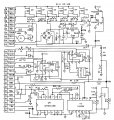
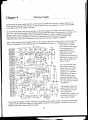
@Bogos87 I am still trying to find the schematic to change Ben's pulse machine to a stepper motor. But I did find somethings about the pulse machine. One is a cropped picture of the pulse circuit, the original one. The second is the page from the book that the crop came from, read the first sentence in the third paragraph. It tells you what I've been saying he prints a new book for each new version of the circuit. But if you buy the latest board you get the new instructions and part list.
 

Attachments

Top