Car battery frying electronics

Thread Starter

Kenthom1212

Joined Apr 19, 2023
4
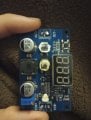
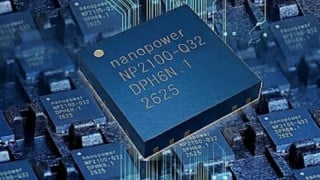
Hey, I'm building a Bluetooth speaker unit and I have everything wired on it but whenever I try to power it off of a car battery it fries my voltage booster. It take the 12v from the battery and boosts it to 34. I believe it's the inrush current but I don't know. Can anyone give me any pointers and tips or diagrams on how I can't prevent my IC from going nuclear? I believe the chip is a NCE4060K MOSFET that's burning up.
 

Attachments

Alec_t

Joined Sep 17, 2013
15,103
Welcome to AAC.
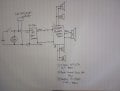
Please post a schematic/drawing showing how everything is wired; also the specifications/datasheets of the booster and speaker unit.
 

Thread Starter

Kenthom1212

Joined Apr 19, 2023
4
Power it up without the load first and see what happens.
Overpowered it up using the wall charger I made it compatible with and everything worked fine, but when I used the battery it fried. I don't want to start it up without the load because if the battery fries that board I don't have any others.
 

Ian0

Joined Aug 7, 2020
13,097
34V would suggest that it could deliver 72W into a pair of 4Ω speakers, and from the size of MOSFET and inductor that supply looks like it might not supply 72W.
 

Alec_t

Joined Sep 17, 2013
15,103
I'm guessing your booster is one like this? If so, 34V is perilously close to its rated 35V maximum! Do you trust the ratings on that booster? It's never a good idea to run things at their maximum if you want them to have a long and happy life.
 

BobTPH

Joined Jun 5, 2013
11,463
34V would suggest that it could deliver 72W into a pair of 4Ω speakers, and from the size of MOSFET and inductor that supply looks like it might not supply 72W.
I get 34^2 / 2 / 2 = 289W RMS power.

72 looks like the power into a single 8 Ohm speaker.
 

Ya’akov

Joined Jan 27, 2019
10,226
It seems most likely that your “wall charger” is inherently current limiting so it can’t produce an overcurrent situation—unlike a car battery which can produce enormous current. What may be happening is that the load can sink more current than the wall-charger-powered boost converter can provide so when you switch to an effectively infinite current source (the car battery) the load is too much for the boost converter to survive.
 

Thread Starter

Kenthom1212

Joined Apr 19, 2023
4
It seems most likely that your “wall charger” is inherently current limiting so it can’t produce an overcurrent situation—unlike a car battery which can produce enormous current. What may be happening is that the load can sink more current than the wall-charger-powered boost converter can provide so when you switch to an effectively infinite current source (the car battery) the load is too much for the boost converter to survive.
That's what I was thinking was happening, is their any way to fix this? I don't really have money to spend but I have some spare parts laying around.
 

BobTPH

Joined Jun 5, 2013
11,463
You basically have 5 4-Ohm speakers in parallel. With 34V, at peak, it needs 42.5A from your boost converter and 120A from your battery.

Mystery solved.
 
Top