Captain Obvious headlines

Thread Starter

nsaspook

Joined Aug 27, 2009
16,321
Overconfidently Conspiratorial: Conspiracy Believers are Dispositionally Overconfident and Massively Overestimate How Much Others Agree With Them

There is a pressing need to understand why people believe in conspiracies. Although past work has focused on needs and motivations, we propose an alternative driver of belief: overconfidence. Across eight studies with 4,181 U.S. adults, conspiracy believers consistently overestimated their performance on numeracy and perception tests (even after taking their actual performance into account). This relationship with overconfidence was robust in controlling for analytic thinking, the need for uniqueness, and narcissism, and it was strongest for the most fringe conspiracies. We also found that conspiracy believers—particularly overconfident ones—massively overestimated (>4×) how much others agree with them: Although conspiratorial claims were believed by a majority of participants only 12% of the time, believers thought themselves to be in the majority 93% of the time. This was evident even when asked to rate agreement among counter-partisans, indicating that conspiracists are genuinely unaware that their beliefs are on the fringe.


1753286957888.png
https://journals.sagepub.com/doi/10.1177/01461672251338358
 
Last edited:

joeyd999

Joined Jun 6, 2011
6,279
Overconfidently Conspiratorial: Conspiracy Believers are Dispositionally Overconfident and Massively Overestimate How Much Others Agree With Them

There is a pressing need to understand why people believe in conspiracies. Although past work has focused on needs and motivations, we propose an alternative driver of belief: overconfidence. Across eight studies with 4,181 U.S. adults, conspiracy believers consistently overestimated their performance on numeracy and perception tests (even after taking their actual performance into account). This relationship with overconfidence was robust in controlling for analytic thinking, the need for uniqueness, and narcissism, and it was strongest for the most fringe conspiracies. We also found that conspiracy believers—particularly overconfident ones—massively overestimated (>4×) how much others agree with them: Although conspiratorial claims were believed by a majority of participants only 12% of the time, believers thought themselves to be in the majority 93% of the time. This was evident even when asked to rate agreement among counter-partisans, indicating that conspiracists are genuinely unaware that their beliefs are on the fringe.


View attachment 353125
https://journals.sagepub.com/doi/10.1177/01461672251338358
Who could disagree with such confidentially bold text?
 

cmartinez

Joined Jan 17, 2007
8,759
Makes you wonder if you lived somewhere in Paris from where you could see the Eiffel tower and owned some surveying instruments whether you could work out the temperature.
That would only work under the assumption that the entire structure was at the same temperature. In fact, other than its height, I bet there's measurable sideways displacement at its tip too.
 

MrChips

Joined Oct 2, 2009
34,807
Makes you wonder if you lived somewhere in Paris from where you could see the Eiffel tower and owned some surveying instruments whether you could work out the temperature.
What a brilliant idea!
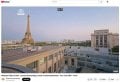
Maybe you can take measurements off a webcam.

Paris webcam.jpg


joeyd999

Joined Jun 6, 2011
6,279
Makes you wonder if you lived somewhere in Paris from where you could see the Eiffel tower and owned some surveying instruments whether you could work out the temperature.
Or, if you lived exactly the right distance away, you could only see it on hot days.
 
Top