The gate has to be a few volts negative WRT the source to control the channel width (and hence conduction).When I use a Jfet in LTspice as a capacitor multiplier, all the current goes through the gate.
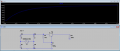
View attachment 101794
None of it goes through the drain.
Is it spice, or me that's the problem?
I tried using different "named" models but they all draw current as well.
Not with a JFET - you have to reverse bias the gate PN junction to control the channel current. Its a depletion mode semiconductor.Yeah but the capacitor multiplier is effectively a source follower, shouldn't the source be higher than the gate naturally? How could I make the gate lower here?
No, it isn't. It is an emitter follower. I don't know where you are getting these statements, but they are incorrect.Yeah but the capacitor multiplier is effectively a source follower,
No. You are equating the behavior of a depletion mode JFET to that of an enhancement mode MOSFET or an NPN bipolar transistor. None of these devices are equivalent. The circuit you started with has a bipolar transistor in it for a reason - because nothing else will work.shouldn't the source be higher than the gate naturally?
Not if the TS uses a FET it isn't.No, it isn't. It is an emitter follower. I don't know where you are getting these statements, but they are incorrect.
ak
There's no emitter in a JfetNo, it isn't. It is an emitter follower. I don't know where you are getting these statements, but they are incorrect.
LTspice is showing the source of the Jfet at a higher voltage than the gate though, at least when I use it as a pure follower.No. You are equating the behavior of a depletion mode JFET to that of an enhancement mode MOSFET or an NPN bipolar transisto
Lot's of people use mosfets it seems. For audio at least.The circuit you started with has a bipolar transistor in it for a reason - because nothing else will work.
Then LTspice is correct. Reverse biasing the gate PN junction increases the depletion region which pinches off the channel - that is the mechanism by which a JFET controls current.There's no emitter in a Jfet
LTspice is showing the source of the Jfet at a higher voltage than the gate though, at least when I use it as a pure follower.
.
True, but you are taking an isolated fact way out of context. Power MOSFETs do very well in audio power amplifier output stages because the temperature coefficient of one operational parameter is the opposite of the equivalent parameter's TC for a bipolar transistor, enabling multiple MOSFET devices in parallel to "self-level". Also, because the device physics of some FETs resemble the physics of a vacuum tube more closely than do the physics of a bipolar transistor, there is the feeling that FET circuits have a "warmer" sound. This is partly supported by the nature of the harmonics generated at the onset of clipping, and partly debunked by rigidly controlled listening tests.Lot's of people use mosfets it seems. For audio at least.
Actually I was referring specifically to capacitor multipliers. I was scanning some Diyaudio forums using search and lots of people claim that there is a significant "sound" improvement when using mosfets over transistors for the multiplier. I have no idea why that would be but I tend to trust it when many different sources claim the same thing. Especially on that forum since they laugh at "audiophoolery"True, but you are taking an isolated fact way out of context
Where would I begin? The reason I want to try to use a Jfet is because since people claim that mosfets sound better than BJTs for the multiplier, and it seems to be a common theme that people enjoy Jfets second only to tubes, a Jfet multiplier seems like a good experiment.With enough effort, a FET can be made to work as a capacitance multiplier
You have to think in terms of where the gate is relative to the source.How does a pure follower and the capacitor multiplier differ though? They both have a B+ voltage for the drain, they both have a lower-than-drain gate voltage, yet when I use a source follower in a circuit the Jfet becomes forward biased.
Technically correct, but if he uses a FET it will not work. So, is it effectively a source follower if the source doesn't follow effectively?Not if the TS uses a FET it isn't.
Is an op-amp voltage follower still a follower if the internal circuitry is FET?coinmaster: Yeah but the capacitor multiplier is effectively a source follower,
ak: No, it isn't. It is an emitter follower.
Technically correct, but if he uses a FET it will not work. So, is it effectively a source follower if the source doesn't follow effectively?
ak
Read the last few above posts. BJT is not the only thing that works.Technically correct, but if he uses a FET it will not work, so is it effectively a source follower if the source doesn't follow effectively?
Yeah but I thought in terms of a source follower the source voltage will follow the gate voltage either way.You have to think in terms of where the gate is relative to the source.
With an enhancement device like most MOSFETS you have to take the gate positive to make it conduct.
With depletion devices like JFETs you have to make the gate negative to stop it conducting.
Did you tell LTspice it was a depletion mode part?Read the last few above posts. BJT is not the only thing that works.
Yeah but I thought in terms of a source follower the source voltage will follow the gate voltage either way.
For example if the "depletion" aspect applied then if I had 200v B+ and I put 50v on the gate then I would have 150v on the output (linearly speaking at least) but in LTspice if I have 200v B+ and I apply 50v on the gate I get like 51v. It follows the gate but with a reverse bias.
A capacitor multiplier to me, looks no different. B+ voltage, gate bias, and source output.