Capacitor help:

Thread Starter

Dr John

Joined Aug 30, 2010
7
Dear All About Circuits Community,

Hello everybody. This is my first post on your forum. I'm very grateful to be in the all about circuits community.
I have a B.S in Electrical Engineering and Computer Networks, working on a Masters Degree. I Design and repair computer systems, audio equipment and home security/entertainment systems.
I hope to contribute any help I can offer.

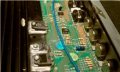
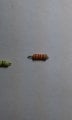
I'm currently refurbishing a Marshall VS8100. I have to replace some capacitors. I've never seen capacitors like these. They look like resistors and even have the color bands.
I wrote Marshall, and a few electronic suppliers , but haven't heard back from them yet. I have all the schematics and capacitance values. I just don't know how to read the color codes to order replacements.
Does anybody out there no where to get these things or how to read the color bands? Is there a replacement for these?
 

beenthere

Joined Apr 20, 2004
15,819
I've never seen capacitors like these. They look like resistors and even have the color bands.
That could be because they are inductors. Pics and a reading with a meter would help (need to pull one lead loose to get the reading).

Unless the devices show discoloration, they are not likely to have failed. What are the symptoms you are chasing?
 

marshallf3

Joined Jul 26, 2010
2,358
You may find that if they're those caps with the color codes they're far better quality than what's being sold at reasonable prices today.

Restoring the amp? Go for the electrolytics first and use REAL DeoxIt on all the controls & switches.
 

Thread Starter

Dr John

Joined Aug 30, 2010
7
Thanks for the feed back, I already tested them and they are caps. -||- .
got a reply back from one of the suppliers. The guy said they are older and to replace them with a ceramic caps.

Here is the reply I got back from the electronic supplier:
The capacitors are most likely ceramic. New capacitors usually aren't color coded but I have attached an old color code chart that may help you identify them. For Temperature Coefficient most new caps have ratings like C0G, X7R, or X5R. If this is an RF amp you may want C0G for stability, otherwise for many other non-critical applications an X7R or less will be sufficient. Our axial lead ceramic capacitors are on the following link: http://search.digikey.com/scripts/DkSearch/dksus.dll? =131083&k=axial%20ceramic

"I'm still a rookie here guys" I'll get this project done to specs and share all the data with the forum.
I aready replaced all the power FETS Electrolytic Caps and Pots , diodes, zenors, transistors, 12Ax7 Preamp Tube ect..
I was able to find some great sites for parts working on this Amp. I have about $100.00 in parts so far, not too bad of a bite for a 1991 marshall. It's all about the experience and learning new things ,right?
I'm going to take these Caos to scool and do a nother test on them. I'll post the results.
P.S. This forum is a blessing.
Thanks Again
 

Attachments

Last edited:

R!f@@

Joined Apr 2, 2009
10,014
Resistor, inductors and caps. If color coded, They all look the same
Closeup pics of them will help us and u to identify them.

We have very good and experienced members u know
 

Thread Starter

Dr John

Joined Aug 30, 2010
7
Hey guys, thanks again for your help, I've attached some close ups of these bad boys, I am confident we will get the answer. Persistence is golden. That's what brought me to your community forum. I am a grad student and have acsses to some nice equipment, but nobody has time or helps there. That and all of my the knee surgeries.. I really appreciate your replies.Thanks Again

I looked at a few of the links posted earlier. This one below looks like what I'm dealing with.

http://www.tpub.com/neets/book2/3g.htm

Figure 3-23. - Ceramic capacitor color code.
 

Attachments

Last edited:

TheLaw

Joined Sep 2, 2010
228
Hey guys, thanks again for your help, I've attached some close ups of these bad boys, I am confident we will get the answer. Persistence is golden. That's what brought me to your community forum. I am a grad student and have acsses to some nice equipment, but nobody has time or helps there. That and all of my the knee surgeries.. I really appreciate your replies.Thanks Again

I looked at a few of the links posted earlier. This one below looks like what I'm dealing with.

http://www.tpub.com/neets/book2/3g.htm

Figure 3-23. - Ceramic capacitor color code.
THose do look a lot like resistors. Perhaps they are ceramics of a sort?

EDIT: Wow sorry didn't see that's what you just said...
 

Wendy

Joined Mar 24, 2008
23,860
I've seen inductors look like that too. You mention you've verified they are caps. Do you have a DVM with a capacitance meter, or some other capacitance measuring device? If so you should be able to match up the color codes with the measured capacitance.
 

Thread Starter

Dr John

Joined Aug 30, 2010
7
Yes indeed, I verified they are caps and testing each one to match the verified is the smart way to go. Along with pictures, documentation I can order the correct components. The new capacitors use numbers, so that's why I was concerned about the specs on these. I'll get the numbers together and verify the codes are good, then I'll post it on the forum.

thanks guys
 

R!f@@

Joined Apr 2, 2009
10,014
The way I see it, you have are resistor and inductors. Resistance check will confirm if the inductors are caps or not. I have seen those buggers, caps and inductors look alike. The marking on the pcb always helps.

If u don't get any resistance then they are caps but the brown one is a resistor.
Can u make out the color coding?
 

Thread Starter

Dr John

Joined Aug 30, 2010
7
I'll recheck the brown one, but the PCB and Schematics are labeled as caps for these components
Going to the School Electronics Shop on Thurs.Should be able check all of them for capacitance and I''ll post the results.
I am in the market for a good Cap. tester that can get up their in Voltage and is reliable.sure is great tool to have on hand.
I agree this forum is very professional and the experience of the members is invaluable. It's also very well designed.
I'm extremely grateful to this forum. I know the members are good at what they do, and I have great respect for their expertise. I hope to be able to contibute as well.
 

marshallf3

Joined Jul 26, 2010
2,358
They have all the looks of classic resistors just as they were changing from molded to dipped but who knows?

If they test as caps and show up as caps in the schematic ......

What age is this thing again?
 

Thread Starter

Dr John

Joined Aug 30, 2010
7
Marshal VS8100 1991-93:

It's terrible isn't is! LOL
They must of got deal on those Caps.
The really drove me nuts, trying to figure them out ,:eek:
They like new resistors.
That's what had me wondering.
I didn't know if there was a special property or specification for these.
I'll post all the info when I get them measured at the school Lab.
Thank You.
 

theamber

Joined Jun 13, 2008
325
I'll recheck the brown one, but the PCB and Schematics are labeled as caps for these components
Going to the School Electronics Shop on Thurs.Should be able check all of them for capacitance and I''ll post the results.
I am in the market for a good Cap. tester that can get up their in Voltage and is reliable.sure is great tool to have on hand.
I agree this forum is very professional and the experience of the members is invaluable. It's also very well designed.
I'm extremely grateful to this forum. I know the members are good at what they do, and I have great respect for their expertise. I hope to be able to contibute as well.
You are saying the schematics does not tell you the value of those caps?
Ceramic caps rarely go bad many times and eye inspection will tell you. Their tolerance is wide, in audio frequencies their drift is not problematic in the higher frequencies is another thing.
 
Top