Can PTC thermistor be placed before a MOV (Varistor) for protecting an SMPS from inrush current and voltage spikes?

schmitt trigger

Joined Jul 12, 2010
2,027
Correction to your post; it is not a PTC, but a NTC thermistor in this particular application.
The resistance value should start fairly high, to limit the inrush current, and then the self-heating decreases the resistance value during normal operation.
And it SHOULD BE a thermistor rated for precisely this application, capable of handling the inrush without failure. You cannot use a NTC thermistor intended for temperature measurements.

EDIT; a relay bypass is used if you experience excessive losses in the thermistor during normal operation. Low power PSUs usually do not use it.
 

Thread Starter

Abdalla Saad

Joined Dec 1, 2024
5
Correction to your post; it is not a PTC, but a NTC thermistor in this particular application.
The resistance value should start fairly high, to limit the inrush current, and then the self-heating decreases the resistance value during normal operation.
And it SHOULD BE a thermistor rated for precisely this application, capable of handling the inrush without failure. You cannot use a NTC thermistor intended for temperature measurements.

EDIT; a relay bypass is used if you experience excessive losses in the thermistor during normal operation. Low power PSUs usually do not use it.
I need to use PTC to protect the MOV from beeing damaged due to an overvoltage or high voltage spikes.
The MOV will protect the circuit in overvoltage period, but if the overvoltage period last longer or the voltage spikes is very high casing MOV to overcurrent then the PTC will limit the current and protect the whole circuit till the overvoltage collapse to safe levels.
 

schmitt trigger

Joined Jul 12, 2010
2,027
Ok, I understand now your concern.
But….Exactly what Sensacell mentioned. The MOV will be damaged long before the PTC reacts.
If you require to protect the MOV, use the self-fused MOVs.
 
Last edited:
Ok, I understand now your concern.
But….Exactly what Sensacell mentioned. The MOV will be damaged long before the PTC reacts.
If you require to protect the MOV, use the self-fused MOVs.
A fused MOV!!!??? Seriously? The surge protector that works in shunt will protect itself by going open circuit and allowing the surge through? That's crazy.
Even a small MOV is rated to take100's if not 1000s of Ampere for a typical 5/20us surge. If you put an NTC or PTC between the surge and the MOV the NTC or PTC will probably be destroyed by the surge. Which is why it is not done that way. If you are worried about the MOV surviving (and they do have a limited surge exposure life time, usually 5 of the surges specified for the specific MOV) then go to a bigger MOV. The biggest ones are capable of absorbing some massive energy levels.
 

Thread Starter

Abdalla Saad

Joined Dec 1, 2024
5
A fused MOV!!!??? Seriously? The surge protector that works in shunt will protect itself by going open circuit and allowing the surge through? That's crazy.
Even a small MOV is rated to take100's if not 1000s of Ampere for a typical 5/20us surge. If you put an NTC or PTC between the surge and the MOV the NTC or PTC will probably be destroyed by the surge. Which is why it is not done that way. If you are worried about the MOV surviving (and they do have a limited surge exposure life time, usually 5 of the surges specified for the specific MOV) then go to a bigger MOV. The biggest ones are capable of absorbing some massive energy levels.

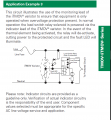
The iTMOV (Thermally Protected Varistors) will not pass the surge to the circuit, if you checked the above circuit you can see that the iTMOV have a third lead to indicate the MOV has been disconnected from the circuit, this lead can be used to deactivate a relay and cutting power to the main circuit that iTMOV protects, and once the voltage return normal it will connect the power to the circuit again.
 
Top