I want to know how to calculate or is it possibe to calculate the window area of PQ/EFD cores, the same way the window area can be calculated for EE cores. It's not relevant to any project...just for general information.
Same question here. Please comment down here if you found that...I want to know how to calculate or is it possibe to calculate the window area of PQ/EFD cores, the same way the window area can be calculated for EE cores. It's not relevant to any project...just for general information.
This seems to be a homework type question, don't they teach you how to Google? Google has much information on what your asking, try it sometime. It even has a link to this thread.Same question here. Please comment down here if you found that...
May be you didn't gave enough attention to the question. Window area for every size of EFD cores are available, We are looking for the method to find it by the core dimension and that thing is not available i have searched it everywhere(not even on the manufacturers' websites).This seems to be a homework type question, don't they teach you how to Google? Google has much information on what your asking, try it sometime. It even has a link to this thread.
https://www.google.com/search?client=firefox-b-1-d&q=calculate+the+window+area+of+PQ/EFD+cores
Maybe you don't understand or pay enough attention. The core size charts give the window area and and the first PDF on the page I linked to tells you how to do the math.May be you didn't gave enough attention to the question. Window area for every size of EFD cores are available, We are looking for the method to find it by the core dimension and that thing is not available i have searched it everywhere(not even on the manufacturers' websites).

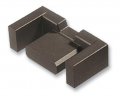
Thank your sir, but this is EE type core. i was looking for EFD type. that one is a bit different.I've always used the winding window figure published by the manufacturers.
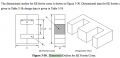
The illustration below is from the first file found by shortbus's Google search (not counting the reference to this thread). In the file it says that the winding area (Wa) (and this is intuitive if you know what winding area is) in the drawing below is calculated based on the dimensions given in the Dimension outline for the core of interest.
For the drawing below it is Wa = (G x E-B)/2
Here, winding window = Winding area.
View attachment 263581


Thank you sir for the guidance. I did it. I calculated the whole window volume first by considering it in two parts because the core does not have that middle limb for whole thickness and then added them that's window volume and then i divided it by the thickness of the core and that's what the window area is.Can you identify the winding window in the drawing you provided (above)? If so, can you calculate its area?

Shouldn't the A_N parameter from the coil former manufacturer datasheet be used as the window area instead given that it bobbin thickness should be considered?I've always used the winding window figure published by the manufacturers.
The illustration below is from the first file found by shortbus's Google search (not counting the reference to this thread). In the file it says that the winding area (Wa) (and this is intuitive if you know what winding area is) in the drawing below is calculated based on the dimensions given in the Dimension outline for the core of interest.
For the drawing below it is Wa = (G x E-B)/2
Here, winding window = Winding area.
View attachment 263581
| Thread starter | Similar threads | Forum | Replies | Date |
|---|---|---|---|---|
| E | Heat sink calculation | Power Electronics | 4 | |
| V | Calculation of Transistor Currents | Homework Help | 15 | |
| V | Inductor energy calculation | Homework Help | 15 | |
| A | DC input RMS value calculation in drift window of 500ms | Analog & Mixed-Signal Design | 15 | |
| N | True RMS calculation Window size | Microcontrollers | 6 |