Facebook
 Google
 GitHub
 Linkedin

Hi All.
I need to build a Pi Network for my circuit as shown in the fig below.
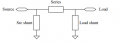
So I have a 'Pi Matching Network' in my circuit. The datasheet asked me to build a Pi Matching Network. ( You know, how there is a series component, a source shunt component and a Load shunt component. )
Anyway, my VNA keeps telling me this: The measured load impedance is 31.9-58.5j.
The VNA is automatically generating these four groups below ( group 1 thru 4 ) of available matching parameters on the screen:
1. 5.24pF capacitor for source shunt and 28.8nH inductor in series.
Does that mean, this group does not need a Load Shunt at all? Does this mean that the proper tuning has been achieved with just a capacitor for source shunt and an inductor in series?
2. 23.1nH inductor for source shunt and 12nH inductor in series.
Does that mean, this group does not need a Load Shunt at all? Does this mean that the proper tuning has been achieved with just a inductor for source shunt and an inductor in series?
3. 97.5nH inductor for load shunt and 23.3nH inductor in series.
Does that mean, this group does not need a Source Shunt at all? Does this mean that the proper tuning has been achieved with just a inductor for load shunt and an inductor in series?
4. 15.3nH inductor for load shunt and 5.21pF capacitor in series.
Does that mean, this group does not need a Source Shunt at all? Does this mean that the proper tuning has been achieved with just a inductor for load shunt and a capacitor in series?
If the answer is yes to all the 4 above questions, then I still cant believe that a 'Pi matching Network' can exist with 1 of the 3 components totally missing.
Ty for your reply!
I need to build a Pi Network for my circuit as shown in the fig below.
So I have a 'Pi Matching Network' in my circuit. The datasheet asked me to build a Pi Matching Network. ( You know, how there is a series component, a source shunt component and a Load shunt component. )
Anyway, my VNA keeps telling me this: The measured load impedance is 31.9-58.5j.
The VNA is automatically generating these four groups below ( group 1 thru 4 ) of available matching parameters on the screen:
1. 5.24pF capacitor for source shunt and 28.8nH inductor in series.
Does that mean, this group does not need a Load Shunt at all? Does this mean that the proper tuning has been achieved with just a capacitor for source shunt and an inductor in series?
2. 23.1nH inductor for source shunt and 12nH inductor in series.
Does that mean, this group does not need a Load Shunt at all? Does this mean that the proper tuning has been achieved with just a inductor for source shunt and an inductor in series?
3. 97.5nH inductor for load shunt and 23.3nH inductor in series.
Does that mean, this group does not need a Source Shunt at all? Does this mean that the proper tuning has been achieved with just a inductor for load shunt and an inductor in series?
4. 15.3nH inductor for load shunt and 5.21pF capacitor in series.
Does that mean, this group does not need a Source Shunt at all? Does this mean that the proper tuning has been achieved with just a inductor for load shunt and a capacitor in series?
If the answer is yes to all the 4 above questions, then I still cant believe that a 'Pi matching Network' can exist with 1 of the 3 components totally missing.
Ty for your reply!