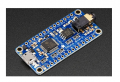
Well too late for that, I bought them on Amazon, because I didn't want to pay18 bucks each from Digi-Key.
Don't say it...I know...
If I had considered that the PWM was going to be a problem, I would have made a different choice.
I had always assumed that the speaker output would already be filtered back to analog, and had no idea that raw PWM would be outputted...live and learn.
I'm glad you raised the issue.
So anyway....assuming I can get the proper filter somehow...will the circuit in the OP work?
You do not need a transformer, instead you use one of the two speaker wires and put a series coupling capacitor in it, and a ground which is the negative supply voltage. Do not connect anything to the other speaker wire.
This is a switching at 300kHz TPA2012 class-D amplifier without any output filter and you want to connect it to a TPA3116 switching class-D amplifier. Their switching frequencies will interfere with each other.
The two TPA3116 amplifiers from Amazon is made in China and are missing important heatsinks. The single amplifiers from Amazon have heatsinks that they call "sunroofs".
If you buy Chinese junk then you get Chinese junk. But they are cheeeep.
I buy inexpensive American and European high quality electronic parts from Digikey who is a real electronics parts distributor and maybe I will buy some cheap Chinese shoes from Amazon.
What happens in "Bridge mode"? You take two amplifiers that let's say need 12V to operate. The MOST it can put out is +-6V (probably closer to +-5V, but hear me out.
If you drive one amp with the ground referenced signal and drive the other amp with the same signal inverted by 180 degrees, then that's the first step. Both of these amps are ground referenced, speaker terminals included. Now you drive a speaker between the two (+) terminals of the amplifiers, so the speaker "sees" twice the available power supply voltage.
You do this because it;s cheaper than making a switching power supply. You also reduce the speaker impedance, to get higher power. P=(V^2)/R. if you make V twice as big power gets much larger. If you make the speaker Z lower power goes up.
if you want to drive something else like your trying to do, you can take the output from the (+) speaker and ground of the bridged configuration. You can voltage divide that even further if you like. Now it's a question of impeadance, The input of a device might be around 10K. professional audio is 600 in, 600 out. That's not the case with consumer audio.
If you don't have any real data on them, how do you know that they have a frequency response down to 20Hz? They might not get below 300Hz, especially if they are small!
Better abandon them and use the signal from one output like several others have suggested, but use a RCRC filter to get rid of the PWM. http://sim.okawa-denshi.jp/en/CRCRkeisan.htm
try 1k/4.7n/10k/470p, and you will need a coupling capacitor to get rid of the DC offset.
Is the power supply stable? You don't want the DC offset wandering up and down as the signal level changes and the power supply dips.
The sound making product is cheap so it is missing the output filters on most other products shown in Google.
The high power amplifier is also cheap so it is missing the heatsink on most other products shown in Google.
The transformers that you do not need are cheap so they have no detailed specs.
Isn't the sound making product stereo? The amplifier you ordered is stereo. So add stereo coupling capacitors between them.
Try them and you might be lucky and have no class-D interference and maybe the amplifier will not get too hot.
As both outputs contain the same signal you only need to attach to one. I think you can assume that either output will be ground referenced in some way, usually bipolar power rails will be referenced to ground so you dont need the galvanic isolation you have shown. Just tap off the output into a reasonably high impedance attinuator before applying to the following amplifier, if that has an AC coupled input fine, otherwise include a series capacitor in your circuit as well.
None of that is correct. Depending on what you mean by "both outputs", either they are not the same because the two output pairs are the two channels of a stereo signal, or the two wires of each signal output are not the same because it is a class D output stage. The signals are ground-referenced, but NOT bipolar about GND. Both the + and - signals of each channel output are square waves swinging between GND and Vcc (+3.3 to +5 V). The two signals are 180 degrees out of phase - one is the inverse of the other. Either one can be used as a unipolar output signal IF it is AC coupled and lowpass filtered. AC coupling is mandatory. The circuit assumes that the mass of the speaker cone will act as a lowpass filter, but this is not available in a direct connection to other electronics.
The new power amp module probably has an AC coupled input, and probably has an anit-aliasing lowpass filter at the input to its pwm modulator, but without more circuit information it is impossible to say whether this is enough to prevent switching components of the effects module outputs from interfering with the power amp modulator.
Since the heatsink (sunroof) is included then I wonder why they did not mount it?
I also wonder why they say the stereo amplifier is for a subwoofer when a subwoofer is frequently in mono?
So after some soul searching, I have decided to rework my project board to gain access to the line outputs from the effects module, something I was trying to avoid by using the speaker outputs.
Taking in all of the information in this thread and some other research, I decided there was probably a really good chance that I wouldn't succeed in getting a good result.
As to the amps I got from Amazon...total crap, one has a loud hiss and the other one wont even power up, so I decided to get another 20 watt amp from Adafruit, which I know is good quality, hooked up the new configuration and everything is good.
Thanks again for everyone's input, it was a big help.

 Facebook
 Google
 GitHub
 Linkedin