BJT characteristics

Thread Starter

aragon1971

Joined Apr 7, 2008
160
Hi
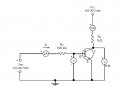
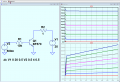
to find the input characteristic of bjt Transistor We must change the the voltage VBB and meausre the current IB
but the voltage VCE must be const how we can keep the voltage const. ?
in the simple bias circuit the VCE=VCC-Ic RC IC=β ΙΒ when the VBB change the current IB change
the VCE NOT KEEP constant


tnak you

George
 

Attachments

LvW

Joined Jun 13, 2013
2,016
If I understand your problem correctly, you are interested in the INPUT characteristic, right?
* Why not perform such an analysis with Rc=0? In this case Vce=Vcc.
* In case of ac analyis (finding re=hie) you can use a big capacitor across Rc.
 

MrAl

Joined Jun 17, 2014
13,684
Hi
to find the input characteristic of bjt Transistor We must change the the voltage VBB and meausre the current IB
but the voltage VCE must be const how we can keep the voltage const. ?
in the simple bias circuit the VCE=VCC-Ic RC IC=β ΙΒ when the VBB change the current IB change
the VCE NOT KEEP constant


tnak you

George
Hello there,

I have to agree with the two posts before this where you use a constant voltage source right across the collector and the emitter.
Since this can cause the transistor to burn out if you drive it too hard later, I like @ericgibbs idea of including a small value resistor in series with the battery. That will at least help a little just in case you accidentally drive the base too hard.

In a general network sometimes you set a voltage to be constant or a current constant in order to measure something else in the circuit. Of course you want to make sure nothing is going to burn out during the test so you use a reasonable level for the added source or take some other measures like we talked about here.
 

LvW

Joined Jun 13, 2013
2,016
Hello there,

I have to agree with the two posts before this where you use a constant voltage source right across the collector and the emitter.
Since this can cause the transistor to burn out if you drive it too hard later, I like @ericgibbs idea of including a small value resistor in series with the battery. That will at least help a little just in case you accidentally drive the base too hard.
Will such a small collector resistor Rc (1 Ohm) change the picture remarkably and will avoid problems (if compared with Rc=0) ?
 

dl324

Joined Mar 30, 2015
18,275
to find the input characteristic of bjt Transistor We must change the the voltage VBB and meausre the current IB
but the voltage VCE must be const how we can keep the voltage const. ?
in the simple bias circuit the VCE=VCC-Ic RC IC=β ΙΒ when the VBB change the current IB change
the VCE NOT KEEP constant
Is this schoolwork?
 

MrAl

Joined Jun 17, 2014
13,684
Will such a small collector resistor Rc (1 Ohm) change the picture remarkably and will avoid problems (if compared with Rc=0) ?
Well I took that as a suggestion rather than an absolute quantity. It might help but maybe 10 Ohms would be better. If the current was too high than it could be adjusted back down until the voltage drop was not too significant, then we could estimate the required drive and set it back down to 1 Ohm and double check the current again.

Alternately, set the base drive, THEN set the CE voltage level with a separate power supply. The 1 Ohm will, in that case, provide a little wiggle room anyway.

Even better, before doing that, set the current limit to the CE power supply to some low value like 100ma or something, then set the drive and make sure the power source did not enter into current limit.
 

Ron H

Joined Apr 14, 2005
7,063
I think Mr. Al has the best idea:
Even better, before doing that, set the current limit to the CE power supply to some low value like 100ma or something, then set the drive and make sure the power source did not enter into current limit.
 

mawyatt

Joined Aug 11, 2023
1
If the bipolar transistor "sees" a collector impedance not zero, then one must consider the Miller effects when evaluating input impedance, which usually for small signals is Vin_ac/Iin_ac (more properly defined by dVin/dIin). The Miller effect will make the input appear much more capacitive and thus lower the small signal AC input impedance.

Best,
 
Top