Big currents, small transducers

Thread Starter

Edgewalker

Joined Nov 16, 2023
9
Hi everyone

I need to measure some big currents. "Big" here means the neighborhood of 2kA (@100V DC). But Transducers big enough for that are not only expensive, but very large. Larger than the space I want to work in.

Is there any reason I can't simply add a second identical cable between supply and load, and measure one of those lines to get half the current, then just do the arithmetic to get the total? This would also increase error, of course, but I'm not very concerned about that.

Come to think of it, in general can't I create n lines and measure one of them to get 1/n of the current? (Again, error accumulates, but again, not what I'm concerned with.)

Thanks in advance.
 

Irving

Joined Jan 30, 2016
5,118
If you have a way to calibrate it, then I'd look at creating your own sensor. You need a ferrite ring to go round the cable, doesn't have to be a tight fit but reasonably close. Cut an air gap in the ring and mount an off-the-shelf hall-effect device in the gap. Have a look at the first few paragraphs of https://www.allaboutcircuits.com/te...g-open-loop-and-closed-loop-configurations/+- to get the idea...

[edit] Thinking about it further... with that current you might not even need the ring...
 

Ian0

Joined Aug 7, 2020
13,131
Hi everyone

I need to measure some big currents. "Big" here means the neighborhood of 2kA (@100V DC). But Transducers big enough for that are not only expensive, but very large. Larger than the space I want to work in.

Is there any reason I can't simply add a second identical cable between supply and load, and measure one of those lines to get half the current, then just do the arithmetic to get the total? This would also increase error, of course, but I'm not very concerned about that.

Come to think of it, in general can't I create n lines and measure one of them to get 1/n of the current? (Again, error accumulates, but again, not what I'm concerned with.)

Thanks in advance.
How big is the cable or bus-bar which is carrying the current you wish to measure?
 

WBahn

Joined Mar 31, 2012
32,823
Hi everyone

I need to measure some big currents. "Big" here means the neighborhood of 2kA (@100V DC). But Transducers big enough for that are not only expensive, but very large. Larger than the space I want to work in.

Is there any reason I can't simply add a second identical cable between supply and load, and measure one of those lines to get half the current, then just do the arithmetic to get the total? This would also increase error, of course, but I'm not very concerned about that.

Come to think of it, in general can't I create n lines and measure one of them to get 1/n of the current? (Again, error accumulates, but again, not what I'm concerned with.)

Thanks in advance.
How are you going to measure the current in just one of them?

Remember that any difference between the n lines is going to affect the degree of load sharing between them. If won't take much of a disturbance to shift a significant portion of the current into the other cables.

You are asking for suggestions that meet your requirements of being inexpensive and small enough for the space you have to work in, but you give no hint as to what your budget is or how much space you have to work with. Makes it rather hard to think of suggestions that might meet your needs.
 

Ian0

Joined Aug 7, 2020
13,131
2nd suggestion:
Just measure the voltage across a known length of cable. (Use a current sensor amplifier IC such as INA181)
And if you are going to be really fancy, stick a temperature sensor to the cable and adjust the reading accordingly as the resistance of copper varies proportional to absolute temperature.
 

Reloadron

Joined Jan 15, 2015
7,889
I would use as Ian0 suggested, a DC current shunt. They come from a variety of manufacturers in a variety of physical sizes. Here is another example. Here is another example. Shunts like this are common in large scale welding applications where thousands of amps DC is not uncommon. Any good process controller can monitor the shunt or any good ASC like the ADS1115 using programmable gain. Common shunts are likely the least expensive solution. You can also purchade from reputable sources with a certificate of calibration if that trips your trigger.


Ron
 

Ian0

Joined Aug 7, 2020
13,131
2000A shunts are not cheap - the price tends to be proportional to the current.
With Hall-effect devices, it is only the hole in the middle that has to be made bigger to accommodate larger currents!
 

Reloadron

Joined Jan 15, 2015
7,889
2000A shunts are not cheap - the price tends to be proportional to the current.
With Hall-effect devices, it is only the hole in the middle that has to be made bigger to accommodate larger currents!
I guess it depends on what we call cheap or inexpensive verse what the thread starter calls cheap. Looking at 2000 amp hall effect sensors they do not come as inexpensive sans some stuff from China through AliExpress and I would not use that stuff in an industrial 2000 amp setting. Got any links? I am seeing in my second link about $75 USD for a shunt. I have no clue what the thread starter's budget is?

Ron
 

Thread Starter

Edgewalker

Joined Nov 16, 2023
9
Thank you for all the educational questions and criticisms. I'm still learning what facts are important to share.

My confusion stems from the fact that I'm just not used to working with big power. My history has me working with about 24V and 60W as a high peak. I'm used to ICs and firmware, not big power.

The conductors are 6ga stranded off-the-shelf AlphaWire. So small? Yes, the current is a transient spike -- under 100 microseconds. But I need to measure it in real time. I already have current transducers with a 900A capacity and a 100Ms/s DAQ, but that CT is railed during about 50 of those microseconds. I also cannot add more than 0.08Ω of impedance. A shunt resistor sure makes the most sense to me, but I'd rather use the equipment I already have if possible.

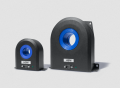
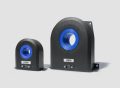
2000A CTs are within my budget, and I have four. But they are massive. This is the rough size difference, and these are the CTs I'm using. The 600RMS/900 peak is on the left, and the 1200RMS/1800 peak is on the right.
HBKs.png

Why can't I own calibration? Because our equipment has to be calibrated by a certified external contractor.

Edit: 200A CTs are not just expensive, they have a lead time or 5-6 weeks, which is just not realistic.
 

Attachments

Last edited:

Ian0

Joined Aug 7, 2020
13,131
I guess it depends on what we call cheap or inexpensive verse what the thread starter calls cheap. Looking at 2000 amp hall effect sensors they do not come as inexpensive sans some stuff from China through AliExpress and I would not use that stuff in an industrial 2000 amp setting. Got any links? I am seeing in my second link about $75 USD for a shunt. I have no clue what the thread starter's budget is?

Ron
I've been very impressed with MicroTransformer (link in post #7). Very helpful to deal with, the stuff works and is about a fifth of the price of LEM. I've not tried anything as large as 2000A -- yet, but I have recently done some projects with 1500A shunts, and I seem to remember their being >£100 each.
 

Ian0

Joined Aug 7, 2020
13,131
Thank you for all the educational questions and criticisms. I'm still learning what facts are important to share.

My confusion stems from the fact that I'm just not used to working with big power. My history has me working with about 24V and 60W as a high peak. I'm used to ICs and firmware, not big power.

The conductors are 6ga stranded off-the-shelf AlphaWire. So small? Yes, the current is a transient spike -- under 100 microseconds. But I need to measure it in real time. I already have current transducers with a 900A capacity and a 100Ms/s DAQ, but that CT is railed during about 50 of those microseconds.

2000A CTs are within my budget. But they are massive. This is the rough size difference, and these are the CTs I'm using.
View attachment 311067

Why can't I own calibration? Because our equipment has to be calibrated by a certified external contractor.

Edit: 200A CTs are not just expensive, they have a lead time or 5-6 weeks, which is just not realistic.
How accurately do you need to measure a transient spike?
Can you measure the steady-state current to a sufficient degree of accuracy?
If so, do it ratiometrically by comparing the voltage drop along the cable.
 

Reloadron

Joined Jan 15, 2015
7,889
I've been very impressed with MicroTransformer (link in post #7). Very helpful to deal with, the stuff works and is about a fifth of the price of LEM. I've not tried anything as large as 2000A -- yet, but I have recently done some projects with 1500A shunts, and I seem to remember their being >£100 each.
I like the higher output voltage they feature. Yes, I would not hesitate to give them a call.

Ron
 

Ian0

Joined Aug 7, 2020
13,131
I like the higher output voltage they feature. Yes, I would not hesitate to give them a call.

Ron
Look through the entire range, the website is a bit . . . random.
I was disappointed that the only one I could find needed ±12V supplies, but I kept looking and a little bit further along I found a 5V version.
 

Thread Starter

Edgewalker

Joined Nov 16, 2023
9
How accurately do you need to measure a transient spike?
Can you measure the steady-state current to a sufficient degree of accuracy?
If so, do it ratiometrically by comparing the voltage drop along the cable.
You've actually asked what's a controversial question around here. The answer apparently is "as accurately as possible". I've been handed a $150,000 DAQ, a lot of HBK CTs, and a requirement that the sensing apparatus fit in basically a large shoebox.

I can already always measure at sufficient accuracy except the transient. So if I could put two 600A CTs on a split line (actually a second line on the same ring terminal), that solves my problem.

A shunt makes the most sense to me, given what little I've learned so far. I don't know why the design I've been handed shows no sign of considering that. This is one of those "this project needs to be done yesterday, somebody dropped the ball -- it's not really in your area of expertise, but we need to make this work." Haha.
 
Top