Bidirectional digital switch

Thread Starter

Eartian

Joined Sep 16, 2021
58
Hi all, I need assistance on developing a switch. The switch should be controlled via microcontroller (3.3v logic). The resistance on should be as low as possible, it would be nice if it is near to zero. It should be bidirectional and should be capable of handling currents in the range of 100 milliamps to 10 nano amps. The voltage it experiences will be in the range of +15v to -15v. I am confused which system to consider, a back to back mosfet, a cmos switch, a mechanical relay? which would be good? the main agenda here is to get lowest on resistance and the switch is on low end that is towards gnd.
 

WBahn

Joined Mar 31, 2012
32,703
"as low as possible" is not a meaningful specification. Is 1 Ω low enough? Is 1 mΩ too much? Whatever you end up with, it won't be "as low as possible" since if you were to spend 10x as much, you could get something lower.
 

Thread Starter

Eartian

Joined Sep 16, 2021
58
"as low as possible" is not a meaningful specification. Is 1 Ω low enough? Is 1 mΩ too much? Whatever you end up with, it won't be "as low as possible" since if you were to spend 10x as much, you could get something lower.
thanks for replying, I agree with you. So basically I am designing a circuit to measure the current in the range of 10 nano amps to 100 milliamps. So if the switch itself offers resistance in the rane of 1 ohms, it will affect the reading right? so in the range of milliohms would be good. I tried to find a suitable switch or circuit online but was not successful.
 

WBahn

Joined Mar 31, 2012
32,703
thanks for replying, I agree with you. So basically I am designing a circuit to measure the current in the range of 10 nano amps to 100 milliamps. So if the switch itself offers resistance in the rane of 1 ohms, it will affect the reading right? so in the range of milliohms would be good. I tried to find a suitable switch or circuit online but was not successful.
Whether, and how much, it would affect the measurement depends on how you plan to measure the current. If you provide some details about how you plan to make the measurements, we might be able to offer some suggestions. You are talking about measurements spanning seven orders of magnitude.
 

Thread Starter

Eartian

Joined Sep 16, 2021
58
Whether, and how much, it would affect the measurement depends on how you plan to measure the current. If you provide some details about how you plan to make the measurements, we might be able to offer some suggestions. You are talking about measurements spanning seven orders of magnitude.
1754852705613.png

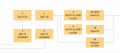
I have not yet started doing the schematic but the above shows a rough idea I have. So the current will travel through those 3 resistors based on the 2 swithes enabled. 5k resistor is fixed one. Based on the current range the R shunt is choosen. Then shunt voltage generated in amplified via 2 current sensing amplifier. 2 amplifier since the range is huge. Either one adc is considered at the micontroller end. I hope i have explained what I have in my mind. Sorry I could not provide much information since I have not yet stared the schematic or circuit. (ignore that mosfet as switch, I need assistance on choosing the switch type).

Also I am open to other ideas on measuring the current
 

MisterBill2

Joined Jan 23, 2018
27,164
I suggest taking a look at the "PICKERING" company that has been in the accurate switching business for a few decades. They are good. And I do not understand the circuit in post #6, as to how it works.
Taking a reading of the voltage across the resistor every few microseconds is not a problem, but switching a circuit that rapidly may be a big challenge.
 
Top