beta parameter of bjt

Thread Starter

aragon1971

Joined Apr 7, 2008
160
Hi
i have a queastion about beta of bjt
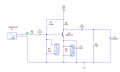
i have a circuit with 2Ν2219 npn i want to comare the voltage in base VB with theory
how i must choose the beta parameter ?


Thank you
George
 

Attachments

DickCappels

Joined Aug 21, 2008
10,661
Beta refers to the ratio of base current to collector current. It has little to do with voltage except that base-to-emitter voltage increases with current.

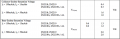
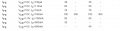
Does this (below) help any?

1645359509879.png
 

Thread Starter

aragon1971

Joined Apr 7, 2008
160
thank you
but the date sheet give the hFE (β) for various current and voltage what is the best choice for beta to compare with theory relation β=(βmin+βmax)/21645363795308.png
 

LvW

Joined Jun 13, 2013
2,026
Hi
i have a queastion about beta of bjt
i have a circuit with 2Ν2219 npn i want to comare the voltage in base VB with theory
how i must choose the beta parameter ?
Thank you
George
I don`t understand your question.
You have shown a circuit witha 2N2219 model - so, what do you want to "choose"? This model contains a certain beta-model.
Of course, you can measure/simulate how big the beta value is at a certain bias point.
For this purpose, simply display Ic (ic) and Ib (ib) for DC resp. ac currents.
 

crutschow

Joined Mar 14, 2008
38,502
how i must choose the beta parameter ?
You normally don't "choose" the beta.
Each transistor has a particular beta value depending upon the model and the current/voltage it is operating at.
So if you need to know the beta of a particular transistor in a circuit, you must measure it.
 

DickCappels

Joined Aug 21, 2008
10,661
You normally don't "choose" the beta.
Each transistor has a particular beta value depending upon the model and the current/voltage it is operating at.
So if you need to know the beta of a particular transistor in a circuit, you must measure it.
And as soon as you put the transistor on the bench or breadboard the heat from your fingers will leave it and it's temperature beta dependent will begin to drop. Since you really won't know the beta of your transistor in a circuit it is good practice to make operation of a circuit largely independent of beta.
 

Thread Starter

aragon1971

Joined Apr 7, 2008
160
I don`t understand your question.
You have shown a circuit witha 2N2219 model - so, what do you want to "choose"? This model contains a certain beta-model.
Of course, you can measure/simulate how big the beta value is at a certain bias point.
For this purpose, simply display Ic (ic) and Ib (ib) for DC resp. ac currents.
I want to comprae the meausrments value with the theory relation what is the value of beta for theoritical relation ?
 

Papabravo

Joined Feb 24, 2006
22,082
I want to comprae the meausrments value with the theory relation what is the value of beta for theoritical relation ?
There is no measurement you can make that will allow you to draw any meaningful conclusion. The beta of each individual transistor that comes off the line WILL BE DIFFERENT. It is more akin to a random variable with specified mean and standard deviation. The best you can do is take a sample of representative parts and state with some confidence level that the beta of any part you select will fall in some range around the mean of ±3 standard deviations. You don't need to bother because the manufacturers have already run the experiment and placed that information in the datasheet.

When you ask the question about which value you should use in a design, the answer is that it should not matter because the design does not depend on the selection of a particular value.
 

Audioguru again

Joined Oct 21, 2019
6,826
When you buy a transistor then it might have a minimum, maximum or any in between beta.
Your circuit has an emitter-to-ground resistor that reduces the effect of beta variations.
Without the emitter resistor then a transistor with a high beta might be saturated and a transistor with a low beta might be cutoff.
 

Thread Starter

aragon1971

Joined Apr 7, 2008
160
There is no measurement you can make that will allow you to draw any meaningful conclusion. The beta of each individual transistor that comes off the line WILL BE DIFFERENT. It is more akin to a random variable with specified mean and standard deviation. The best you can do is take a sample of representative parts and state with some confidence level that the beta of any part you select will fall in some range around the mean of ±3 standard deviations. You don't need to bother because the manufacturers have already run the experiment and placed that information in the datasheet.

When you ask the question about which value you should use in a design, the answer is that it should not matter because the design does not depend on the selection of a particular value.
thank !
 
Top