Best way to isolate inductive power loads from logic

Thread Starter

KKRS_

Joined Oct 26, 2023
24
What is the best cost-benefit ratio for isolating logic (controllers, MPUs, FPGAs, etc.) from inductive loads?
I often need to power the logic from the same power source and find it difficult to make decisions.

  1. Power the loads from the direct 12V and power the 5V logic with the output of an isolated DC/DC. The converter input will then be powered by 12V, while the 5V output will be galvanically isolated from the input. Is this a valid solution, albeit a very expensive one?
  2. Isolate the data lines that activate the inductive loads using isolated DC/DC converters and optoisolators. Is this a valid solution?

Thank you for your help.
 

MaxHeadRoom

Joined Jul 18, 2013
30,598
Often the best way is to ensure or provide a really good GND or common path between all power supply connections, this is the way I have managed to avoid problems in many industrial situations that use a mixture of devices with different supplies. etc.
 

crutschow

Joined Mar 14, 2008
38,418
what do you mean "good GND"?
You want to use what's commonly called a "star" ground where each element has it's own ground path back to the supply common.
That way the ground current from a high current load won't cause "ground-bounce" on the electronic circuits, and thus possible signal glitches.

You may want to use opto isolators for the signals so there is no signal ground path for the current to go from the high power devices through the electronics ground to the ground point.
That also minimizes any noise or ground-bounce from affecting the signal levels to the high power devices.

Galvanic isolation and separate power supplies is the last (and most expensive) resort for this problem.
 
Last edited:

MisterBill2

Joined Jan 23, 2018
27,323
@MaxHeadRoom

what do you mean "good GND"?
A "Good Ground", in theory is a zero impedance zero voltage plane . That is not really possible, so the next best is to have no inductor current flowing in those portions that current for the logic portion flows thru. Fortunately CRUTSCHOW has described that method of avoiding what are actually "ground loops," although they do not look like loops on the outside..
 

MaxHeadRoom

Joined Jul 18, 2013
30,598
A "Good Ground", in theory is a zero impedance zero voltage plane . That is not really possible, so the next best is to have no inductor current flowing in those portions that current for the logic portion flows thru. Fortunately CRUTSCHOW has described that method of avoiding what are actually "ground loops," although they do not look like loops on the outside..
I have curomized and retrofitted too many CNC and other industrial . machines to remember and always have applied the equi-potential bonding techniques and Star point GND, as laid out in the Siemens document I have posted many a time.
I can only recall one issue I had in all that time,
Also as a moderator on the CNCzone, I have steered many a first time machine tool builder into correcting some of the problems with ground noise issues seen in the wiring practice.
 

dendad

Joined Feb 20, 2016
4,636
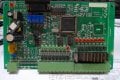
In our industrial control equipment, we have an isolated supply for the CPU and opto isolated in and out.
Photo on 28-1-26 at 5.22 pm.jpg
This one has optos driving FETs for the outputs, and included fly-back diodes.

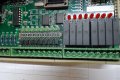
And we use relays for the outputs on this one.
Photo on 28-1-26 at 5.22 pm #2.jpg
Opto isolation is a good way to protect your devices and is a lot cheaper that replacing the controller!
These have given many years good reliable service!
 

drjohsmith

Joined Dec 13, 2021
1,579
What is the best cost-benefit ratio for isolating logic (controllers, MPUs, FPGAs, etc.) from inductive loads?
I often need to power the logic from the same power source and find it difficult to make decisions.

  1. Power the loads from the direct 12V and power the 5V logic with the output of an isolated DC/DC. The converter input will then be powered by 12V, while the 5V output will be galvanically isolated from the input. Is this a valid solution, albeit a very expensive one?
  2. Isolate the data lines that activate the inductive loads using isolated DC/DC converters and optoisolators. Is this a valid solution?

Thank you for your help.
good enginerring answer ... it depends !

if its controling a nuclear reactor Id come up with a different system to a system for a hallowean toy !

powering the loads direct from the 12v is good, ensure you have ground as well as power going direct from the power to the load.

the controler , has seperate power connection to the 12v , again with its ground return going direct back to the power source.

then opto isolate the outputs from the controler to the switches.

include over voltage , reverse bias diodes and fuses on the power in as you feel fit
 

panic mode

Joined Oct 10, 2011
4,939
  1. Power the loads from the direct 12V and power the 5V logic with the output of an isolated DC/DC. The converter input will then be powered by 12V, while the 5V output will be galvanically isolated from the input. Is this a valid solution, albeit a very expensive one?
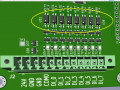
not sure about "very expensive". my recent boards used LTV-217 optocouplers and they are some $0.03-$0.06 depending volume. single input was under $0.10 (opto, diodes, resistors and LED). the biggest "cost" was board space.

1769609281662.png
 
Last edited:

MisterBill2

Joined Jan 23, 2018
27,323
Certainly isolating the power system from the logic system is a good concept, but not always so very simple to achieve in the actual assembly. The issue is often convenience for those doing the assembly work and wiring connections.
MAX is right about "grounding", but making sure it is done correctly may require direct supervision !

In the system design stage is the place to start the separation of current paths, including in the power return wiring. While that is not so very difficult in the drawings, it may take some effort to achieve it in the actual construction of a system, because of the physical arrangement of different portions of the components.
 
Top