Facebook
 Google
 GitHub
 Linkedin

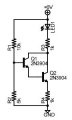
Unfortunately, you've picked a circuit that isn't very conducive to learning how a transistor works. The off resistance of the LDR combined with R1 isn't going to give you much base current. If you're trying to operate the LED at 10mA (you need a current limiting resistor as others have already mentioned), you need up to 1mA of base current if you want the transistor to saturate. At the very minimum, you need another transistor for more current gain.I am more than a little confused now! I had thought the base was voltage driver, maybe back to the text for me!
The rule of thumb for voltage dividers is that you want the divider current to be 10 times the load current. There's no way for you to get that much. The transistor will turn on, but it won't saturate.
It would be better if you just used a resistor instead of the LDR and verified that the transistor was amplifying current as it should (by setting a bias point, measuring voltages, and calculating currents).
Something like this:

Note that 5k isn't a standard value and I chose the supply voltage to make it easy to calculate the voltage on the base without using a calculator. Similarly, you can calculate the voltages across R3 and R4 and the currents in them without a calculator.
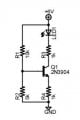
EDIT: Then you can try this:
Last edited: