Facebook
 Google
 GitHub
 Linkedin

And also it's part of Marvel's MCU ...It's also on Wikipedia: https://en.wikipedia.org/wiki/File:Tesseract.gif

And also it's part of Marvel's MCU ...It's also on Wikipedia: https://en.wikipedia.org/wiki/File:Tesseract.gif
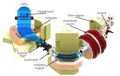
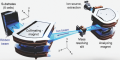
kvUpgrades of the LHC collimation system, which began during LS1, have continued during LS2. Sixteen new collimators have been installed in the accelerator over the last three years in preparation not only for the accelerator’s next period of operation (Run 3) but above all for the future High-Luminosity LHC (HL-LHC).
The HL-LHC, which is due to be commissioned at the end of 2027, will improve on the current LHC’s performance thanks to a tenfold increase in its integrated luminosity, i.e. the number of collisions per surface unit, thereby increasing the number of collisions inside the experiments. To achieve this, the HL-LHC’s beams of particles will be more intense, which is not without its problems.
Super cool stuff. I'm familiar with industrial type beam collimation.
I haven’t had time to play around or toy with this for awhile. But it has to do with a friend of mine, his ideas formed from publications, disseminated by the Press, either Scientific Journals or other lets just say, Media, and I don’t care.Super cool stuff. I'm familiar with industrial type beam collimation.
https://en.wikipedia.org/wiki/Collimator
View attachment 249461
View attachment 249462

I mean, it could, but you'd need about \(2.77\times10^{15}\) kg of it to do so (to overcome the gravitational binding energy of the earth). That, for perspective, is about 0.0000000463% the earth's mass (or about 12.6 Halley's comets). For more tangible perspective, this would be a mass roughly the size (and composition) of a small asteroid 6.7 km in radius (13.4 km in diameter, or a little wider than Washington, DC).if handled improperly could potentially destroy the earth.
Attempt a simple explanation please. Explain how this is so destructive. Is it explosive? Or the opposite? Seemingly ripping apart the earth chunk by chunk maybe similar to objects of similar size although one smaller than the other attracted spinning oscillations faster and faster, conjoining as twin bodies that find equality eventually to a coherent oneness in space Or is it more reactant now a force becomes relevant to heat both creating a causation event that does a similar thing. Wherein, molecules or particles begin to combine and a heat overwhelmingly results in a sudden explosion over time either instant or of a time duration, a critical mass explotion.I mean, it could, but you'd need about \(2.77\times10^{15}\) kg of it to do so (to overcome the gravitational binding energy of the earth). That, for perspective, is about 0.0000000463% the earth's mass (or about 12.6 Halley's comets). For more tangible perspective, this would be a mass roughly the size (and composition) of a small asteroid 6.7 km in radius (13.4 km in diameter, or a little wider than Washington, DC).
https://home.cern/news/news/physics/cern-approves-two-new-experiments-transport-antimatterBurning one gallon of gasoline releases 1.3 × 10^8 joules (130 million joules) of energy
Here’s the question: If you were capable of converting mass to energy with 100% efficiency, how much mass M would you need to produce an energy E = 1.3 × 10^8 joules?
...
This mass can also be written as 1.44 micrograms; it’s roughly equivalent to the mass of a single grain of sand 0.1 millimeter across.
I’ll study this today, food for thought, haven’t had much time as of late to do so, far to busy these days.Your friend is talking about the effects of Annihilation
http://www.astronomy.ohio-state.edu/~ryden/ast294z/solution_5.pdf
https://home.cern/news/news/physics/cern-approves-two-new-experiments-transport-antimatter
1. Therefor, based on the above model, the grains of sand combined to equal Washington D.C. in post #205 Energy to Mass equivalent, describes the Energy proposed to destroy the earth, does it or could it as a reactive agent produce a particle to particle force as to turn the earth into a neutron star, a causation expanded particle nuclei physical thermonuclear reaction or combined reactions.Your friend is talking about the effects of Annihilation
http://www.astronomy.ohio-state.edu/~ryden/ast294z/solution_5.pdf
https://home.cern/news/news/physics/cern-approves-two-new-experiments-transport-antimatter
While some of these 1276 papers could equally well be simply characterized as “Mathematics”, it’s hard to describe exactly what makes a lot of the rest “Physical Mathematics” rather than “Physics”. Part of the answer is that these are not physics papers because they don’t answer a question about physics. A striking aspect of the survey is that while a lot of it is about QFT, the only mention at all of the QFT that governs fundamental physics (the standard model) is in a mention of one paper relevant to some supersymmetric extensions of the SM. The only other possible connection to fundamental physics I noticed was about the landscape/swampland, something only a vanishingly small number of people take seriously.
Also striking is the description of the relation of this field to string theory: while much of it was motivated by attempts to understand what string/M-theory really is, section 3.1 asks “What Is The Definition Of String Theory And M-Theory?” and answers with a doubly-boxed
with commentary:We don’t know.
In the background of this entire subject is the 1995 conjecture that there is a unique M-theory which explains various dualities as well as providing a unified fundamental theory. After nearly 30 years of fruitless looking for this, the evidence is now that there is no such thing, and maybe the way forward is to abandon the M-theory conjecture and focus on other ways of understanding the patterns that have been found.This is a fundamental question on which relatively little work is currently being done, presumably because nobody has any good new ideas.

Where was the first time you heard of a tesseract? For me, it was in Madeline L’Engle’s “A Wrinkle in Time”. When I first read it, I was 10. The story and Heinlien’s short story “Life Line” taught me how to visualize four dimensions mentally.
Yeah, I read that novel too, when I was a kid. As for visualizations, I remember an old article in Scientific American that talked about the subject.Where was the first time you heard of a tesseract? For me, it was in Madeline L’Engle’s “A Wrinkle in Time”. When I first read it, I was 10. The story and Heinlien’s short story “Life Line” taught me how to visualize four dimensions mentally.

The 'laws' of physics start off simple enough, or so you would think. Like the law of gravitational forces. What could be simpler than it being proportional to the product of the masses involved and inversely proportional to the square of the distance between them? Combine that with F=ma and consider the following:
You probably know all this already but i couldnt help but mention some of this simply because it's such an amazing part of life and existence.The 'laws' of physics start off simple enough, or so you would think. Like the law of gravitational forces. What could be simpler than it being proportional to the product of the masses involved and inversely proportional to the square of the distance between them? Combine that with F=ma and consider the following:
Take those 'simple' laws and try to apply them to a 'simple' system of say 4 spheres each with a specified mass, specified initial position in 3D space and a specified initial velocity as a 3D vector and calculate the positions over time for just a short while and the calculations become next to impossible without a very powerful computer. Move to 10 such objects and the long term system predictions become nearly impossible to solve.
Again, the laws of chemistry seem simple enough and derive of course from quantum physics as well but try to determine the behavior of a 'simple' prokaryotic cell using just the laws of chemistry and no computing machine on earth can predict the future state of such a living system.
There are plenty more examples. Then you have the major problem in physics in my mind:
Even if we do 'know' all the laws of particle physics from experimentation and application of the scientific method and the mathematical relationships that determine their interactions, the question of why the rules are what they are will remain a mystery that no amount of discovery can determine.
I write software applications, sometimes just for the enjoyment of it. One I made that I enjoy watching is John Conway's 'Game of Life' simulation that does create some rather interesting patterns (I think it is the one you are referring to). In this one the 'world' has no boundaries and you can zoom in and out and pan around. Very simple rules that result in rather fascinating patterns. Now there is about as many variations of that as there are creative people to think up the rules.You probably know all this already but i couldnt help but mention some of this simply because it's such an amazing part of life and existence.
I think this is something like what we call "emergence". That's quite an amazing concept. A lot of little things create huge systems that can vary wildly, even though in theory they are predictable, or at least if we could calculate everything in a reasonable amount of time, which for many we can not at least not yet. Hopefully quantum computing will help with this if we ever really get that far.
Another example is that computer simulation they used to call simply, "Life". You would start out with a set of 'living cells' that have to obey some simpler rules depending a lot on how close they are to neighbors. They either life or die, and if they live, they join with other cells and it keeps going and going but the shapes and number of cells changes wildly. To calculate what would happen in some closed form function would have to be impossible.
It's amazing how all this works when you think about it. Some systems die out, or live for a long time then die out, yet some go on for what looks like forever. There are so many little things that can vary so it's hard to predict what will happen with different initial states. We call it a mystery just because we cant calculate it yet or come up with a simple set of laws that explains the entire behavior.
It's also amazing that if it were not for that, we might not be here, or we might all look exactly the same and perform the same routines day after day without variation, interacting more like robots that have a simple programming.
Yes that is probably it. My first exposure to this was back in the 1980's and i dont remember much about it now other than the hugely different outcomes with different initial setups.I write software applications, sometimes just for the enjoyment of it. One I made that I enjoy watching is John Conway's 'Game of Life' simulation that does create some rather interesting patterns (I think it is the one you are referring to). In this one the 'world' has no boundaries and you can zoom in and out and pan around. Very simple rules that result in rather fascinating patterns. Now there is about as many variations of that as there are creative people to think up the rules.
I learned it manually just using a checker board or chess board. To play it is this simple:Yes that is probably it. My first exposure to this was back in the 1980's and i dont remember much about it now other than the hugely different outcomes with different initial setups.
| Thread starter | Similar threads | Forum | Replies | Date |
|---|---|---|---|---|

|
The weirdest beauty queens... | Off-Topic | 2 | |

|
The beauty of PFC capacitors | Analog & Mixed-Signal Design | 6 |
| Similar threads |
|---|
| The weirdest beauty queens... |
| The beauty of PFC capacitors |