battery kills mosfets

Thread Starter

myil

Joined May 2, 2020
148
Hi Everyone,

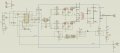
I have done designing a push pull converter which boost 12VDC up to 340VDC. Everything works fine when I use a lab power supply. But when I use a battery, my mosfets and gate driver burn out once I power up the circuit. There has been couple of times that didn't happen. I couldn't figure out why this is happening. I would appreciate your help.
 

Attachments

Thread Starter

myil

Joined May 2, 2020
148
Your lab bench power supply is current limited.
Presumably the battery you are using is a 12V automotive battery which can source >500A when short circuited.
My lab bench power supply is limited to 5A. I am using it with max value. Still, It doesn't give me any problem. Yes, it is automotive battery. The converter is the part of my inverter design. So it's necessary to use a battery. What do you recommend me to do?
 

Ian0

Joined Aug 7, 2020
13,132
Judging by the values of Rt and Ct in the TL494, this is a high-frequency design. What frequency are you running it at?
1) Your high frequency circuit has a capacitive load, and it really won't like that. When a MOSFET switches on, it will see C3 as a short circuit.
2) Is your transformer saturating?
3) Is the feedback stable? I'm not sure how U2 and U4 are supposed to work. What does the Bode plot of your feedback circuit look like? Where is your reference voltage?
4) How about a FUSE?
 

Thread Starter

myil

Joined May 2, 2020
148
Judging by the values of Rt and Ct in the TL494, this is a high-frequency design. What frequency are you running it at?
1) Your high frequency circuit has a capacitive load, and it really won't like that. When a MOSFET switches on, it will see C3 as a short circuit.
2) Is your transformer saturating?
3) Is the feedback stable? I'm not sure how U2 and U4 are supposed to work. What does the Bode plot of your feedback circuit look like? Where is your reference voltage?
4) How about a FUSE?
Hi,
I set the frequency to 50khz. My transformer is not saturating. The feedback seems to be stable. Everything is fine with lab bench power supply. I have very stable output voltage with load or without load. The problem starts when I connect the battery.
 

jpanhalt

Joined Jan 18, 2008
11,087
In Order to narrow the possibilities, what happens if you put a 1 Ω resistor in series with the battery? It will need to be a hefty (25W) resistor. On occasion, I have use lower wattage resistor in a bucket of water .
 

Ian0

Joined Aug 7, 2020
13,132
For starters, try putting L1 the other side of C3 so that the power stage doesn't see a capacitive load.
The 1 ohm resistor is an excellent idea - look on the scope to check that the voltage across it doesn't have any big peaks - that would indicate where it might be getting into trouble.
Also try it again on the power supply, and ramp the voltage up slowly to see if it gets into trouble at any particular voltage.
Finally, try it open loop with the feedback not connected to make sure that isn't the problem.
(But don't try the trick with the bucket of water at higher voltages!)
Also remember that fuses are cheaper than MOSFETs and can be replaced rather more easily!
 

Thread Starter

myil

Joined May 2, 2020
148
The startup current may be too high with the battery, since it doesn't limit the inrush current as your power supply does.
You may need a soft-start circuit such as shown in Figure 13 of the data sheet.
I have a soft start circuit. C1 has been chosen 1uf to get 50 clock cycles with 50khz (TL494 datasheet page 16).
 

Thread Starter

myil

Joined May 2, 2020
148
In Order to narrow the possibilities, what happens if you put a 1 Ω resistor in series with the battery? It will need to be a hefty (25W) resistor. On occasion, I have use lower wattage resistor in a bucket of water .
Unfortunetly, I don't have a hefty 25W resistor. My cheap Chinese electronic load also burnt. :S
 

BobaMosfet

Joined Jul 1, 2009
2,211
My lab bench power supply is limited to 5A. I am using it with max value. Still, It doesn't give me any problem. Yes, it is automotive battery. The converter is the part of my inverter design. So it's necessary to use a battery. What do you recommend me to do?
Look at your automotive cold-cranking amps rating. it's going to be 500A or more. That's what it is prepared to deliver through your circuit. When you design a circuit, you must design it using components that can (in and of themselves) withstand such potential, otherwise they will disintegrate.

Look at what crutschow said- I think he is giving you the right answer. Startup current.
 

Ian0

Joined Aug 7, 2020
13,132
A 12V lamp will work as well. 55W lamp has a resistance of 2.6 ohms, or probably about 0.26 ohms when cold. If you've got a car battery, you've probably got a spare lamp for the headlights! (If you're French, you must have by law)
 

Ian0

Joined Aug 7, 2020
13,132
Look at your automotive cold-cranking amps rating. it's going to be 500A or more. That's what it is prepared to deliver through your circuit. When you design a circuit, you must design it using components that can (in and of themselves) withstand such potential, otherwise they will disintegrate.
That doesn't mean you have to design your circuit to take 500A. It means you have to design your circuit to PREVENT it taking 500A when it shouldn't!
 

Thread Starter

myil

Joined May 2, 2020
148
For starters, try putting L1 the other side of C3 so that the power stage doesn't see a capacitive load.
The 1 ohm resistor is an excellent idea - look on the scope to check that the voltage across it doesn't have any big peaks - that would indicate where it might be getting into trouble.
Also try it again on the power supply, and ramp the voltage up slowly to see if it gets into trouble at any particular voltage.
Finally, try it open loop with the feedback not connected to make sure that isn't the problem.
(But don't try the trick with the bucket of water at higher voltages!)
Also remember that fuses are cheaper than MOSFETs and can be replaced rather more easily!
Hi Ion0,

Thank you for your help. It's my stupid that I placed the inductor L1 by mistake after output capacitor. I swapped the inductor L1 as you said. Now, it seems to be working fine. I switched on and off 10-15 times so far and have no problem.
 

Ian0

Joined Aug 7, 2020
13,132
There's a lot of Chinese made inverters on the market which have exactly the same problem. I've seen them under the brand name "Human Power", but probably several others as well. I think that the manufacturer overcame the problem by adding lots of extra MOSFETS, but they still blow up regularly.
I still think that your feedback is a bit dubious. I'm not sure how good the phase and gain margins will be, but you've certainly gone about it in a very expensive way! Give this a read: https://www.ti.com/seclit/ml/slup340/slup340.pdf - your circuit behaves like a voltage-mode buck regulator.
 

Thread Starter

myil

Joined May 2, 2020
148
I placed inductor L1 after output capacitor in my PCB design which created the problem. Now, I swapped it as Ion0 said and that seems to be working fine. Thank you all for helping.
 

DickCappels

Joined Aug 21, 2008
10,661
That is probably because the TL494 is a pulse-width modulated voltage regulator which requires a low pass filter on the output change the pulses to DC voltage. With rectifiers feeding the capacitor directly a peak detector is formed and at start-up the circuit "tries" to change the capacitor up to the desired voltage level as quickly as possible with no possibility of regulation.

Repeating @Ian0 's advice (post #4, Question #4) since you plan to use this with a car battery, it is a really good idea from a safety standpoint to have a suitable fuse somewhere between the battery and the power supply circuit.
 

Ian0

Joined Aug 7, 2020
13,132
Also worth pointing out how unsuitable SLI (starting lighting and ignition) batteries are for anything other than that purpose. They will be quickly ruined by anything involving continuous power or deep discharge.
 
Top