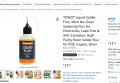
That could be one of the reasons. The wire could also have already had some grime on it. If the solder wasn't bonding to the wire, it's either due to surface contamination, improper wetting, or too much solder.
Use a cotton ball dampened with acetone and wipe off the grime on the surface. It'd be best to wear a latex glove because acetone is hard on your skin.
Apply whenever you need to remove grime and just before attempting to solder.
You shouldn't need to add more solder after soldering the joint. You should be heating the wires and applying solder until it flows over the entire area. I couldn't see where you were applying the solder or if it was actually flowing.
You applied too much heat because not only did the insulation melt, it also turned black.
Wearing gloves would let you handle the wires and not contaminate them with oil from your hands.
You need to get a stand with arms with alligator clips so you can hold both wires and be able to apply some pressure on the wires with the iron tip.
Like this (one arm shown):
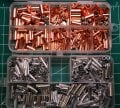
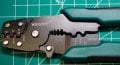
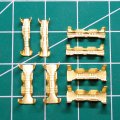
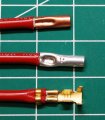
If you're having so much difficulty soldering, maybe you should go with a crimp option.
He's not even using a tinned tip or flux (but is wearing gloves). But his technique is okay. He interleaved the wires before twisting. I don't think that's necessary. He's also holding the spool of solder, like you were. I don't get that because I use 1-pound spools and that would be very inconvenient. I break off a length of solder to use. If it's more than a few inches long, I wind it around my fingers to make a small loop(s).
Not wearing gloves, didn't use flux, didn't use tinned tip (but put a blob of solder on it), just twisted the wire. He put the iron under the wire, applied solder from the top, and didn't move the tip around.
That could be one of the reasons. The wire could also have already had some grime on it. If the solder wasn't bonding to the wire, it's either due to surface contamination, improper wetting, or too much solder.
I use liquid rosin flux. I bought a liter in the mid-1990's and still have most of the liter left.
Use a cotton ball dampened with acetone and wipe off the grime on the surface. It'd be best to wear a latex glove because acetone is hard on your skin.
Apply whenever you need to remove grime and just before attempting to solder.
and at the end of a work do you guys like using electrical tape to insulate the solder . what are pros and cons of electrical tape vs shrinking protector vs? other ways Thanks
to insulate soldered connections (connector pins etc) use heat shrink. do not use electrical tape - it is a temporary measure. if you leave it on long enough it will become lose, come off and leave sticky mess.

 Facebook
 Google
 GitHub
 Linkedin