basic questions about soldering. Beginner

Thread Starter

circuityes

Joined Jun 20, 2019
39
good thanks
and at the end of a work do you guys like using electrical tape to insulate the solder . what are pros and cons of electrical tape vs shrinking protector vs? other ways Thanks
 

MrChips

Joined Oct 2, 2009
34,832
good thanks
and at the end of a work do you guys like using electrical tape to insulate the solder . what are pros and cons of electrical tape vs shrinking protector vs? other ways Thanks
At the end of the job we turn off the solder iron, put the tools away, and have a cold one.
 

dl324

Joined Mar 30, 2015
18,341
using electrical tape to insulate the solder . what are pros and cons of electrical tape vs shrinking protector vs?
If you're referring to wires, some don't require insulation. For the ones that do, I prefer heat shrink, but tape is also acceptable (and better when you don't have access to shrink the heat shrink).
 

Thread Starter

circuityes

Joined Jun 20, 2019
39
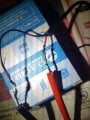
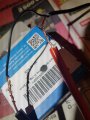
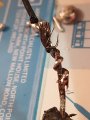
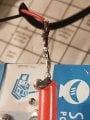
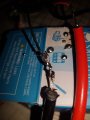
hi comments about those solderings? should I add more solder? what best have too much or not enough? all comments welcomed..

Maybe add circle where there is too much and not enough thanks20260509_153818.jpg20260509_153411.jpg20260509_151830.jpg20260509_151813.jpg20260509_151722.jpg
 

dl324

Joined Mar 30, 2015
18,341
comments about those solderings? should I add more solder? what best have too much or not enough? all comments welcomed..

Maybe add circle where there is too much and not enough
First off, I'd make the wire overlap region smaller and I'd make the twisted region tighter (spaced more closely together). The green region needs more solder, red needs less. I can't see what the underside on the red wire looks like, but that strand sticking out is unsightly.
soldering.jpg
 

dl324

Joined Mar 30, 2015
18,341
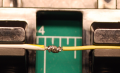
Here's an example I made soldering #24 wire to something like #18-20:
1778359032860.png
1778359125431.png
The ruler hash marks are 1/8", so the joint is 1/4" overall.
 

Thread Starter

circuityes

Joined Jun 20, 2019
39
Here's an example I made soldering #24 wire to something like #18-20:


The ruler hash marks are 1/8", so the joint is 1/4" overall.
HI it looks like you had the thinner wire roll around the bigger one and the bigger on ws straight. vs twisting them both turning around the other. which did you do?
 

Thread Starter

circuityes

Joined Jun 20, 2019
39
hI i made a short video of soldering 2 joint. all comments accepted. you can use at min xyz you did that or we see this.

Thanks
in my vimeo
 

dl324

Joined Mar 30, 2015
18,341
i made a short video of soldering 2 joint
Your tip is too big and it's not tinned. It looks like you're applying the solder to the tip of the iron instead of the wires. Then it looks like you're dabbing on more solder instead of having the solder flow.

I used a 1/32" conical tip. Applied flux to the wires and a bit of solder to the tip. Heated the wires from the bottom and applied solder to the wires. Your tip looks like a 3/16" or 1/4" screwdriver.

What looked like a cold solder blob (the too much solder I flagged) is probably due to reheating the solder too much. That will make 63/37 solder look dull, like a cold joint.
 

Thread Starter

circuityes

Joined Jun 20, 2019
39
Your tip is too big and it's not tinned. It looks like you're applying the solder to the tip of the iron instead of the wires. Then it looks like you're dabbing on more solder instead of having the solder flow.

I used a 1/32" conical tip. Applied flux to the wires and a bit of solder to the tip. Heated the wires from the bottom and applied solder to the wires. Your tip looks like a 3/16" or 1/4" screwdriver.

What looked like a cold solder blob (the too much solder I flagged) is probably due to reheating the solder too much. That will make 63/37 solder look dull, like a cold joint.
hum so you say that before soldering i would be better to add solder wire onto the iron tip so that it melts and well e why tin it? also when we leave tin on the iron it fumes( iread it was the roxin going in smoke) . Iread it was not doing good joint after so how to tin and why thanks
 

Thread Starter

circuityes

Joined Jun 20, 2019
39
i saw some video where they show how to tin the tip. they use paste. Is this paste i have good for that?
I think the guy quickly say a tined tip was making better contact. Is that the only reason?

when do we tin the tip? beginning? middle of job ? the end? do we use the paste everytime?

thanks20260509_192116.jpg
 

MrChips

Joined Oct 2, 2009
34,832
Splicing two wires takes practice. Put heat shrink tubing over one wire. After twisting the two wires, use a minimum amount of solder. The entire joint should be of uniform thickness, not much thicker than one wire alone. This way, when the heat shrink tubing is in place, the final joint should be almost the original cable.

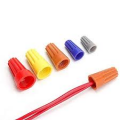
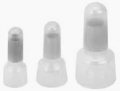
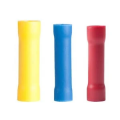
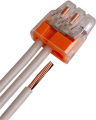
Other techniques for joining two wires is to use wire nuts, splices, and snap connectors.

Wire twist cap
1778369240180.png


End crimp cap

1778369077884.png


Cable splice
1778368929707.png

Cable connector
1778369144613.png
 

MrChips

Joined Oct 2, 2009
34,832
i saw some video where they show how to tin the tip. they use paste. Is this paste i have good for that?
I think the guy quickly say a tined tip was making better contact. Is that the only reason?

when do we tin the tip? beginning? middle of job ? the end? do we use the paste everytime?
You tin the tip of a new soldering iron first time before using.
Then you tin the tip when ever it loses its shine. I don't use paste.
 

Thread Starter

circuityes

Joined Jun 20, 2019
39
You tin the tip of a new soldering iron first time before using.
first time you ever use it or at the beginning of every session?20260509_195657.jpg

i just tinned the tip of the iron just with solder. I dont know if it is a coincidence but my next joint attemp was terrible. It is all black and does not seem to want to get wet like bubles are forming on the wire or the lead is just leaking on the table. Why does it do that?
 

Attachments

dl324

Joined Mar 30, 2015
18,341
you say that before soldering i would be better to add solder wire onto the iron tip so that it melts and well e why tin it?
Tinning mainly prevents oxidation on the tip. A blob of solder on the tip before soldering helps with heat transfer. Liquid flux can also help with heat transfer.

I applied flux when I soldered the wires because I was handling the wires with my fingers. That can transfer oil which could affect solder wetting - if it's more than the flux core can handle.
also when we leave tin on the iron it fumes( iread it was the roxin going in smoke)
If your iron is in the right temperature range, it can only be flux. Vaporizing metal takes much higher temperatures.
i saw some video where they show how to tin the tip. they use paste. Is this paste i have good for that?
I only use paste when I'm soldering surface mount components. Even then, I sometimes use solder wire. It just depends.

Take what you see in YouTube videos with a grain of salt. Some/many of the people posting don't know what they're talking about.
I think the guy quickly say a tined tip was making better contact.
Tinning prevents the tip from oxidizing.
when do we tin the tip?
Whenever it needs it.
do we use the paste everytime?
No. Paste is for surface mount components.
 

dl324

Joined Mar 30, 2015
18,341
i just tinned the tip of the iron just with solder. I dont know if it is a coincidence but my next joint attemp was terrible. It is all black and does not seem to want to get wet like bubles are forming on the wire or the lead is just leaking on the table. Why does it do that?
On the red wires, it appears that the wire has more contamination on it than the flux core can handle. Do you have any acetone/nail polish remover you can use to clean them?

Also, you're doing a crappy job of twisting the wires together. You need to get all of the strands under control (bend them all down so that they'll lay flat when soldered). If you don't, they're just going to get covered with solder and point every which way.

Since you're having such a horrible time with this, you could try tinning each wire separately (be sure to twist the strands so none are poking out). Then place the wires side-by-side and reflow the solder. Add more solder if you need it. You won't have a mechanical connection between the wires, but the solder will give a good amount of hold if it's properly wetted.
 

Thread Starter

circuityes

Joined Jun 20, 2019
39
I applied flux when I soldered the wires because I was handling the wires with my fingers. That can transfer oil which could affect solder wetting - if it's more than the flux core can handle.
Hi Dl , so the oil on my fingers could be the reason why the tin was not sticking or encompassing the wires? so what kind of flux to get for that? ho
 

Thread Starter

circuityes

Joined Jun 20, 2019
39
On the red wires, it appears that the wire has more contamination on it than the flux core can handle. Do you have any acetone/nail polish remover you can use to clean them?

Also, you're doing a crappy job of twisting the wires together. You need to get all of the strands under control (bend them all down so that they'll lay flat when soldered). If you don't, they're just going to get covered with solder and point every which way.

Since you're having such a horrible time with this, you could try tinning each wire separately (be sure to twist the strands so none are poking out). Then place the wires side-by-side and reflow the solder. Add more solder if you need it. You won't have a mechanical connection between the wires, but the solder will give a good amount of hold if it's properly wetted.
yes I have acetone . how much to apply and when?
thanks
 
Top