Automotive relay - 84Ω @ 13.8V = 165mA

Thread Starter

Tonyr1084

Joined Sep 24, 2015
9,744
Before I run with this I want to check in with those who know more about coils and stuff than I do.

Just installed an air horn in my truck. The motor draws 7A to start and about 4A when running. It only runs briefly as in when you blow the horn. It's hooked to power through a 10 amp fuse. Chassis ground is through a relay. The relay coil measures 84Ω. At common running voltage of 13.8V it looks like the amperage would be about 165mA. BUT I DON'T KNOW THAT! I know nothing about "Reactance" and don't know if I need to consider that as part of the project.

I'm about to order a horn button of some sort and I want to get something suitable. Before the order is placed, what do I need to know that I don't know? It would SEEM like a 1 amp button would be way plenty for the load it will see. I also want to fuse protect the button as it too will be connected to continuous power.

The horn is already mounted and wired. And tested by tapping positive to one side of the relay coil. It works. So there's no need to reinvent the system, it's there and it works. All I need is to order the right size horn button and appropriate fuse.

Your help is appreciated.
 

panic mode

Joined Oct 10, 2011
4,864
automotive relays do draw fair amount of current since they have relatively low resistance (50-150 Ohm).
that current produces nice inductive kick when the relay switches off. which is why some of them have diode built in. so wathe polarity, 85 is the negative side of the coil and 86 is the positive. on relays without internal diode, polarity does not matter - until someone plugs in different relay. you can add external diode just in case. 1A button should be fine.
 

Thread Starter

Tonyr1084

Joined Sep 24, 2015
9,744
Thanks PM. No diodes. No worry of inductive kickback. Horn wired direct to the battery. Relay will be wired to the horn button and the button will be wired to the battery. No electronics in the circuit whatsoever.

I think THIS switch will make a nice addition. The LED will be wired into the lights so when lights are on the horn will be illuminated. When the horn button is pressed the light will go out and the horn will blow. When released the horn will stop blowing and the LED will light back up.
 

nsaspook

Joined Aug 27, 2009
16,250
Thanks PM. No diodes. No worry of inductive kickback. Horn wired direct to the battery. Relay will be wired to the horn button and the button will be wired to the battery. No electronics in the circuit whatsoever.

I think THIS switch will make a nice addition. The LED will be wired into the lights so when lights are on the horn will be illuminated. When the horn button is pressed the light will go out and the horn will blow. When released the horn will stop blowing and the LED will light back up.
The diode is there to protect the switching contacts from arcing and corroding due to high voltage potentials from inductive loads. I would expect the cars horn button is pretty rugged and is already protected from horn arcing from inductive loads being disconnected. Your new, added button, maybe not.

Show us the new button and relay circuit, please.
 

panic mode

Joined Oct 10, 2011
4,864
car horn draws some 4-6 A and it is an inductive load.
automotive relay coil draws some 0.2A and it is an inductive load.

any inductive load powered by DC and switched off abruptly will have that eroding effect on contacts.

relay contacts are rated for 20-40A. so on average relay to horn current ratio is 6:1.
button contact is rated for 1A so on average that contact to relay coil current ratio is 5:1.
so both are generously overrated and horn is not a feature used frequently, there are also bylaws prohibiting unnecessary use.

so both sides of the circuits should work fine without diodes, even for a driver that abuses horn...
adding diodes does reduce wear but both relay and button are low cost and easy to replace even if there is a failure.
 

nsaspook

Joined Aug 27, 2009
16,250
car horn draws some 4-6 A and it is an inductive load.
automotive relay coil draws some 0.2A and it is an inductive load.

any inductive load powered by DC and switched off abruptly will have that eroding effect on contacts.

relay contacts are rated for 20-40A. so on average relay to horn current ratio is 6:1.
button contact is rated for 1A so on average that contact to relay coil current ratio is 5:1.
so both are generously overrated and horn is not a feature used frequently, there are also bylaws prohibiting unnecessary use.

so both sides of the circuits should work fine without diodes, even for a driver that abuses horn...
adding diodes does reduce wear but both relay and button are low cost and easy to replace even if there is a failure.
100% true but I sometimes design for life safety systems and knowing Murphy, the failure will happen at the worse possible time.

Take a shot every time you hear that car horn.
 
Last edited:

Thread Starter

Tonyr1084

Joined Sep 24, 2015
9,744
I sometimes design for life safety systems and knowing Murphy, the failure will happen at the worse possible time.
The air horns are secondary and not as loud as OEM horns still on the truck. It's more of a toy than anything else. But I also agree about them failing at the worst possible time.

Back in the 70's I installed a custom steering wheel on my car. The horn was wired properly and worked as it should. Until one day I tapped the horn and it stuck on. Had to pull over, pop the hood and disconnect the horn from the relay. By the time I got home and was able to diagnose the problem the horn relay was too hot to touch. Turned out the problem was one of the wires on the steering wheel and adapter had pinched a wire. Though that wire wasn't instantly pierced it eventually broke through the insulation and made ground contact, which is how the horn relay was wired. It was fixed and had no further problems. But yes, Life, Mission Critical situations need to be nearly 100% fool proof. The air horns are on my truck because they can be.

As for a wiring diagram, this is a link to the button. It's SPDT, LED Lighted. The location where it will be installed has both power and ground conveniently located. It's adjacent to a DC volt meter that shows battery and alternator voltage. Turn the truck on and you read the battery. Start it and it reads the running voltage. As for a schematic, I have yet to draw that out. The switch itself will arrive tomorrow some time.
 

nsaspook

Joined Aug 27, 2009
16,250
The air horns are secondary and not as loud as OEM horns still on the truck. It's more of a toy than anything else. But I also agree about them failing at the worst possible time.

Back in the 70's I installed a custom steering wheel on my car. The horn was wired properly and worked as it should. Until one day I tapped the horn and it stuck on. Had to pull over, pop the hood and disconnect the horn from the relay. By the time I got home and was able to diagnose the problem the horn relay was too hot to touch. Turned out the problem was one of the wires on the steering wheel and adapter had pinched a wire. Though that wire wasn't instantly pierced it eventually broke through the insulation and made ground contact, which is how the horn relay was wired. It was fixed and had no further problems. But yes, Life, Mission Critical situations need to be nearly 100% fool proof. The air horns are on my truck because they can be.

As for a wiring diagram, this is a link to the button. It's SPDT, LED Lighted. The location where it will be installed has both power and ground conveniently located. It's adjacent to a DC volt meter that shows battery and alternator voltage. Turn the truck on and you read the battery. Start it and it reads the running voltage. As for a schematic, I have yet to draw that out. The switch itself will arrive tomorrow some time.
That's a nice quality button. Yes, to sound toys in cars.
The Fog Horn is really nice for moving shopping cart druggies off the road in Portland.

3798387037_a90b20b7c4_z.jpg3802715988_c9b777db74_z.jpg
Speaker connected to a extra channel from the car 5.1 audio system. The sound box is in the glove compartment.

Voltage regulator, sound module and two small relays for each of the source effects. RCA audio out for the amplifier.
3801899437_4864a24073_z.jpg
Sound recorder module for two recordings, selected by relays from the cars Kenwood head-unit touch-screen switch option.
 
Last edited:

Thread Starter

Tonyr1084

Joined Sep 24, 2015
9,744
Show us the new button and relay circuit, please.
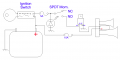
Screenshot 2025-04-11 at 9.11.01 AM.png
The SPDT Mom. switch houses the LED, which is on when the key is on. It's chassis grounded.
The relay is horn mounted and shares chassis ground with the horn. The horn will only blow when the key is on and the MOM switch is pressed.

Fuses omitted from the diagram. Horn is 10A fused on 14 gauge wire. The switch will be powered via Key Live circuit and fuse.
 
Last edited:

nsaspook

Joined Aug 27, 2009
16,250
View attachment 346702
The SPDT Mom. switch houses the LED, which is on when the key is on. It's chassis grounded.
The relay is horn mounted and shares chassis ground with the horn. The horn will only blow when the key is on and the MOM switch is pressed.

Fuses omitted from the diagram. Horn is 10A fused on 14 gauge wire. The switch will be powered via Key Live circuit and fuse.
I would make sure the main fuse from the Ignition Switch is someplace easily accessible and easy to remember where the hell it is, just in case of a switching stuck, horn on failure like you talked about earlier.
 

Thread Starter

Tonyr1084

Joined Sep 24, 2015
9,744
I would make sure the main fuse from the Ignition Switch is someplace easily accessible and easy to remember where the hell it is, just in case of a switching stuck, horn on failure like you talked about earlier.
Fuse to motor through relay is under the hood - one of those in-line fuse holders.
Fuse to the button and relay coil is in the driver side fuse panel and connected with one of those pigtail fuse kits where you remove the fuse, plug it in, place the original fuse on one set of slots and the other set of slots feeds a free wire to be connected to whatever is the case.
 

nsaspook

Joined Aug 27, 2009
16,250
Fuse to motor through relay is under the hood - one of those in-line fuse holders.
Fuse to the button and relay coil is in the driver side fuse panel and connected with one of those pigtail fuse kits where you remove the fuse, plug it in, place the original fuse on one set of slots and the other set of slots feeds a free wire to be connected to whatever is the case.
I'm sure you did it perfectly from the electrical safety point of view but remembering where the hell the fuse is, 5 years later, when the horn is stuck at church, is what our pal Murphy loves.

A nice FAT label that says, FUSE FOR HORN IS HERE ->, that the driver can see easily without too much trouble.
 

Thread Starter

Tonyr1084

Joined Sep 24, 2015
9,744
What do I care about the next owner. I'll probably have removed the horns before selling or trading it in.

Anyway, in light of comments about relay wiring I've revamped the schematic. While at it I decided to switch the ground of the horn instead of power. I'm confident someone is going to have something to say about that too. Nevertheless, I'm showing fuses as well. Here's the revamped drawing. Remember - the drawing is just a representation of what's going on. Don't be concerned that I've swapped the positive and negative wires on the motor. When hooked up correctly the horn blows. And yes, I've already tested that part of it.
Screenshot 2025-04-11 at 11.51.29 AM.png
 

Thread Starter

Tonyr1084

Joined Sep 24, 2015
9,744
DONE!
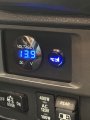
IMG_5219.JPG
Battery voltage gauge right there, easy hookup to power and ground. Button only lit when engine running (or on accessory).

Had to redo the plastic face frame with aluminum. Took a while making things fit. Once fit, it was painted. When dry enough to install - gauge and horn button was installed. Ran wire to the horn via a rubber plug. Easier than I expected.
 
Top