Auto Chicken Coop door with Astronomic Clock Timer Project

Hi Jbrienza.
I agree with Phil-S. An easier method may be worth considering. I've been looking at doing a similar project, except my concept uses a couple of AA batteries, a small solar panel to trick charge and a couple of small servo motors.

I intend on using a DS3231 real time clock module to act as the timer. It only costs around AU$2. You can use a couple of libraries that have already been written to load the current time and set the daylight savings time where you live. Then via code, you can tell the door to lock and unlock at the relevant time of day each week (pending dusk/dawn times you find on the net).

Alternatively, you can use an LDR that you can find on eBay for around 10 cents each. Again via code, this can be easily triggered to "open" the door when it gets light and close the door when it starts getting dark. In your code, you could put a ckeck in place to ensure that on a day when a thunderstorm is about to happen and it gets darker, the door waits for a minimum time (say 6pm) before it will close - otherwise poor Colette will get locked out of her house before she wonders home.

How I'd like to set my coup up is that maybe the door swings open via a chicken standing on a platform inside the coup. I can see the platform on say about a 5 degree angle, with one edge touching the ground and the other up say 50mm. Stepping on it pulls a wire that pulls the door open. A similar platform is on the outside as well.

To stop one platform or the other operating, a small cheap servo motor locks one or the other platform from dropping on its hinge. Another motor locks or unlocks the door to stop the nasty foxes getting in. As the meerkat add says... "Simplesssss".
 

Thread Starter

Jbrienza

Joined Sep 21, 2017
12
Hi I am looking to build an auto chicken coop door with the following parts below. I am a circuit dummy and have done much reading but just don't understand everything fully. Basically I would like door to open and close on the dawn dusk schedule of the timer (on off schedule). I am planning to bring AC power to the coop bc I will need a water heater to prevent frozen water in the winter. I have read many of the coop door posts but cant seem to find what I am looking for.

Is there someone who can please help me with a ‘barney style’ wiring diagram and also recommend a DPDT relay that I should get based on the parts I am using. I would like to keep it as simple as possible. Any help is much appreciated. PS- the linear actuator has limit switches built into it, and draws 3.5 to 4.5amps max (I contacted the mfg).

timer:
https://www.intermatic.com/en/timer-controls/electronic-in-wall-timers/st01

linear actuator:
http://www.ebay.com/itm/Heavy-Duty-...637038&hash=item4d04a75949:g:b-cAAOxyiOxR0Ol4

DPDT Relay:
( not sure If I need or what exactly what to get....)
 

Attachments

Phil-S

Joined Dec 4, 2015
241
Take look at Theben DIN rail timers, specifically Selekta 170 top2
This is dawn to dusk single channel timer that takes account of your position (latitude and longitude) and automatically calculates the sunrise and sunset times.
They won't be cheap, but it might give you an idea of what's available off the shelf. Theben stuff is good quality. I'm not sure how an ordinary timer is going to help you if the dawn/dusk bit is the most important.
Another way which you probably wouldn't want to contemplate at this stage, is a micro-controller with a realtime clock where you could set up an array of numbers which would give you a correction for the dawn /dusk times.
I still think you are going to need some type of light sensor along the way.
As for the relay if you need it, relays are specified by the coil voltage (AC, DC etc.) and the rating (usually Amps) of the contacts - the DC and AC ratings are different. The other factor is the form, i.e. PCB or plug-in type. Also look up protection diodes to prevent damage to other components when the relay is operated.
I hope the chickens appreciate all this.
 

ebeowulf17

Joined Aug 12, 2014
3,307
Hi I am looking to build an auto chicken coop door with the following parts below. I am a circuit dummy and have done much reading but just don't understand everything fully. Basically I would like door to open and close on the dawn dusk schedule of the timer (on off schedule). I am planning to bring AC power to the coop bc I will need a water heater to prevent frozen water in the winter. I have read many of the coop door posts but cant seem to find what I am looking for.

Is there someone who can please help me with a ‘barney style’ wiring diagram and also recommend a DPDT relay that I should get based on the parts I am using. I would like to keep it as simple as possible. Any help is much appreciated. PS- the linear actuator has limit switches built into it, and draws 3.5 to 4.5amps max (I contacted the mfg).

timer:
https://www.intermatic.com/en/timer-controls/electronic-in-wall-timers/st01

linear actuator:
http://www.ebay.com/itm/Heavy-Duty-...637038&hash=item4d04a75949:g:b-cAAOxyiOxR0Ol4

DPDT Relay:
( not sure If I need or what exactly what to get....)
I was hoping someone with more expertise would give you direct answers to your questions, but no luck so far, so here goes:

I believe any of these relays would do what you need:
https://www.digikey.com/products/en...f_1410=u20A&pf_1410=u25A&pf_1410=u30A&pf_69=6

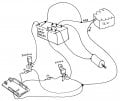
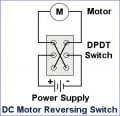
As for wiring the relay, what you need is a very common, standard motor reversing arrangement. The relay coil should be powered by the output from your dusk to dawn timer. The power input comes from your dc power supply. It would look like a variation of these common arrangements:
IMG_2939.JPG

IMG_2936.JPG

For power supplies, obviously you need 120VAC in and 12VDC out, so it's just the amperage I'm less sure about. I wonder how much overhead you need for starting a motor. I like over-building things to play it safe, so I'd prefer to at least double your expected amperage needs (4.5A x 2 = 9A x 12V = 108W or higher.) That may be overkill, and the power supplies are getting pricey at that point, so hopefully someone else can give better advice. Anyway, here's a list of supplies starting at 5A (60W) and going up from there:
https://www.digikey.com/products/en...f_1120=425&pf_1120=79&pf_1120=528&pf_1120=330
 
I did, if you read between the lines and followed the link.

This https://forum.allaboutcircuits.com/attachments/motor-limits-pdf.126710/ circuit I posted for a similar, but more complex of a problem.

The bridge rectifier, capacitor and resistor can be eliminated. The SPDT limit switches can be reduced to SPST NC switches.

The link above allowed the ability to get a FULLY OPEN and FULLY CLOSED signal as well as a MOVING signal. The linked PDF also employs dynamic braking, so the motor stops instantly.
 

ebeowulf17

Joined Aug 12, 2014
3,307
I did, if you read between the lines and followed the link.

This https://forum.allaboutcircuits.com/attachments/motor-limits-pdf.126710/ circuit I posted for a similar, but more complex of a problem.

The bridge rectifier, capacitor and resistor can be eliminated. The SPDT limit switches can be reduced to SPST NC switches.

The link above allowed the ability to get a FULLY OPEN and FULLY CLOSED signal as well as a MOVING signal. The linked PDF also employs dynamic braking, so the motor stops instantly.
I didn't mean to offend anyone, but the specific requests were:
  • Advice on DPDT relay selection
  • Advice on power supply selection
  • Diagram showing how to wire DPDT relay.
It didn't look like anyone had addressed those specific requests, including your linked schematic, so I made my best attempt to do so. I welcome criticism of that advice, as I freely admit I still have quite a bit to learn.
 

Thread Starter

Jbrienza

Joined Sep 21, 2017
12
I didn't mean to offend anyone, but the specific requests were:
  • Advice on DPDT relay selection
  • Advice on power supply selection
  • Diagram showing how to wire DPDT relay.
It didn't look like anyone had addressed those specific requests, including your linked schematic, so I made my best attempt to do so. I welcome criticism of that advice, as I freely admit I still have quite a bit to learn.
Thanks Ebeowulf17
 

ebeowulf17

Joined Aug 12, 2014
3,307
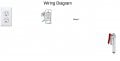
Here's my attempt to show the timer wiring to the relay coil, based on the idea of using a relay with a 120VAC coil, and working from the original drawings Jbrienza posted. I believe this is correct. As with any project involving mains wiring, double (and triple) check everything and be careful.

*** This drawing is only appropriate if using a relay with a 120VAC coil! ***
*** If using a low voltage coil, everything will need to be wired differently! ***
  • The red wire on the switch isn't used at all.
  • Hot wire from plug (black) connects to switch's black wire.
  • Blue from switch (switched hot) goes to one side of relay coil.
  • White from plug (neutral) goes to other side of relay coil.
  • 12VDC power supply should be plugged into standard outlet (not switched by timer)
  • 12VDC output from power supply should feed power to actuator through relay contacts as discussed in earlier posts.

Wiring to Coil_for-AAC copy.png
 

ebeowulf17

Joined Aug 12, 2014
3,307
Here's an alternate wiring scheme that should work if you've got a relay with a 12VDC coil.
  • Red wire from switch still isn't used.
  • Positive output from power supply connects to switch's black wire.
  • Blue from switch (switched +12VDC) connects to one side of relay coil (positive side if it's polarized coil)
  • Negative (maybe labelled ground or common) from power supply goes to other side of coil.
  • The positive and negative 12VDC lines will both need to be split so that unswitched 12V can also be run through the relay contacts as shown in previous posts.
Wiring to Coil_for-AAC_low-voltage copy.png
 
Top