Facebook
 Google
 GitHub
 Linkedin
I have a Marantz SR7000 amplifier (240V / 50Hz) that has recently developed some problems.
Normally when powering up the amp, there would be an initial clicking sound, a pause of 3-4 seconds, followed by a second click when the amp would start outputing amplified sound. In April 2024, when powering up the amp, it started taking more than the usual 3-4 seconds for the relays to click into place. Once powered up, the amplified audio was perfect and there was no hum or crackle. I disconnected the amp and put it aside for a few months.
When I powered up the amp this morning (it's 12°C / 54°F indoors), it took a full 40 seconds before the second relay clicked and amplified audio started coming out. However, after a minute or so, there was another click and the audio stopped. A bit later, the relays clicked again, and a quiet 200Hz hum came out as well as a momentary white noise/crackle which disappeared after a couple of seconds. After turning the amp off then on again, the audio was perfect, however after a few minutes it stopped again, only to restart after half a minute or so.
Apart from the speakers and AC power, the amp is connected only to a TV using a TOSLINK optical cable - nothing else is connected.
The amp is is powered through an IEC male plug with no earth pin. It's currently winter, but in the summer it gets very humid.
Service manual and User guide
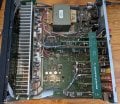
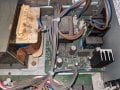
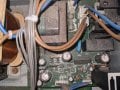
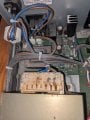
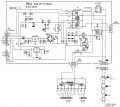
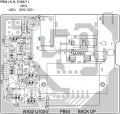
I have attached photos of the IC connected to the mains plug and some schematics of the same board from the service manual.
Normally when powering up the amp, there would be an initial clicking sound, a pause of 3-4 seconds, followed by a second click when the amp would start outputing amplified sound. In April 2024, when powering up the amp, it started taking more than the usual 3-4 seconds for the relays to click into place. Once powered up, the amplified audio was perfect and there was no hum or crackle. I disconnected the amp and put it aside for a few months.
When I powered up the amp this morning (it's 12°C / 54°F indoors), it took a full 40 seconds before the second relay clicked and amplified audio started coming out. However, after a minute or so, there was another click and the audio stopped. A bit later, the relays clicked again, and a quiet 200Hz hum came out as well as a momentary white noise/crackle which disappeared after a couple of seconds. After turning the amp off then on again, the audio was perfect, however after a few minutes it stopped again, only to restart after half a minute or so.
Apart from the speakers and AC power, the amp is connected only to a TV using a TOSLINK optical cable - nothing else is connected.
The amp is is powered through an IEC male plug with no earth pin. It's currently winter, but in the summer it gets very humid.
Service manual and User guide
I have attached photos of the IC connected to the mains plug and some schematics of the same board from the service manual.
Attachments
-
 1.4 MB Views: 7
 -
 1.4 MB Views: 7
 -
 1.6 MB Views: 7
 -
 1.3 MB Views: 8
 -
 340.7 KB Views: 8
 -
 334.5 KB Views: 8