Advice on a PC to oscilloscope adapter please

be80be

Joined Jul 5, 2008
2,395
4900 results for: PC Oscope on this forum

Be nice if people would post a link to the one they was talking about.

Most sound cards can go too 47 k I used some 2n35 to feed my mic I did have it somewhere I even made some 10 x probes for it.
I wish my computer not messed up I saved the drive but it got lost when i moved. Or i would post it.
 

Thread Starter

whitehaired novice

Joined Jul 15, 2017
289
4900 results for: PC Oscope on this forum

Be nice if people would post a link to the one they was talking about.

Most sound cards can go too 47 k I used some 2n35 to feed my mic I did have it somewhere I even made some 10 x probes for it.
I wish my computer not messed up I saved the drive but it got lost when i moved. Or i would post it.
Sorry--I don't really know how but maybe this will help==Discussion in 'The Projects Forum' started by Wendy, Jun 6, 2008.
 

Thread Starter

whitehaired novice

Joined Jul 15, 2017
289
Years ago, when dinosaurs roamed the countryside prior to the dinosaur ban and oscilloscopes were in their early years the vertical deflection was controlled by a Volts/Div attenuation/amplifier.scheme. The vertical deflection actually applied to the CRT vertical deflection plates was 50 mV/Div in many cases. Signals below 50 mV/Div were amplified and those above were attenuated. A simple Google of any of the schematics of these scopes will yield a diagram of how they worked. So absolutely you can create a vertical channel deflection system. Here is an example of the old Tektronix 1A1 Vertical Plug in for early Tek Scopes like the 545, you will see circuit diagrams in the pDF file on download.

The end result is it becomes easier to buy than build such a project. While I can appreciate your financial status investing in a PC pico scope is the best way to go.

Actually, I am one of those dinosaurs. As I remember The deflection plates were several hundred volts Peak to Peak apart, driven by a directly coupled push-pull tube amp. In my day the operator had to manually adjust the gain to get the proper calibration. My total scope experience (other than reading about them) was about a two week period where someone gave me a trial period on a scope with tremendous drift. It was so bad I had him take it back.
OHOH--I see I inserted my reply in the wrong place and made it look like it was from Ron, not me. Sorry, whitehaired novice.
Just My Take....
Ron
 
Last edited:

Janis59

Joined Aug 21, 2017
1,893
RE: MaxHeadRoom "" The one I find really useful is the Syscomp digital scope""
My vote is for Picoscope Picotech 6404C. Very useful, mecryless fast and oriented on power-users, has 4 channels, freq analyse funct, data dechipherating funct and many more. But not cheap, cost the price what one may buy a very poor apartment in the province. I have it already few years and still am happy every time switching it on.

Other one I use more often is just the mobile phone sized standalone (battery fed) one-channel scope INTRUSTAR, it cost me less than 100 USD and works up to 50 MHz. But that is only for repair/serviceing needs, as for serious jobs the two channel are mandatory.
 

Danko

Joined Nov 22, 2017
2,180
I have considered the DSO but it is my understanding that it does not allow both x and y axis to be measured--as in a curve tracer. Please ask your friend if I have misunderstood the specs.
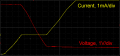
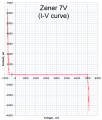
This I-V curve of 7V Zener diode obtained with help of 8-bit USB PC oscilloscope and Microsoft Excel program:
Zener_osc.png Zener.png
 

Attachments

Last edited:

Thread Starter

whitehaired novice

Joined Jul 15, 2017
289
This I-V curve of 7V Zener diode obtained with help of 8-bit USB PC oscilloscope and Microsoft Excel program:
View attachment 147676 View attachment 147677
Danko, Many thanks. Please remember my name--novice. Please post a schematic. This seems to be exactly what I want.
I'll admit to being a little frightened of the scope kit for two reasons. First is it has a lot of negative reviews and second my limited small motor control makes soldering a pc board difficult. But I'll give it a go.
 

BR-549

Joined Sep 22, 2013
4,928
whitehaired novice........your first scope should be an analog scope. Consider an used dual channel tektronix. ~100 bucks.

I would not recommend a PC scope. You want your scope to be independent from other equipment.

Read @Lestraveled posts of used scopes.
 

Danko

Joined Nov 22, 2017
2,180
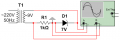
Please post a schematic. This seems to be exactly what I want.
I did it so:
I-V.png
1. Obtain stable image of both channels on computer screen.
2. Save data from oscilloscope to text file.
3. Open text file in Excell, highlight columns with data of 1 and 2 channels, click on INSERT tab, click on SCATTER, click on SCATTER WITH SMOOTH LINES.
That's it. You have chart with I-V curve.
Image, text file and chart see in post #25.
 
Last edited:

Danko

Joined Nov 22, 2017
2,180
Danko, Thanks, but this won't work with the DSO, right? I'm sure it has only 1 chanel.
Hello whitehaired novice,
DSO does not mean Digital Scope One channel.
It is Digital Storage Oscilloscope.
For example, DSO HANTEK-6022BL
It has 18 channels (16 channels are logical).
In attachment - Hantek-6022BL-PC-USB-Oscilloscope User's Manual.
But much better 11-bit oscilloscope, MaxHeadRoom suggested in post #17
 

Attachments

Last edited:
At the moment all I really would like to do is to make some charistic curves of diodes--a learning experience rather than with any goal.
I would not do it with a scope. A home version of LabView. A D/A and A/D and some work on your part. I tested solar cells professionally. Unfortunately, my first project was to use something already bought that was unsuitable with upgrades along the way to where the testing was traceable to NREL.
 
Top