Facebook
 Google
 GitHub
 Linkedin

Hello,
I have been working on a PSFB converter , my controller is UCC28950 and there is MCU in my system but it will just read ADC datas and write some digital signal for ON/OFF the IC and this will be a battery charger that is working with CC/CV charge so the regulated max. output current is 60A in CC mode and I am analyzing the circuit only this mode for now. The 60A is regulated , I have a shunt resistor at output and a current sense opamp INA241A4IDDFR and there is error amplifier outside of controller that is generating PWM according to reference level for output current loop and I need to change the output level before the circuit works because user can prefer lower charge current ad I have two options , first one is adjusting reference voltage that is in error amplifier , the other one is adjust the feedback current gain .
Schematics are below and which one is better solution ? I cant find a way to solve this probelm , please help me
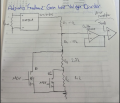
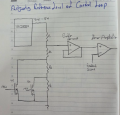
and also are buffer op-amps necessary to stable the voltage level ? and Do they get slower the response time if I use them in current feedback path ?
I have been working on a PSFB converter , my controller is UCC28950 and there is MCU in my system but it will just read ADC datas and write some digital signal for ON/OFF the IC and this will be a battery charger that is working with CC/CV charge so the regulated max. output current is 60A in CC mode and I am analyzing the circuit only this mode for now. The 60A is regulated , I have a shunt resistor at output and a current sense opamp INA241A4IDDFR and there is error amplifier outside of controller that is generating PWM according to reference level for output current loop and I need to change the output level before the circuit works because user can prefer lower charge current ad I have two options , first one is adjusting reference voltage that is in error amplifier , the other one is adjust the feedback current gain .
Schematics are below and which one is better solution ? I cant find a way to solve this probelm , please help me
and also are buffer op-amps necessary to stable the voltage level ? and Do they get slower the response time if I use them in current feedback path ?