Adding batteries to portable gas analyser

Thread Starter

liteace

Joined Mar 7, 2012
242
Hi All, need more help, my adding batteries is on a roll, you helped me with this:

https://forum.allaboutcircuits.com/threads/adding-batteries-to-worklamp.165715/#post-1460583

a MASSIVE thank you to all

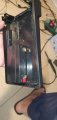
I have also got a portable gas analyser, I broke the LCD so had to dismantle to change, this thing has got a NP1.2-6 Yuasa 6v 1.2Ah stuck inside,
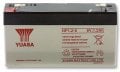
42246024.jpg


I have changed it a couple of times but this one is also dying, while Im waiting for the new LCD to arrive I would like to remove this brick and put a few
18650's in if poss.
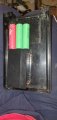
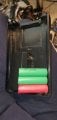
Im not worried about using the charging circuit thats built in for the gel battery I can add another as there's a bit of room in the back.

This machine runs direct on 12 volts from external source plugged into charging / power jack, that's how I mainly use it, whats the best approach, do I put 6 in wire them in parallel so I have a 7.2 volts and connect direct to the wires that are for the gel batter or shall I make it up to 12 volts and connect to the PCB where the external supply / charger port is, could someone clever work out run time compared to the gel battery, I know we dont know current draw but say it was using 500ma and lasted 2 hours on the gel, what would it last on the 18650's

or shall I just not bother and get a genuine Yuasa and just replace that?
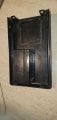


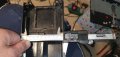
20200125_121729.jpg20200125_121737.jpg20200125_121854.jpg20200125_122426.jpg20200125_122444.jpg
 
Last edited:

Dodgydave

Joined Jun 22, 2012
11,395
I would put 2 in Series at 7.2V to 8.4V, and then put more packs in parallel for longer current drawing, as long as you have the correct charger, as these are different from Sla batteries.

If you're using 500mA, then the Yuasa will last 2Hrs appx, and the lithium cells will depend on the capacity usually 3000mAh cells will give upto 6Hrs....
 
Last edited:

KeithWalker

Joined Jul 10, 2017
3,607
You can convert it to run on LiPo batteries but the analyzer will need a 12V so you must add a DC to DC boost convertor to the output of the batteries. There a re lots of inexpensive moduled advertised on-line.
Regards,
Keith
 

Thread Starter

liteace

Joined Mar 7, 2012
242
sorry, yes 2 in series to 7.2V, then add another 2x2 packs so ive got 6 18650's in total.
The spec sheet with the gel battery is 4 hours but thats with the machine being brand new, if I can get an hour out of it with the 18650's I'll be happy

What do you think is the best way to go about this, use the original wet gel battery connector and feed it with 7.2 or use the external connector, PCB connections and feed it with 12 volts.

Does this exist, looking for a small controller that will charge 6 18650's safely with red / green charging / charged LED and will also protect the 18650's from going under voltage

Thanks
 
Last edited:

KeithWalker

Joined Jul 10, 2017
3,607
The existing lead acid battery supplies 7.2 watt hours of energy. A single 18650 LiPo cell will provide 10.8 watt hours of energy so it will last 1 1/2 times as long as the lead acid battery. Do you really need more than that?

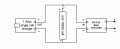
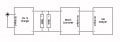
This is the setup you will need:

Drawing1.jpg
Regards,
Keith
 

Thread Starter

liteace

Joined Mar 7, 2012
242
Yes I would like to have a little more run time just because I can + I have old laptop cells here I would like to re-use, the new LCD will take about 20 days to arrive in that time I can knock something together powering it

In you drawing there, what powers the 1a single cell charger, whats the input voltage?

Thanks
 

MisterBill2

Joined Jan 23, 2018
27,558
You can put either 3 or 4 of the lithium cells in series, depending on the regulator circuit for the gas analyser. BUT you do need to know the current that the analyzer draws to know how many amp-hours you need to provide, because over-discharging the cells will damage them.
So I suggest using an external supply with an accurate ammeter and finding out just what the current draw is. Then you can make an informed decision.
 

KeithWalker

Joined Jul 10, 2017
3,607
In you drawing there, what powers the 1a single cell charger, whats the input voltage?

Thanks
I usually use a USB charging module something like this for charging 18650 batteries:

https://www.aliexpress.com/item/400...chweb0_0,searchweb201602_4,searchweb201603_53

The input is 5 v @ 1 amp from any USB source. If you use two cells in parallel they will last more than three times longer than the lead gel battery. The same charger module will still work. It will just take twice as long to charge them. That should not be an issue.

If you use a 3V to 12V boost module like this, It will protect the battery from over-discharge because it will quit working when the battery voltage falls to 3 volts

https://www.aliexpress.com/item/328...chweb0_0,searchweb201602_4,searchweb201603_53

Good luck.
Keith
 

Thread Starter

liteace

Joined Mar 7, 2012
242
Sorry Im missing something here, why would I want to boost it to 12 volt, the original internal battery is 6 volt ?

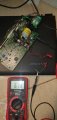
with the external power / charger plugged in the unit is supplying 6.78 volts to the gel battery connections

20200125_203814.jpg
 
Last edited:

KeithWalker

Joined Jul 10, 2017
3,607
My mistake. I read that it runs from an external source of 12 Volts. The boost convertor should be set to output 6 Volts.
Regards,
Keith
 

MisterBill2

Joined Jan 23, 2018
27,558
It seems that the six volt battery of the device charges from an external 12 volt source. That would be reasonable for a system charging a lead acid or even NiCad battery.
To rin the device from a string of 2 lithium cells, or groups of two cells, a buck regulator will be required, providing 8.4 down to 7.2 volts into the regulator and 6.0 volts out. That is easily achieved. then there will be a constant 6 volts available. BUT there will also need to be a battery voltage monitoring circuit to avoid over-discharging the cells.
 

Thread Starter

liteace

Joined Mar 7, 2012
242
"there will also need to be a battery voltage monitoring circuit to avoid over-discharging the cells"
Thats what Im looking for, what the plan is, put 6 x 18650's that'll be 2 sets of 3 so Ive got 7.2V to 8.4ish out, through the buck regulator down to 6 volts, the only problem I can see at the mo is the voltage monitoring circuit, I might have to put 2 in 1 for each bank of 18650's as Ive looked for a 6 with 7.2V to 8.4ish output but not found as yet
 

MisterBill2

Joined Jan 23, 2018
27,558
I am presuming that when the 6 volt battery was new that the whole device could run totally on the battery without any external supply connected.
 

Thread Starter

liteace

Joined Mar 7, 2012
242
I am presuming that when the 6 volt battery was new that the whole device could run totally on the battery without any external supply connected.
Yes correct, the external is more a charging port but will power the unit when the battery is low / flat.
Do these buck regulator get very hot ?

Thanks
 

MisterBill2

Joined Jan 23, 2018
27,558
Yes correct, the external is more a charging port but will power the unit when the battery is low / flat.
Do these buck regulator get very hot ?

Thanks
An adequately rated buck-mode regulator is quite efficient, and so they do not get very hot at all. A linear regulator is much less efficient.
Since the input voltage would be from a high of 8.4 volts to a low of 7. 2 volts, a low dropout circuit is required. Probably just an adjustment of a standard 5 volt regulator circuit is all that would be required. There may even be a commercially available regulator module that could be adjusted a bit to provide the voltage that this application requires.
 

Thread Starter

liteace

Joined Mar 7, 2012
242
My Samsung INR18650-25R have arrived so it time for the modification.

Would this work. eliminate completely the internal battery connections

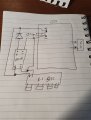
4 x 18650's through a 4s BMS feeding a buck converter, set to 12 volt out, the out of the buck connected to the original 12v charge/external with a diode in place to stop the voltage feeding back into the buck when charging or running on external power, sorry about the really bad drawing


20200223_101912.jpg
 
Top