Thank you.
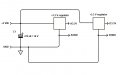
In some literaures what I saw is there a ferrite bead between different grounds,in some other there is a zero ohm resistance.
May be it is for the PCB design software to distinguish between the nets .
Why is it important to split grounds in a mixed signal application?
In any circuit, current flows in the positive supply rail and the negative supply rail (ground).
Digital circuits produce high frequency current spikes every time a digital gate switches state. These spikes appear in both positive and negative (GND) supply rails.
In a mixed signal application, it is important to keep this digital noise away from analog circuitry.
Hence, analog circuits and digital circuits should no share the same return paths (GND).
Eventually, AGND and DGND must be referenced to the same equipotential point. This is done where power and ground enters the PCB.
You can place a ferrite bead on the +5 V input to each voltage regulator.
If you were using a single regulator for both AVDD and DVAA, putting a ferrite bead on AVDD would help to suppress HF switching noise from the digital circuits.
Yes, you can put a 0-ohm resistor to allow the CAD software to keep GND, AGND, and DGND as separate nets. In the actual PCB layout, omit the resistor.

 Facebook
 Google
 GitHub
 Linkedin