Facebook
 Google
 GitHub
 Linkedin

Hello,
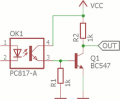
I'm trying to design an optocoupler based interface to translate 5V TTL from FPGA [5i22 FPGA based PCI Anything I/O card] to 24V. The pins will be set as output. When an I/O pin is high (5V) I want to turn the opto on, and through a transistor, get 24V. That requires an active high or non inverting logic. I had a discussion with the tech support of 5i22 FPGA I/O card, and they told me:
"Active low is required for reliable operation and to guarantee outputs are off at startup from a hardware standpoint. As far as logic is concerned that's at a higher level and can be addressed by inverting the logic at the FPGA IO pins (if you use our hostmot2 firmware there is a register for this inversion)"
What can I do in that to satisfy my needs? Why is it not reliable to set an active high interface?
I'm trying to design an optocoupler based interface to translate 5V TTL from FPGA [5i22 FPGA based PCI Anything I/O card] to 24V. The pins will be set as output. When an I/O pin is high (5V) I want to turn the opto on, and through a transistor, get 24V. That requires an active high or non inverting logic. I had a discussion with the tech support of 5i22 FPGA I/O card, and they told me:
"Active low is required for reliable operation and to guarantee outputs are off at startup from a hardware standpoint. As far as logic is concerned that's at a higher level and can be addressed by inverting the logic at the FPGA IO pins (if you use our hostmot2 firmware there is a register for this inversion)"
What can I do in that to satisfy my needs? Why is it not reliable to set an active high interface?