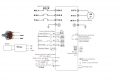
AC Motor Speed Controller Circuit

MaxHeadRoom

Joined Jul 18, 2013
30,671
As previously noted, that is a 3ph induction motor and as such will require a type of VFD that produces a variable frequency, with each wave cycle modulated by a PWM waveform, at least this is the method currently used by many VFD manufacturers.
If the motor has not yet been purchasd, it may be worth looking at a BLDC motor where drives and designs are more common.
Max.
 

Thread Starter

Fanfire174

Joined Mar 13, 2018
240
As previously noted, that is a 3ph induction motor and as such will require a type of VFD that produces a variable frequency, with each wave cycle modulated by a PWM waveform, at least this is the method currently used by many VFD manufacturers.
If the motor has not yet been purchasd, it may be worth looking at a BLDC motor where drives and designs are more common.
Max.
I had the motor already that's why looking to build VFD circuit for motor

I think it would be good to build VFD circuit rather than purchasing VFD module. It may take some time but I can save money
 

Uilnaydar

Joined Jan 30, 2008
118
I do this for a living and wouldn't want to do it. Spin a simple DC motor at variable speed first. Next, spin a BLDC motor at variable speed next.

Once you can do those two things you will have the background to allow the folks here to make recommendations on how to do variable frequency induction drives. Then when they toss terms like back emf or phase lead/lag (ELI/ICE ICE BABY), you will understand.

In addition to this being a non-trivial design, it will kill you DEAD when you screw up and most likely make a good crater where you were when it happens.
 

Reloadron

Joined Jan 15, 2015
7,891
I do this for a living and wouldn't want to do it. Spin a simple DC motor at variable speed first. Next, spin a BLDC motor at variable speed next.

Once you can do those two things you will have the background to allow the folks here to make recommendations on how to do variable frequency induction drives. Then when they toss terms like back emf or phase lead/lag (ELI/ICE ICE BABY), you will understand.

In addition to this being a non-trivial design, it will kill you DEAD when you screw up and most likely make a good crater where you were when it happens.
I would heed this. I have worked with some large VFDs for big motors up to 40 HP but never designed a VFD. We ran 480 VAC 60 Hz delta power and you learn a healthy respect for that voltage on a 100 amp buss. Learning stuff like what was just mentioned (I learned ELY the ICE man :) ) is a little like learning to swim, you don't start learning in the deep end of the pool. The best way to learn is not in a complex project requiring extensive math and an understanding of motor poles.
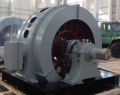
I can appreciate that you have a motor but you need to understand you are looking to design a very complex drive. This is a simple 480 VAC arc flash demonstration. There is 3 phase 480 VAC bridged by simple light gauge wire. I learned very fast a long time ago to have a healthy respect for everyday industrial 480 volt 3 phase systems. I believe you will find the consensus here is start at the beginning learning how what you want to learn actually works. The shallow end of the pool. That helped me live through a 45 year career so I could retire and be here. :) I have no clue how to design or build a VFD but those who do will tell you what you are hearing.

Ron
 

MaxHeadRoom

Joined Jul 18, 2013
30,671
The largest/highest voltage motor controller I have worked on is a 4Kvolt 3ph synchronous motors used for driving huge 'one-lung' piston compressors.
The motors were ran up as induction motors and the slip was monitored from a slip ring coils on the rotor to detect the degree of slip, when it was within a few cycles, DC was injected into the winding an the motor came up to synchronism.
Max.

upload_2019-2-18_12-53-36.png
 

shortbus

Joined Sep 30, 2009
10,050
The largest/highest voltage motor controller I have worked on is a 4Kvolt 3ph synchronous motors used for driving huge 'one-lung' piston compressors.
The motors were ran up as induction motors and the slip was monitored from a slip ring coils on the rotor to detect the degree of slip, when it was within a few cycles, DC was injected into the winding an the motor came up to synchronism.
Max.

View attachment 170422
That's his next project.
 

shortbus

Joined Sep 30, 2009
10,050
I think it would be good to build VFD circuit rather than purchasing VFD module. It may take some time but I can save money
You must be young. Many come here wanting to do things that they think can be done cheaper. But if you are willing to first be safe, then also willing to fail many, many times and have years to complete the project, go for it. But in the end, you could have bought one cheaper.
 

Reloadron

Joined Jan 15, 2015
7,891
The largest/highest voltage motor controller I have worked on is a 4Kvolt 3ph synchronous motors used for driving huge 'one-lung' piston compressors.
The motors were ran up as induction motors and the slip was monitored from a slip ring coils on the rotor to detect the degree of slip, when it was within a few cycles, DC was injected into the winding an the motor came up to synchronism.
Max.

View attachment 170422
That is really cool. Behind my former facility (a large former TRW business park) where we owned our building there sat a pump house with 4 large, really large pumps which moved RWS (Reclaim Water Supply) throughout the entire facility. The pumps ran on the popular 4160 volts, three phase. The pump house was fed by its own sub station which one day literally blew up. I think you saw my comments in a generator thread. They brought in a large diesel generator on a flat bed to run those pumds. I have no clue as to the current but that diesel had a 2,000 US gallon fuel tank and every other day a truck came and topped it off with 1,500 US gallons. Those pumps had the highest voltage motors I have ever been around. The largest motors inside our facility were 480 V 3 Phase the largest being I think was 40 HP on old GE Amplidyne units which were being replaced by new IGBT power supplies for the product.

Ron.
 

Thread Starter

Fanfire174

Joined Mar 13, 2018
240
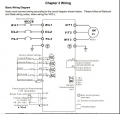
Here is a wiring diagram for VFD

upload_2019-2-19_11-31-17.png


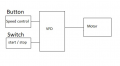
I understand the power and motor wiring but have a doubt with connection for the potentiometer and on/off switch

I am looking help with wiring diagram
 

Attachments

LesJones

Joined Jan 8, 2017
4,511
I don't see what there is to understand about three wires connecting a potentiometer to the VFD. The inputs M0 to M3 can be configured in the setup menu (Or possibly DIP switches) to behave in different ways to suit the user requirements. For example the contact on the M0 input contact with one configuration will need to stay closed for it to run forward. With a different configuration setting just pulsing the contact will probably start the forward direction. I have not read the manual on your particular VFD so I can only generalise. You need to READ and UNDERSTAND the manual for the VFD that you have to make it behave the way you want.
I notice the VFD in the diagram requires a three phase input but the picture in post #29 shows a single phase input. Also that picture shows a 220 volt three phase output. are you sure that you can change your 415 volt motor from star to delta configuration so it will work on 220 volt three phase ?

Les.
 
Last edited:

Thread Starter

Fanfire174

Joined Mar 13, 2018
240
I don't see what there is to understand about three wires connecting a potentiometer to the VFD.
more than 230v AC is not safe to work so I think it's better to ask experience person before connecting anything

How to connect a potentiometer and relay to VFD ?

upload_2019-2-19_16-20-49.png
I notice the VFD in the diagram requires a three phase input but the picture in post #29 shows a single phase input. Also that picture shows a 220 volt three phase output. are you sure that you can change your 415 volt motor from star to delta configuration so it will work on 220 volt three phase ?

Les.
I got this manual
 

Attachments

Reloadron

Joined Jan 15, 2015
7,891
Your first post you mentioned:
Product Specification:-
· Warranty : 1 year
· Voltage : 415 Volt
· Horsepower : 0.25 HP
· Speed : 1440 RPM
· Brand Name : MGM
· Number Of Items : 1
· Product Type : Flange type
· Phase : 3 Phase
· Power : 0.18 Kwatt

That was your motor. You have a 415 Volt 3 Phase motor. This is a specification for your AC VFD drive:

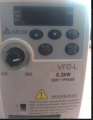
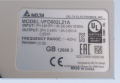
M O D E :V FD 0 07 L21A
IN P U T :1 P H /9.7 A 3P H /5.1 A 2 00-2 40 V 50 -60 H z
O U TP U T :3 P H 0-2 40 V 4.2A 1.6kVA 1 HP
Fre q. Ra ng e:1 .0~ 40 0H

You have a 415 VAC motor and a VFD with a 0-230 VAC output. Where did you originally plan to get the motor 415 volt power?

See Les Jones Post #32.

Ron
 
Last edited:

Uilnaydar

Joined Jan 30, 2008
118
TS: This project worries me. In addition to working with drives, I'm also a first responder. The highest percentage outcome I see with this project is somebody having to do chest compressions.

My recommendation is find a company to recommend, source, and install this VFD before you kill yourself.

Though I am generally a jerk, this particular time I'm not being a jerk, I'm warning you that you have high odds of killing yourself or, even worse (if it were me), others since it seems this design is for a 3rd party.
 
Last edited:
Top