Facebook
 Google
 GitHub
 Linkedin

Hi everyone, First time poster here.
Anyway, I have a fairly new AC clamp meter (Kobalt AC TRMS cheapo from Lowes) and I was trying to measure the current draw from a 3-fan setup that I have on my porch. The three fans are all plugged in to an extension cord and I am measuring between the extension cord and the receptacle (a standard 15A GFI protected receptacle) using the wire splitter that came with the meter. According to the motor data I should be seeing about 1.3A AC from each fan, for a total of around 3.9A. The meter is reading 39A though. So I did some research on the forums here and saw a couple of threads pointing out that the line splitter for a clamp meter sometimes has a 10X side and a 1X side. That is indeed the case for the line splitter that I have, so I went back to re-measure using the 1X side of the splitter.
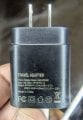
However, I'm reading 39A on the 1X side AND on the 10X side. For a sanity check, I plugged a phone charger in to the splitter and measured the current. The charger should draw max 0.7A AC, and it was reading 3.0A on the 1X side AND the 10X side of the splitter. So not exactly 10X during that measurement, more like 4X-5X
I'm okay with the splitter not actually having a 10X measurement side, but I'm wondering why a phone charger is giving 5X current that is expected, but the fans are giving exactly 10X the current expected. Does this have something to do with the fan motors being a highly inductive load? I believe they are pretty standard PSC motors. Is this meter just junk? Am I using it wrong somehow? Any help would be appreciated.
Anyway, I have a fairly new AC clamp meter (Kobalt AC TRMS cheapo from Lowes) and I was trying to measure the current draw from a 3-fan setup that I have on my porch. The three fans are all plugged in to an extension cord and I am measuring between the extension cord and the receptacle (a standard 15A GFI protected receptacle) using the wire splitter that came with the meter. According to the motor data I should be seeing about 1.3A AC from each fan, for a total of around 3.9A. The meter is reading 39A though. So I did some research on the forums here and saw a couple of threads pointing out that the line splitter for a clamp meter sometimes has a 10X side and a 1X side. That is indeed the case for the line splitter that I have, so I went back to re-measure using the 1X side of the splitter.
However, I'm reading 39A on the 1X side AND on the 10X side. For a sanity check, I plugged a phone charger in to the splitter and measured the current. The charger should draw max 0.7A AC, and it was reading 3.0A on the 1X side AND the 10X side of the splitter. So not exactly 10X during that measurement, more like 4X-5X
I'm okay with the splitter not actually having a 10X measurement side, but I'm wondering why a phone charger is giving 5X current that is expected, but the fans are giving exactly 10X the current expected. Does this have something to do with the fan motors being a highly inductive load? I believe they are pretty standard PSC motors. Is this meter just junk? Am I using it wrong somehow? Any help would be appreciated.