AC Circuit .. emergency ))

Thread Starter

ZeroBlank

Joined Jan 22, 2017
14
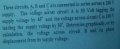
having an ac circuit i have a supply of 200 volt and three loads of 100 (30 deg lead) and 50 (45 deg lag) the third is unknown

how can i calculate it ? , i tried 200 (0 deg) = V1 + V2 + V3 in complex matter and V3 turned out to be bigger than the source = 219,3(0.7 deg)

am i wrong ?
 

WBahn

Joined Mar 31, 2012
32,827
If this is truly an emergency, close your browser and dial 9-1-1....

Otherwise, a sketch of the circuit might be nice, particularly since you are requiring us to guess how these loads are connected.

Showing your work might also be nice.
 

MrAl

Joined Jun 17, 2014
13,704
Hi,

Can you show your work?
We can then see if it is right or not.
Also show how you converted the lead and lag to complex representation.
 

WBahn

Joined Mar 31, 2012
32,827
Do you see the difference between the full information the problem supplied and the trickle of detail you provided. The problem clearly states that these three circuits are connected in series, whereas you simply said that they exist. The problem clearly stated that the circuit voltages are lagging (or leading) the supply voltage whereas you give no indication of whether you are talking about the relationships between the loads and the supply or between the voltages and currents within the load or what.

Now, show your work.

With reactive circuits it is quite possible to get voltage magnitudes that are greater than the supply. So work through the math and then check your results.
 

Motanache

Joined Mar 2, 2015
652
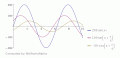
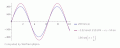
img5.gif img6.gif
img7.gif

Or:
img1.png

The analytical method for the composition (addition) of two vectors:

On the abscissa:
100*cos(30)+50*cos(45)=121

On the ordinate:
100*sin30-50*sin(45)=16.14
Pythagoras' Theorem:
X^2=121^2+16.14^2 => X=122
tg(16.14/122)=6.9deg

X=122V
7 deg leading

Initial drawing was not well done, resulted supposed to be above the abscissa.
7 degrees means almost abscissa.

122v had two loads in series. Up to 200V, approximate 80V remains to be on the third loads.

B=80V

A+C=122V as follows:
Abscissa: 121 (V)
Ordinate: 16.14(V)

200V phase shift 0:
Abscissa: 200 (V)
Ordinate: 0(V)

-------------------------------------
B=80V as follows:
Abscissa: 79 (V) (79+121=200)
Ordinate: -16.14(V) (16-16=0)
tg(-16.14/79)=-11.9 => 11.9 deg lagging
 

Attachments

Last edited:

Motanache

Joined Mar 2, 2015
652
If lagging the supply voltage:
In fact in series the current intensity it's the same and voltages differ:
V1=100*sin(w*t+30deg)
V2=50*sin(w*t-45deg)
V3=A*sin(w*t+phase)
V=200*sin(w*t)
where w is 2*PI*frequency

V=V1+V2+V3
200*sin(w*t)=100*sin(w*t+30deg)+50*sin(w*t-45deg)+A*sin(w*t+phase)
It looks like an equation and two unknowns: A, phase

https://www.wolframalpha.com/input/?i=solve+200*sin(w*t)=100*sin(w*t+Pi/6)+50*sin(w*t-Pi/4)+A*sin(w*t+p)+for+A


200*sin(x)=100*sin(x+30deg)+50*sin(x-45deg)+A*sin(x+p)
for x=0
0=50-35.4+AsinP
AsinP=-14.6
for x=Pi/2
Asin(Pi/2+p)=78

System with two equations and two unknowns:
{AsinP=-14.6
{Asin(Pi/2+p)=78


Or:
In this case B = 80V
10.627 deg lagging
https://www.wolframalpha.com/input/?i=plot+220*sin(x),100*sin(x+Pi/6)+50*sin(x-Pi/4)+80*sin(x-0.1855),200++from+x=0+to+10
img8.gif
 
Last edited:

Thread Starter

ZeroBlank

Joined Jan 22, 2017
14
View attachment 119271 View attachment 119272
View attachment 119274

Or:
View attachment 119266

The analytical method for the composition (addition) of two vectors:

On the abscissa:
100*cos(30)+50*cos(45)=121

On the ordinate:
100*sin30-50*sin(45)=16.14
Pythagoras' Theorem:
X^2=121^2+16.14^2 => X=122
tg(16.14/122)=6.9deg

X=122V
7 deg leading

Initial drawing was not well done, resulted supposed to be above the abscissa.
7 degrees means almost abscissa.

122v had two loads in series. Up to 200V, approximate 80V remains to be on the third loads.

B=80V

A+C=122V as follows:
Abscissa: 121 (V)
Ordinate: 16.14(V)

200V phase shift 0:
Abscissa: 200 (V)
Ordinate: 0(V)

-------------------------------------
B=80V as follows:
Abscissa: 79 (V) (79+121=200)
Ordinate: -16.14(V) (16-16=0)
tg(-16.14/79)=-11.9 => 11.9 deg lagging
oh that explains everything and simplifies it .it's really a cool method to use wolfram dealing with these issues ^^, Thanks a lot .
 

RBR1317

Joined Nov 13, 2010
715
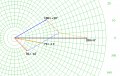
In the old days we would use polar graph paper and a set of good drafting tools to construct phasor diagrams to solve these kind of problems. If the diagram was carefully done then the answer could be read directly from the graph with slide-rule accuracy, no calculation necessary.

200V-3-phasor.png
 

Attachments

MrAl

Joined Jun 17, 2014
13,704
Hi,

Yeah there are a number of ways to do this.

Another way is to just proceed as the original post seemed to imply. That is by converting the sources into complex form and then we just have a simple equation:
200=A*(a1+b1*j)+B*(a2+b2*j)+C*(a3+b3*j)

and we can solve for any of the sources on the right.
Any a+b*j is the unit vector where:
a=cos(angle)
b=sin(angle)

and so knowing all the angles we know all the a and b, and knowing the amplitudes A and C we can then calculate the unknown source amplitude and easily find the phase angle because we'll end up with some a+b*j where we have;
Ampl=sqrt(a^2+b^2)
Phase=atan2(b,a)

I prefer this method because it is very straightfoward and always works.
 
Top