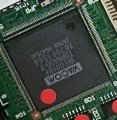
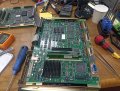
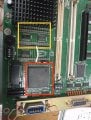
A 30 years old PCB board which is a CONTROLLER of a machine and the red IC is not sending any power to yellow IC zones.

Thread Starter

22Lab_Test22

Joined Oct 22, 2024
23
Its a 30 years old PCB board and the company stopped making it, so no datasheet and no schematic. Its a hard troubleshooting, the main issues is beeping continuously, after the hard time watching all ICs and stuffs, the red IC is not sending any power to yellow IC zones, so thought that the datasheet may help but couldnt find anywhere.

What more can i do?
 

Attachments

Thread Starter

22Lab_Test22

Joined Oct 22, 2024
23
The beeps usually identify a fault condition in the machine. We have no idea what machine it is from and my crystal ball is at the cleaners, so I really can't make any useful suggestions.
Is there a way to know if the given IC is triggered by external componenents or not.
 

Thread Starter

22Lab_Test22

Joined Oct 22, 2024
23
How did you know that the red ic not sending power to yellow ic?, if you say that no Datasheets neither schematic?
I have working boards and i compare them with non working, First i check where those pins are connected sand i look the datasheet of Yellow IC, they are input pins.
 

atferrari

Joined Jan 6, 2004
5,001
At the least one of the ICs in the yellow área are not memory chips as in the ST datasheet; that one is most likely a Texas Instrument's 74LS07.

A clear, well focused picture taken in daylight would solve that part of the doubts.
 

panic mode

Joined Oct 10, 2011
4,864
Its not the motherboard or PCB of a computer But it is a CONTROLLER of a machine. Its keep on beeping during power on.
computer motherboards are often used as controller for MANY machines....

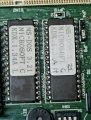
what you have shared so far sure looks like customized SBC based on AT motherboard architecture from that era. the thing under heatsink is the CPU, likely 386DX (386SX were smaller and did not need heatsink). those EPROMS are used to store MSDOS 3.2 which is operating system for old computers (late 80s, early 90s). before chipsets became a thing, that functionality was created using few dozens of ICs. this board does seem to have onboard video card which would be normal for SBC. also it seem to have some IO which is not something normally found on computer motherboard but sure would on unit that us meant for automation (POS, machines, etc.)

as with any PC, beeping on powerup is suggesting error code. probably by BIOS, before it even reaches DOS.
this could be many things - complaint that memory module is bad or not seated correctly or in correct slot., or CMOS battery is dead so settings are lost etc. to decode what they mean you need documentation for this board.
 
Last edited:

Thread Starter

22Lab_Test22

Joined Oct 22, 2024
23
computer motherboards are often used as controller for MANY machines.
what you have shared so far sure looks like AT motherboard. the thing under heatsink is the CPU. those EPROMS are used to store MSDOS 3.2 which is operating system for old computers (late 80s, early 90s). before chipsets became a thing, they were created using few dozens of ICs.

beeping on powerup is suggesting error code. probably by BIOS, before it even reaches DOS.
this could be many things - complaint that memory module is bad or not seated correctly or in correct slot., or CMOS battery is dead so settings are lost etc.
First i did check CMOS battery, even if i removed CMOS battery in working board, it doesnt beep.
second, the SRAM and Flash RAM they are new and even i swap them from the working board to this non working one,
The indeed problem is BIOS as the DOS is not getting powers, as i mention in the main problem, the IC not sending power.

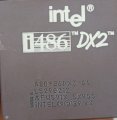
the pic is CPU
 

Attachments

panic mode

Joined Oct 10, 2011
4,864
a bit surprised that 486DX2 is paired with such old DOS but still everything i stated stands.
not sure what would be the best way to proceed. one certainly could try swapping components until the issue is resolved. but this is hardly practical, not to mention that most of those ICs are unobtanium.
personally i would consider trying to find replacement board or at least documentation. if that is not an option, one could try finding another SBC (perhaps RPI or whatever), add suitable I/Os and write custom application that would replicate functionality. but who wants to sink that kind of time into 30 year old machine. machines are meant to pay for them self in couple of years (industrial robots in one year). so 30 year old machine has had really nice long life and deserves to be retired.
 
Last edited:

panic mode

Joined Oct 10, 2011
4,864
you still did not state what is it that this machine does and why do you want to rescue it.
i would say you need to determine if you can find someone with right skills to repair or modernize current system and if that is worthwhile... if you have bunch of them, developing upgrade may be worth it. but finding someone that is knowledgeable both about industrial machines, PCB design and programming, (and interested in doing this) is going to make the search rather difficult and expensive, which is why this kind of work is normally something people do not for profit but out of passion - if they have spare time.
 

panic mode

Joined Oct 10, 2011
4,864
I have working boards and i compare them with non working, First i check where those pins are connected sand i look the datasheet of Yellow IC, they are input pins.
compare HOW exactly?
measuring voltage tells very little as those signals are bursts of pulses and they are too fast for DMM.
checking signals with scope or data analyser can only take you so far without schematics and any debugging aid, because what you observe may not be a fault - it may be just a result caused by program branching differently because some condition (like fault or IO state). so replacing parts at the place where you observe difference, will likely do nothing, because that is probably not where the fault is. so you would need to track back where they get data from which means tracing things back through several ICs etc.

doing board level troubleshooting on product like this is not easy. it requires a lot of skill, patience, right tools and luck.
 

Thread Starter

22Lab_Test22

Joined Oct 22, 2024
23
compare HOW exactly?
measuring voltage tells very little as those signals are bursts of pulses and they are too fast for DMM.
checking signals with scope or data analyser can only take you so far without schematics and any debugging aid, because what you observe may not be a fault - it may be just a result caused by program branching differently because some condition (like fault or IO state). so replacing parts at the place where you observe difference, will likely do nothing, because that is probably not where the fault is. so you would need to track back where they get data from which means tracing things back through several ICs etc.

doing board level troubleshooting on product like this is not easy. it requires a lot of skill, patience, right tools and luck.
Oh i see. Thanks for your guidance and steps.
 
Top