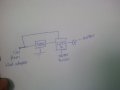
I am trying to get 5v from a 7805 regulator to power my motor driver ic. When powered up on no load output is 5v and after some seconds it heats up and back to 12v
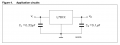
The datasheets for a 7805 show the important input and output capacitors that are missing in your circuit.
If the 7805 is genuine and is not a cheap Chinese copy then it will shut down when it becomes too hot.
Since the 7805 becomes too hot then why is it missing a heatsink?
I agree that the missing capacitors cause it to oscillate which makes it too hot.
I do not understand exactly what you are describing. So I have some questions:
When the regulator gets hot does its output increase from 5 volts to 12 volts?
Or, does the 12 volt input start at a voltage lower than 12 volts and increase to 12 volts when the regulator gets hot?
I am trying to get 5v from a 7805 regulator to power my motor driver ic. When powered up on no load output is 5v and after some seconds it heats up and back to 12v
I do not understand exactly what you are describing. So I have some questions:
When the regulator gets hot does its output increase from 5 volts to 12 volts?
Or, does the 12 volt input start at a voltage lower than 12 volts and increase to 12 volts when the regulator gets hot?
If the output voltage has become equal to the input it means that the pass transistor in the 7805 has failed short-circuit. Excessive voltage at the input is one way to cause this. My suspicion is that lack of local capacitors at the input of the 7805 allows high voltage spikes due to the clamping diodes internal to the outputs of the L295. Clamping diodes only work if there is someplace for the energy to go. If there is no other load and no capacitance, the inductive energy can raise the voltage to something very high.
The input of the 7805 should have a good high-frequency capacitor (100 nF or more ceramic), and in this case, I recommend also using an electrolytic capacitor of at least 10 µF. I would use capacitors rated for at least 16 VDC (assuming the input supply is regulated at 12 volts).
If the output voltage has become equal to the input it means that the pass transistor in the 7805 has failed short-circuit. Excessive voltage at the input is one way to cause this. My suspicion is that lack of local capacitors at the input of the 7805 allows high voltage spikes due to the clamping diodes internal to the outputs of the L295. Clamping diodes only work if there is someplace for the energy to go. If there is no other load and no capacitance, the inductive energy can raise the voltage to something very high.
The input of the 7805 should have a good high-frequency capacitor (100 nF or more ceramic), and in this case, I recommend also using an electrolytic capacitor of at least 10 µF. I would use capacitors rated for at least 16 VDC (assuming the input supply is regulated at 12 volts).
hi 47,
If you have not added a 100nF the 7805 Vin and Vout, I would recommend that you do so, the circuit maybe stable now, but it could go unstable under certain conditions.
E
hi 47,
If you have not added a 100nF the 7805 Vin and Vout, I would recommend that you do so, the circuit maybe stable now, but it could go unstable under certain conditions.
E
The input tends to need a fair bit of capacitance + a ceramic for transient damping. Too much capacitance on the output can cause problems, ultra low ESR ceramics added on the output can produce very unwanted effects. especially so with the LDO types, which have a growing collection of application notes explaining it.

 Facebook
 Google
 GitHub
 Linkedin